Generac Generator for Sale: Costs, Sizing & Install Guide
Explore practical guidance for a Generac generator for sale, including cost ranges, sizing essentials, installation steps, and maintenance tips for homeowners and property managers.


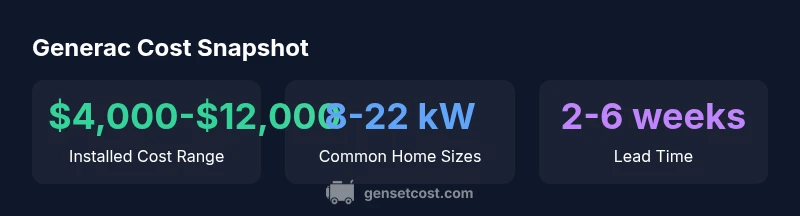
Typical installed costs for a Generac generator for sale range roughly from $4,000 to $12,000 for 8-22 kW models, with installation and transfer switch adding $2,000–$5,000 depending on permits and labor. Portable units are cheaper, while larger standby systems push toward the higher end. Lead times generally range 2–6 weeks, influenced by permits, location, and contractor availability. This estimate reflects data from Genset Cost Analysis, 2026.
Why Generac is a popular choice for home backup power
According to Genset Cost, Generac is a widely recognized brand in the home backup power segment, valued for its broad model range, dealer network, and service support. Homeowners and property managers frequently encounter a Generac generator for sale because these units are designed to cover essential circuits during outages, from lighting and refrigeration to heating systems. The brand’s standby models are engineered to detect outages automatically and reconnect critical loads within seconds, reducing the risk of spoilage, climate-related outages, and business disruption. Beyond raw reliability, Generac’s popularity is fueled by accessible service plans, an established installer ecosystem, and consistent compatibility with transfer switches and panel upgrades. In many markets, the availability of local technicians trained on Generac systems keeps maintenance costs predictable and response times reasonable. Overall, this combination of risk mitigation, network support, and a clear ownership pathway makes Generac a go-to option when evaluating a possible Generac generator for sale.
From a consumer perspective, clarity on total cost of ownership is essential. The Genset Cost team notes that while sticker price highlights the equipment cost, installation complexity, site accessibility, and local permitting all shape the final investment. Prospective buyers should treat the search for a Generac generator for sale as a multi-step process that includes load calculation, site assessment, and a formal quote from multiple authorized dealers. The goal is to align the selected model with essential loads, lifestyle needs, and budget, while leaving room for contingencies. A thoughtful approach minimizes the odds of oversizing or underperforming during outages.
Understanding the cost landscape for a Generac generator for sale
Costs related to a Generac generator for sale are typically split into equipment, installation, and ongoing ownership. Equipment costs rise with larger kilowatt ratings and optional features such as automatic transfer switches, weather-resistant enclosures, and advanced monitoring. Installation costs depend on the site: some homes require trenching, new conduit runs, or panel upgrades, while others only need a straightforward connection to an existing transfer switch. Permitting and labor rates vary by jurisdiction, which is a main driver of the final price range. In practice, total installed cost can vary widely even among similar homes, so obtaining quotes from multiple authorized dealers is advisable. Genset Cost Analysis, 2026 emphasizes comparing not just upfront price but also warranty terms, after-sales service, and what’s included in the installation scope. When planning, homeowners should budget for potential upgrades to the electrical panel and fuel system to ensure long-term reliability and safety. A careful cost assessment helps avoid unexpected outlays during peak outage seasons.
Sizing your Generac generator for home comfort
Sizing is about more than watts. Start with essential circuits (fridge, sump pump, lighting, heat or cooling in critical rooms) and then evaluate nonessential loads you want backed up. A formal load calculation, often performed by a licensed electrician, considers starting currents for motors and the duty cycle of appliances. Generac offers a range of standby models (8-22 kW in typical residential use) designed to support different load profiles. The sizing decision should also factor in climate, building insulation, and daily power usage patterns to avoid frequent cycling or nuisance tripping. In practice, many households find that opting for the middle-to-upper end of a homeowner standby range reduces the risk of under-sizing during very hot or cold conditions. The goal is steady operation during outages without excessive energy waste or generator wear. A well-sized system improves resilience and ensures a smoother transition should a grid loss occur.
Installation basics: transfer switches, permits, and codes
A reliable installation starts with a compatible transfer switch that isolates the home from the grid during outages. For most homeowners, a professionally installed standby generator paired with a 100-200-amp transfer switch is standard. Permits are common and can influence both timeline and cost; some jurisdictions require electrical inspections and fuel line approvals. Site considerations include clearance from combustibles, stable mounting, and protection from weather. Fuel supply choices—natural gas or propane—affect long-term running costs and fuel availability. NFPA standards and local electrical codes guide safe setup, installation clearances, and wiring practices. Planning ahead with a licensed installer reduces the risk of code-related delays and ensures that your Generac system meets safety and performance expectations. A typical Generac generator for sale becomes a practical asset only when the installation is properly sized, permitted, and tested.
Fuel options, efficiency, and reliability
Most residential standby Generac systems offer natural gas or propane as primary fuel sources, with natural gas often providing continuous supply through the home’s existing line. Propane can be a viable alternative in areas where natural gas is unavailable or unreliable. Efficiency hinges on proper sizing and automatic operation, along with an efficient transfer switch that minimizes power loss during switching. Regular maintenance, including spark plug and oil changes, helps sustain reliability and energy efficiency over the system’s life. Fuel availability, storage considerations, and local fuel costs influence long-term running expenses and should factor into total cost assessments when evaluating a Generac generator for sale. Choosing a model that aligns with your climate, insulation, and typical outage duration supports consistent performance when it matters most.
Maintenance and lifecycle costs
A Generac generator, like most home backup systems, requires routine maintenance to sustain reliability. Typical maintenance tasks include oil changes, battery checks, air-filter replacement, and occasional module updates. Annual service from an authorized dealer can identify wear before it leads to failures, while battery life and spark plugs contribute to ongoing costs. In some markets, maintenance contracts cover routine inspections and priority service, providing predictable budgeting. While maintenance adds to annual ownership costs, a well-maintained unit reduces the likelihood of unexpected outages and extends the life of the investment. Planning for long-term upkeep helps ensure that a Generac generator for sale remains dependable across multiple seasons and power events.
Buying tips: finding reputable dealers and warranties
When evaluating a Generac generator for sale, prioritize authorized dealers with a clear service network and transparent warranties. Ask for a formal written quote that itemizes equipment, installation, permits, and any optional features. Compare warranty terms across models and ensure coverage includes parts, labor, and transfer switch reliability. Reading reviews from local customers can reveal performance trends and service responsiveness in your area. A strong warranty and a solid service footprint are as important as initial price because they directly impact long-term ownership costs and outage reliability. If possible, request a pre-installation assessment to validate load calculations and confirm the expected performance of your chosen Generac model.
How to compare quotes and financing options
Quotes should be evaluated on four dimensions: equipment quality, installation scope, permit requirements, and after-sales support. Ask for a side-by-side comparison that lists each line item and the inclusions, such as a transfer switch, fuel line upgrades, and testing procedures. Financing options, including promotional offers or extended warranty plans, can significantly affect the total cost of ownership. Consider total cost of ownership over a 10- to 15-year horizon, including depreciation, fuel costs, maintenance, and potential repair expenses. The goal is to balance upfront affordability with long-term reliability, ensuring the Generac generator for sale chosen aligns with both budget and resilience goals. A prudent approach is to obtain multiple quotes, verify credentials, and review the installer’s proposed maintenance schedule before making a final decision.
Real-world considerations for property managers
Property managers evaluate standby generators not only for resident comfort but also for business continuity. A high-quality Generac generator for sale can support essential common-area loads, elevator systems, and security infrastructure during outages. When comparing options, consider collective rather than individual unit needs, including common circuits, building systems, and peak outage duration. Ensure the transfer switch and fuel supply are sized to handle multi-unit loads and that maintenance contracts include remote monitoring and priority service. A well-planned installation reduces tenant complaints, preserves property value, and mitigates revenue loss during power disruptions. Collaboration with a trusted installer and a clear service agreement is critical to successful risk management in property portfolios.
Generac cost by size and fuel type
| Model Type | Typical Size | Installed Cost Range | Fuel Type |
|---|---|---|---|
| 8-12 kW | 8-12 kW | $4,000-$8,000 | Natural gas/Propane |
| 14-20 kW | 14-20 kW | $7,000-$12,000 | Natural gas/Propane |
| 22 kW | 22 kW | $9,000-$15,000 | Natural gas |
People Also Ask
What is the typical price range for a Generac generator for sale?
Prices vary by size, features, and installation complexity. Equipment plus installation commonly falls into a broad range, with larger standby models costing more and portable units being cheaper. Always request a detailed quote that separates equipment, installation, permits, and transfer switches.
Prices vary by size and installation. Get a detailed quote that separates equipment, installation, and permits.
How do I determine the right size for my home?
Perform a formal load calculation that accounts for essential circuits and anticipated outage duration. Start with essential loads like refrigeration, heating or cooling, and lighting, then decide if you want extra comfort features. A licensed electrician can guide you toward an appropriate 8-22 kW range for most homes.
Do a formal load calculation with an electrician to pick the right size.
What installation considerations matter most?
Key concerns include transfer switch compatibility, permits, clearance requirements, and fuel line routing. Hiring a licensed installer ensures code compliance and a safe, reliable connection to your home’s electrical system.
Get a licensed installer to handle permits and wiring for safety and compliance.
Are ongoing maintenance costs significant?
Yes, routine service, oil changes, and battery checks form ongoing costs. Preventive maintenance reduces the risk of unexpected outages and protects warranty terms. Some owners enroll in annual service plans for predictable budgeting.
Expect annual service costs; routine maintenance protects reliability.
Where can I find legitimate Generac generator for sale sources?
Buy from authorized Generac dealers or the official website to ensure authentic equipment and warranty support. Be cautious of off-brand listings or unverified sellers that can complicate warranty coverage.
Stick to authorized dealers or the official site for reliability.
“A careful load analysis and transparent pricing are the foundation of a smart backup power purchase. Rushing to a low upfront price often increases risk and long-term costs.”
Key Takeaways
- Assess essential loads before choosing size
- Budget equipment plus installation and permits
- Obtain multiple quotes from authorized dealers
- Factor in maintenance and warranty into total cost