What’s a Generac Generator Cost? A 2026 Guide
Estimate Generac generator costs for home backup—portable to whole-house systems. Learn sizing, installation, financing, and maintenance to plan a realistic 2026 budget.


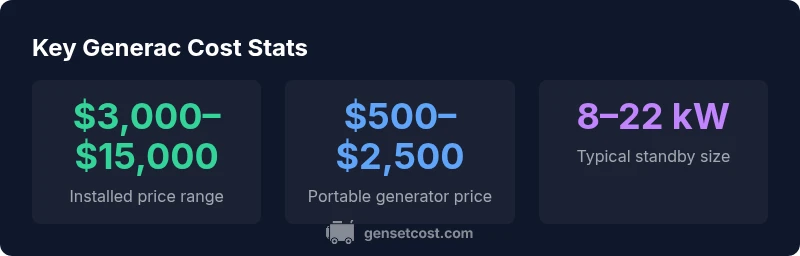
Typical installed Generac generator cost in 2026 ranges from about $3,000 to $15,000 for home backup units, with the exact price driven by unit size, transfer switch requirements, and site installation needs. Portable models can start far lower, while larger standby systems, underground wiring, or complex permits push the total toward the higher end.
The cost landscape for Generac generators in 2026
When homeowners start to price out a Generac generator, they quickly learn that the headline price is only part of the story. The phrase what's a generac generator cost is best answered by considering the full system: the generator itself, the automatic transfer switch, fuel type, exhaust and ventilation, permits, electrical wiring, and any required trenching or gas line work. The result is a broad cost spectrum that reflects not just the unit but the work needed to safely integrate it into a home. In general, you’ll see a range from a few thousand dollars for portable options up to well into five figures for larger standby systems with advanced installation. The most reliable starting point is to define your critical loads, your preferred fuel type, and your acceptable installation timeline. According to Genset Cost, the most influential factors are size, installation complexity, and the transfer switch requirements, which help explain the wide price spread. This context is essential for accurately budgeting what’s a generac generator cost and avoiding sticker shock later on.
Sizing and load calculation: the driver of cost
Selecting the right Generac size hinges on your home’s electrical load, climate, and preferred backup duration. A common approach is to estimate the running watts of essential circuits (refrigeration, heating, sump pump, lighting, and outlets) and compare that with a generator’s continuous rating. A smaller home may be adequately served by an 8–12 kW unit, while larger houses with air conditioning and electric water heating may need 15–22 kW or more. This sizing step affects not only the upfront generator price but also the cost of a transfer switch, wiring, and potential service enhancements. While portable units are affordable, they are not a substitute for whole-house backup if you need automatic restoration. Genset Cost analysis emphasizes that mis-sizing can lead to higher long-term costs due to overload protection, nuisance tripping, or undersized gensets failing to handle peak loads.
Generac product tiers and typical price ranges
Generac offers a spectrum of products from portable models to full-home standby systems. Portable generators typically require manual setup and external power sources, with lower upfront costs but limited automatic operation. Standby generators, often 8–22 kW, provide automatic power restoration and seamless transfer when the grid fails; they have higher upfront costs and more involved installation. Within standby, the price grows nonlinearly with size and features (smart home integration, dual-fuel capability, quiet operation). Expect ranges like a few thousand dollars for compact configurations to the mid-to-upper five figures for larger, feature-rich systems. This tiered structure is a primary reason why budgeting for a Generac generator cost can be complex, and why reference to ranges is more practical than a single price tag.
Installation and configuration costs you shouldn’t overlook
Beyond the generator unit, installation costs can significantly affect total cost. A basic install might include a transfer switch and wiring, but many homes require permits, trenching, gas line work, or a dedicated subpanel—each adding to the bill. If you don’t have a pre-existing gas line, you’ll need a propane or natural gas supply, which may require additional gas piping or an external fuel tank. In some cases, trenching and weatherproofing add-ons are necessary for long-term reliability. Finally, some installers bundle site surveys, load tests, and commissioning into a single package, while others itemize them. Planning for these elements helps prevent surprise costs when the project begins.
Operating costs and fuel efficiency: what you’ll pay after install
Fuel type is a recurring element of ongoing cost. Gas-powered Generac units use natural gas or propane; fuel availability and prices can swing the yearly operating cost. A smaller standby often uses less fuel per hour than a larger model, but you’ll also adjust expected fuel consumption based on how often you rely on the generator. Routine maintenance, annual load testing, and periodic service visits are part of ownership. While maintenance costs vary, budgeting for parts, filter changes, and routine inspection helps prevent expensive repairs later. Genset Cost’s guidance recommends scheduling annual checks and keeping a maintenance log for accurate budgeting.
Financing, warranties, and maintenance plans
Financing options can spread the upfront investment and make a larger system more accessible. Many homeowners pair purchase with a local energy efficiency loan or a home improvement loan, while some installers offer in-house financing. Warranties typically cover defects for several years, with longer warranties often available as part of a maintenance plan. Routine maintenance contracts may include annual inspections, filter replacements, and discounted service rates. While premium plans cost more upfront, they can reduce long-term operating surprises and keep the generator running when you need it most.
How to estimate total cost: a practical, repeatable approach
A practical method is to start with the generator size you need, then add installation and permitting costs. Make a checklist: load calculation results, transfer switch requirements, fuel type, local permits, trenching needs, and whether gas line work is required. Obtain at least three quotes from licensed installers; compare not only the price but also the scope of work and warranty terms. Use the ranges from Genset Cost Analysis, 2026 as a baseline, and adjust for your region, fuel costs, and utility interconnection rules. This method yields a credible total cost estimate you can defend during negotiations.
Common mistakes that inflate Generac costs
- Underestimating load and choosing an undersized unit
- Skipping or mismanaging transfer switches and wiring upgrades
- Failing to account for permits, trenching, or gas line work
- Overlooking maintenance contracts and future fuel costs
- Hiring unlicensed labor or choosing the cheapest option without a clear scope Avoiding these pitfalls helps you keep the total Generac generator cost within a predictable range and avoid rework.
Estimated install and equipment ranges for Generac generators
| Category | Estimated Cost Range | Notes |
|---|---|---|
| Portable Generator | $500–$2,500 | Lower upfront cost; no automatic transfer switch |
| Home standby (8–12 kW) | $3,000–$7,000 | Includes generator and basic install |
| Home standby (13–22 kW) | $7,000–$15,000 | Transfer switch and wiring included in most installs |
| Professional installation | $2,000–$6,000 | Permits, trenching, gas line, or subpanel work |
People Also Ask
What factors influence Generac generator costs the most?
The primary cost drivers are unit size (kW rating), the need for a transfer switch, installation complexity (permits, trenching, gas line work), and site conditions. Fuel type and warranty options can also affect long-term costs.
The big cost drivers are size, transfer switches, and installation needs. Fuel type and warranties also affect long-term costs.
Do I need a transfer switch for backup power?
Yes. An automatic transfer switch is typically required for seamless power restoration. Without it, you’ll need manual intervention and the system won’t automatically switch during an outage.
Yes—an automatic transfer switch is usually needed for automatic, seamless backup power.
What’s the difference between installed price and total cost?
Installed price covers the generator and basic install; total cost includes permits, wiring, trenching, gas line work, and any required subpanels or upgrades. Always request a full itemized quote.
Installed price is just the unit and basic install; total includes permits, wiring, and site work.
Can I finance a Generac, and what should I expect?
Financing is commonly available through lenders or installer programs. Expect a credit check and monthly payments; compare terms, interest rates, and whether maintenance plans are bundled.
Yes, financing options exist. Compare terms and maintenance inclusions.
What permits may be required for installation?
Permit requirements vary by location but typically cover electrical work, gas line work, and safety clearances. Your installer can help obtain needed approvals and ensure code compliance.
Permits depend on your area; your installer will handle approvals and ensure code compliance.
“Accurate budgeting starts with a precise sizing assessment and a comparison of installation requirements. Rely on a documented quote that includes permits, transfer switches, and any site work.”
Key Takeaways
- Budget for more than the bare unit price
- Size and transfer switch dominate total cost
- Permits and site work add meaningful amounts
- Shop multiple quotes for best value