Generator 30 Amp Cord: Sizing, Costs, and Safety Essentials
Compare generator 30 amp cords, gauge, and transfer-switch options to estimate cost, choose the right cord length, and ensure safe, code-compliant backup power for homes and properties.


A generator 30 amp cord is designed to connect a portable generator to a 30-amp inlet or transfer switch, enabling critical loads during an outage. The most common configurations are TT-30 (125V) and L14-30 (125/250V). When sizing, match the cord gauge and length to your anticipated load and distance, and always use a compatible inlet or transfer switch while following local codes.
Understanding the generator 30 amp cord and its role in home backup power
According to Genset Cost, choosing the right generator 30 amp cord is essential for safe startup and cost-effective backup power. A 30 amp cord is designed to carry heavier current from a portable generator to a home panel or transfer switch, enabling critical circuits to run during an outage. The most common configurations you’ll encounter are TT-30 and L14-30 connectors. TT-30 is a straight, 125V inlet/receptacle used for many home backup setups, while L14-30 supports both 120V and 240V loads and is favored for generators that service multi-wire circuits. When selecting a generator 30 amp cord, consider the distance from generator to inlet, the total expected load, and the environment (outdoor use, weather exposure, temperature). Sizing the cord correctly helps minimize voltage drop and protects equipment. Always pair the cord with a compatible inlet or transfer switch and follow local electrical codes.
Key Connector Configurations and Safety Considerations
The most common 30 amp cord configurations are TT-30 and L14-30. TT-30 cords are typically used for single-pircuit, outdoor-rated backup systems, while L14-30 cords support mixed 120V/240V loads and are suitable for multi-appliance setups. Safety hinges on proper grounding, correct polarity, and secure connections. Always inspect the cord for insulation wear, corrosion on connectors, and any moisture intrusion. When connecting, ensure the generator is off, the transfer switch is in the correct position, and no loads are energized during the initial hookup. Use outdoor-rated cords with weatherproof ends, and keep cords clear of walkways to prevent tripping hazards.
Sizing Your Cord for Generator Load and Distance
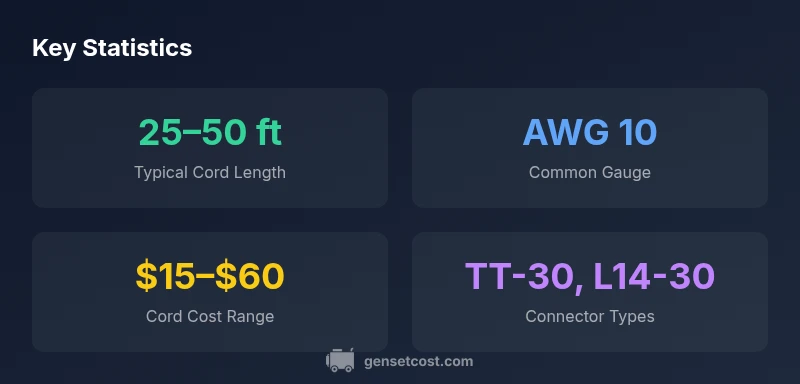
A key step in selecting a generator 30 amp cord is aligning cord size with both the expected load and the run length. For typical residential backups on short to medium runs, AWG 10 is common; for longer runs or higher loads, AWG 8 may be advised to minimize voltage drop. Calculate total amperage by adding essential circuits you intend to power, then cross-check the generator’s output rating with the inlet or transfer switch. Remember that longer cords introduce more resistance, which can lead to reduced voltage at the load. When in doubt, opt for a thicker gauge cord or a shorter run to preserve voltage stability. Always verify compatibility with your transfer switch and receptacle before use.
Installation Scenarios: Home Backup vs Outdoor Applications
In a home backup scenario, the generator 30 amp cord usually connects to a dedicated inlet box mounted on an exterior wall, feeding a transfer switch that isolates the house from the utility grid. Outdoor applications, such as powering detached workshops or temporary job sites, require weatherproof outlets and robust cord management. Whichever scenario you choose, ensure the cord is rated for outdoor use, is properly grounded, and is protected from moisture and direct sunlight. Consider securing the cord against wind or movement with cord reels or cable clips, so it does not become a trip hazard or get damaged by lawn equipment. Confirm that the cord length and gauge meet the anticipated load and distance.
Cost Considerations: Cord, Inlet, and Transfer Switch
Budgeting for a generator 30 amp setup involves more than the cord itself. A complete solution includes the cord, a compatible inlet or transfer switch, and any required mounting hardware or enclosure. Cord costs range across typical lengths and gauges, with outdoor-rated cords and specialized connectors commanding higher prices. In addition, a transfer switch or inlet kit is essential to prevent backfeeding, and installation may require a licensed electrician to ensure code compliance. When evaluating options, compare the total installed cost, not just the cord price. Consider future flexibility—for example, whether you might upgrade to a larger generator or add more circuits—before purchasing.
Gauge, Length, and Voltage Drop: Practical Guidelines
Voltage drop is a real consideration with long cords. To minimize loss, use the thickest gauge practical for the run length and load, and avoid long extensions beyond what your code allows. For many home setups, AWG 10 handles typical loads well up to about 25–30 feet, but longer runs or higher loads may justify AWG 8. If you must stretch beyond the recommended distance for AWG 10, reassess the load or install a dedicated outlet near the generator. Additionally, ensure connections are clean, dry, and properly tightened to avoid resistance that increases heat and reduces performance.
Maintenance, Storage, and Weatherproofing
Keep your generator 30 amp cord in good condition through routine inspection and proper storage. Check insulation for nicks, cracks, or cuts; inspect the connectors for corrosion; and confirm there is no moisture ingress. When not in use, store the cord loosely coiled in a cool, dry place away from direct sunlight. Outdoor cords should be stored off the ground and protected from lawn chemicals and moisture. Before each use, inspect for damage, verify outdoor rating, and test connections with a low-load test run to confirm everything works as expected.
Troubleshooting Common 30 Amp Cord Issues
If the cord fails to energize loads or you notice a buzzing or heat buildup, begin diagnosis with a visual inspection for frayed insulation or loose connectors. Confirm the generator is producing adequate current and that the transfer switch is properly set. Check that the inlet box and breakers align with the cord’s rating. If voltage appears reduced, re-check gauge and length considerations and test the circuit with a clamp meter. Never operate a damaged cord; replace it and consult a licensed electrician if you detect recurring issues.
Step-by-Step Quick-Start Guide to Using a 30 Amp Cord
- Verify the generator’s output matches the cord and transfer switch ratings. 2) Inspect the cord for wear, moisture, or damage; replace if needed. 3) Arrange a clear, dry path from generator to inlet, away from doors, vents, and water sources. 4) Connect the cord to the generator, then to the inlet or transfer switch. 5) Start the generator and gradually energize essential circuits, monitoring for unusual sounds or heat. 6) After use, shut down loads, switch off the generator, disconnect in reverse order, and store safely.
Common 30 amp cord configurations and receptacles
| Cord Type | Receptacle Type | Voltage | Typical Use |
|---|---|---|---|
| TT-30 | TT-30 inlet or receptacle | 125V | Residential backup and single-circuit use |
| L14-30 | L14-30 inlet or receptacle | 125/250V | Multi-wire loads and mixed-voltage needs |
| L5-30 | L5-30 receptacle | 125/250V | Portable generator connections with 30A protection |
People Also Ask
What is a generator 30 amp cord and where is it used?
A 30 amp cord connects a generator to a 30-amp inlet or transfer switch, enabling backup power to essential loads. It typically uses TT-30 or L14-30 connectors and must be matched to the generator’s output and the inlet/transfer switch. Always observe safety and code requirements.
A 30A cord links your generator to a 30-amp inlet or transfer switch for backup power; pick the right connector and follow safety rules.
How do I determine the right gauge and length for my 30 amp cord?
Gauge and length depend on your load and distance. For many short runs, AWG 10 is common; for longer runs or higher loads, AWG 8 may be advisable. Always verify that the cord rating matches the generator and inlet, and avoid excessive voltage drop.
Gauge and length depend on load and distance; choose thicker wire for longer runs or higher loads.
Can I reuse a standard extension cord with a 30 amp setup?
No. Household extension cords are generally not rated for 30 amps and may be unsafe outdoors. Use purpose-built generator cords rated for 30A and outdoor use.
No—use a cord rated for 30A and outdoor use.
What safety steps should I take before connecting a generator with a 30 amp cord?
Turn off the generator, disconnect loads, verify transfer switch compatibility, and follow manufacturer instructions. Use GFCI if required and never backfeed a panel.
Always shut down, check compatibility, and follow instructions.
Are 30 amp cords weatherproof and how should I store them?
Outdoor-rated cords are recommended. Store them loosely coiled in a dry, cool place and inspect for wear or damage before each use.
Yes—use outdoor-rated cords and store properly.
“Selecting the right 30 amp cord is not just about amperage—gauge, length, and connector compatibility determine safety and performance.”
Key Takeaways
- Know your load and run length before buying a cord
- Choose outdoor-rated cords with the correct connector type
- Match gauge to distance and expected amperage to minimize voltage drop
- Always couple cords with a compatible inlet or transfer switch
- Inspect and maintain cords regularly to prevent outages