How Long Generator Cord: Safe Lengths and Best Practices
A practical guide to choosing safe cord lengths for home generators. Understand voltage drop, gauge needs, outdoor-rated cords, and typical lengths to power essentials reliably during outages.


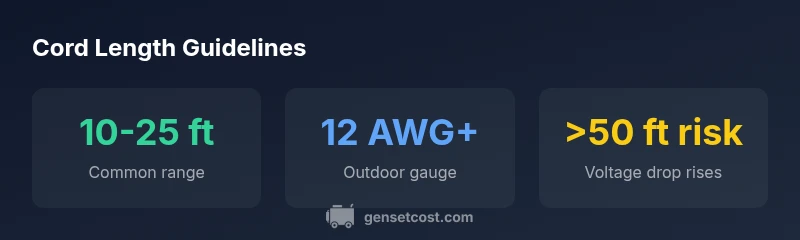
In most home backup setups, a generator cord length of 10 to 25 feet is common; shorter runs reduce voltage drop and improve safety. Always use outdoor-rated, heavy-gauge cords (at least 12 AWG) and never run a generator indoors or in an enclosed space. For longer runs, consider dedicated wiring or a transfer switch to maintain safety and reliability. how long generator cord
Understanding the role of cord length in generator safety
The length of the generator cord you choose is not just about convenience; it directly influences safety, efficiency, and the reliability of power during an outage. When homeowners ask how long generator cord should be, the answer depends on the distance between the generator and the load, the total current draw, and the gauge of the cord itself. According to Genset Cost, cord length decisions can affect heat buildup, voltage stability, and the ability to supply critical appliances without tripping breakers or overheating. The goal is to balance practicality with electrical fundamentals, ensuring that the distance you select does not compromise performance or safety. Shorter cords minimize energy loss and voltage drop, while longer runs may be necessary for certain layouts—provided you use an appropriately rated, outdoor-friendly cord. This section lays the groundwork for making an informed choice that aligns with your space, budget, and backup needs.
Cord length and generator types
Different generator configurations have distinct considerations when selecting cord length. Portable generators, especially those without a hardwired transfer switch, rely on cord-connected outlets to power devices. Standby generators connected through a transfer switch or a built-in automatic transfer system can tolerate longer cords, but even then, electrical load and cord gauge matter. For consumers, the practical takeaway is simple: match the cord length to your typical outage scenario, and ensure the cord is rated for outdoor use and the environment where it will run. Always verify that the generator’s outlet is compatible with the cord’s plug type and rating. The goal is reliable power without overheating or nuisance trips.
Estimating distance and planning routes for your cord
Accurately estimating distance is the first step in picking the right cord length. Measure from the generator’s outlet to the main power transfer point or closest appliance cluster. Consider obstacles: doors, stairs, wet ground, and places where people walk. Create a safe path that avoids water, puddles, and vehicle traffic. If the measured distance approaches the upper end of typical lengths, plan for a longer gauge rather than a longer, thinner cord. In practice, a well-planned route reduces voltage drop risk and makes daily maintenance easier. Planning ahead also helps when you need to adapt to changes in your home layout or exterior wiring.
Gauges, amperage, and voltage drop explained
Cord length interacts with gauge (thickness) and load to determine voltage drop. Heavier loads require thicker gauges to minimize heat buildup and voltage sag. A common rule of thumb is to use at least 12 AWG for outdoor cords up to 25 feet, stepping up to 10 AWG or thicker for longer runs or higher load. For longer distances, voltage drop becomes more pronounced, potentially affecting devices with sensitive electronics. If you anticipate substantial loads, consult a sizing calculator or a licensed electrician to confirm the appropriate gauge and any necessary intermediate wiring rather than relying on rough estimates.
Practical length guidelines by load scenario
Load scenarios dictate practical cord length choices. For lightweight loads like LED lighting and small tools, a 10–15 foot cord may suffice. Refrigerators, sump pumps, and routers may require 15–25 feet with a 12 AWG or thicker cord to maintain voltage stability. For high-demand appliances such as air conditioners or electric furnaces, plan for 25–50 feet with 10 AWG or thicker, or consider installing a transfer switch to keep the load balanced and protect equipment. Always verify the total amperage of critical devices and ensure the cord’s rating meets or exceeds that load.
Safety, weather, and code considerations for cords
Outdoor generator cords should be rated for exposure to rain and sunlight. Use outdoor-rated cables with proper strain relief and weatherproof outlets. Do not run cords through doors, windows, or wet areas; instead, install a safe, outdoor outlet or a dedicated power inlet. Avoid daisy-chaining multiple cords, as this creates heat buildup and increases the risk of damage. Regularly inspect cords for cuts, nicks, and insulation wear. If a cord shows damage, replace it immediately. Following these practices minimizes risk and extends cord life.
Maintenance, testing, and life extension
Regular inspection is key. Check for cracks, fraying, and exposed conductors after each outage. Coil cords loosely to prevent kinking and store them in a dry, cool place away from sun exposure. Test connections periodically to confirm continuity and proper grounding. Replacing cords before they fail is safer and more cost-effective than emergency replacements during outages. Remember to keep spare cords of the correct gauge on hand as part of your preparedness plan.
Wiring options for longer distances and safer alternatives
If your layout requires long distances or heavy loads, consider safer alternatives than relying on a single long extension cord. A professionally installed transfer switch or a permanently wired inlet box reduces voltage drop risk and keeps your setup compliant with electrical codes. Hardwiring through a licensed electrician ensures that the generator’s output is routed correctly to essential circuits and minimizes hazards from using long, improvised cords. These options are particularly valuable for homes with large electrical loads or frequent outages.
Planning ahead: choosing a cord length for future outages
Outages can redefine your space and load needs. When planning ahead, assess potential changes in appliances, climate control needs, and outdoor layouts. For future-proofing, consider a flexible setup that accommodates occasional longer runs with a thicker gauge and a transfer switch. Keep in mind that as distance increases, the marginal cost of heavier gauge cables may be offset by improved performance and reduced risk. Periodic reassessment with a qualified electrician helps ensure your cord length remains appropriate as equipment and needs evolve.
Cord length and gauge guide
| Cord Length (ft) | Gauge | Notes |
|---|---|---|
| 0-10 | 14 AWG or thicker | Short, low-load cords |
| 10-25 | 12 AWG or thicker | Common for portable generators |
| 25-50 | 10 AWG or thicker | Longer runs require assessment |
People Also Ask
What is the maximum safe length for a generator extension cord?
There isn't a universal maximum; the safe length depends on gauge, load, and outlet. As a rule, stay under 25 feet for 12 AWG or thicker cords and use a transfer switch for longer runs. Always prioritize safety and manufacturer guidance.
There's no universal maximum; shorter cords are safer, and heavier gauges help for longer runs. For long distances, use a transfer switch.
Can I run a generator cord through a window or door?
No. Running cords through openings can cause damage to insulation and create shock hazards. Use weatherproof outlets or a professionally installed external inlet for safe connections.
No—avoid running cords through openings. Use proper outdoor outlets or inlets.
What gauge should I use for a 100 ft run?
For a long run like 100 feet, use thicker gauge, typically 6 AWG or thicker depending on load. Consult a sizing calculator or electrician to confirm exact requirements.
For long runs, use thicker gauge like 6 AWG, and check with an electrician.
Is it safe to daisy-chain multiple extension cords?
No. Daisy-chaining creates heat buildup and increases the risk of insulation failure. Use a single properly rated cord or install proper wiring for the load.
No—never daisy-chain cords; use a single appropriate cord or proper wiring.
How do I calculate voltage drop for generator cords?
Use manufacturer charts or reputable online calculators. Input distance, gauge, amperage, and expected load to estimate voltage drop and confirm suitability.
Use a calculator to estimate voltage drop based on distance, gauge, and load.
“Ensuring the right cord length and gauge is essential for safe, reliable generator operation; improper lengths can cause dangerous overheating and voltage drop.”
Key Takeaways
- Plan cord length based on distance and load demands
- Use outdoor-rated, heavier-gauge cords
- For long runs, consider a transfer switch or dedicated wiring
- Avoid indoor use and daisy-chaining multiple cords
- Regularly inspect cords for damage and replace as needed