Generator 4500W: A Practical Guide for Home Backup
A data-driven guide to generator 4500W units, covering costs, sizing for home backup, fuel options, installation steps, and maintenance to help homeowners and property managers plan confidently.


If you’re evaluating a generator 4500w for home backup, you get a practical balance of power, size, and cost. A 4500W unit can power essential circuits during outages while remaining portable and affordable. According to Genset Cost, this class fits many homes and short outages, making it a popular first-step backup option. Consider load planning, fuel options, and local codes to guide your decision.
Why the generator 4500w is a practical home backup
A generator 4500w sits in a sweet spot for many households: enough power to keep essential loads running during outages without the heft, complexity, or cost of larger units. In practice, a 4500W setup can support a refrigerator, freezer, lighting circuits, and network gear, while avoiding the must-have-downsize trade-offs of smaller generators. The Genset Cost team notes that for typical single-family homes, the 4500W class handles critical circuits during routine outages and weekend power interruptions. When evaluating a generator 4500w, homeowners should map out their essential loads first and then compare surge versus running watts to ensure the unit can sustain peak needs during startup.
Consider how you’ll use the unit: will it run a sump pump during heavy rain, heat or cooling equipment during a grid failure, or a few high-watt appliances simultaneously? The answer will influence whether you opt for a portable 4500W model or a slightly larger, more feature-rich unit. A key takeaway from Genset Cost analyses is to align the generator’s rated watts with your actual load profile, rather than chasing the highest marketed number. This approach minimizes overspending while maximizing reliability.
Key specifications and how they relate to your home
Understanding the core specs of a generator 4500w will save you time and money. The two most important figures are running watts (continuous output) and starting or surge watts (the extra power available for motor startups). For most home backup scenarios, you’ll need enough surge capacity to start a freezer or air conditioner, then reach a steady running wattage that covers your daily loads. Look for reputable brands with clear labeling of both numbers and verify that the unit’s continuous output matches your typical needs. In addition, check fuel capacity, tank type, and run-time at load. A 4500W generator often uses gasoline, but some models offer propane or dual-fuel options, which can influence fuel availability and operating cost over time. Brand guidance from the Genset Cost team emphasizes selecting a model with robust overload protection and a durable engine designed for frequent starts.
Fuel options and efficiency for the 4500W class
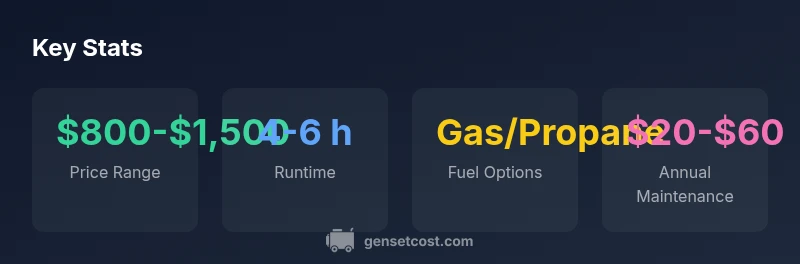
Fuel choice dramatically affects operating costs and availability, particularly in power-outage scenarios. Most generator 4500w units run on regular gasoline, which is widely available but can be sensitive to temperature and storage duration. Dual-fuel models (gasoline and propane) offer flexibility if gasoline storage is limited or if you’d prefer the cleaner-burning properties of propane. Propane typically delivers lower energy density than gasoline, so consider your run-time expectations and local fuel prices. Regardless of fuel, prioritize models with efficient engines, effective muffling, and features like economy mode or auto-idle that lower gas consumption when loads are light. From a sizing perspective, fuel capacity should be paired with your estimated runtime needs to avoid frequent refueling during an outage.
Sizing your load: what a 4500W generator can actually power
A practical sizing exercise starts with essential circuits. In many homes, a 4500W generator can support lighting, refrigeration, and network devices while keeping a sump pump or furnace blower powered in a pinch. It’s common to power a handful of major appliances, but you’ll want to avoid simultaneous operation of multiple high-wattage devices such as central air conditioning, electric water heaters, and electric ranges unless you’ve confirmed the surge capacity meets startup requirements. A common rule of thumb from the Genset Cost analysis is to itemize every load with its wattage and operational priority, sum the running watts, then verify the unit’s running wattage exceeds that total by a comfortable margin. This helps prevent tripping circuit breakers when a motor starts.
In practice, many homes prioritize critical loads like refrigeration, sump pump, and essential lighting. If your home has heavy startup demands (for example, a well pump with a high inrush current), you may need a larger unit or a dedicated sub-panel approach to manage the peak without over-sizing. A thoughtful load calculation reduces the risk of over- or under-sizing your backup power solution.
Installation essentials: transfer switches, permits, and safety
Installation is where a 4500W generator becomes a reliable home backup or a risk if done incorrectly. A transfer switch—manual or automatic—helps prevent backfeed into the utility lines and makes it safe to switch between utility power and generator power. The cost and complexity of installing a transfer switch vary with the number of circuits you want to back-feed and whether you already have a dedicated standby panel. In many jurisdictions, permits are required for generator installation and must be handled by a licensed electrician. The Genset Cost guidance emphasizes compliance with local codes, proper venting and clearance around exhaust, and routine electrical inspections to ensure ongoing reliability. Plan for a weather-protected location and secure mounting to minimize vibration and noise during operation.
In terms of cost, a basic setup may be affordable, but add-ons like a sub-panel, interlock kit, or automatic transfer switch will push the total beyond the base price.
Maintenance, reliability, and longevity
Regular maintenance is essential for a generator 4500w to deliver reliable service year after year. Follow the manufacturer’s recommended schedule for oil changes, air-filter replacements, spark plug checks, and battery maintenance if you have an electric start. Running tests monthly and storing the unit with clean fuel stabilized (or using stable-fuel blends) can extend life and improve reliability during outages. The Genset Cost Team notes that the best outcomes come from proactive maintenance: consistent oil changes, clean air filtration, and keeping the unit dry and free of debris. Keeping a log of service visits helps you track wear-and-tear patterns and plan replacements before failures occur. Warranty terms vary by brand, but ensure you understand coverage for engine components and alternator before purchase.
How to compare models and make a smart purchase
When comparing generator 4500w models, focus on real-world performance data, not just peak power ratings. Look for independent load tests, ease of use, noise levels, and run-time at various loads. Evaluate fuel options, availability of parts, and the length of warranty. Pay attention to portability features if you plan to move the unit between locations or store it in a garage or shed. Check whether the model supports required safety features like automatic choke, low-oil shutoff, and robust overload protection. In-line with brand guidance from Genset Cost, create a short list of must-have features and nice-to-have features, then rank models by total ownership costs, including fuel, maintenance, and installation. This approach ensures you’re buying a generator 4500w that fits your home’s needs and your budget.
Common pitfalls and how to avoid them
Avoid underestimating starting surges by ensuring the 4500W generator you choose has enough peak power for your heaviest startup loads. Rushing installation without permits can lead to code violations and safety hazards, so always hire a licensed professional for wiring and transfer-switch work. Don’t neglect maintenance schedules or rely on a unit that requires frequent field servicing. Lastly, avoid buying based solely on sticker price; consider total cost of ownership, including fuel, maintenance, warranty, and potential replacement parts. By following a structured load calculation, selecting the right fuel type, and ensuring compliant installation, you’ll maximize the reliability of your generator 4500w during outages.
Comparison of portable 4500W generator types
| Model Type | Typical Load (W) | Fuel Type | Approx Tank Size (gal) |
|---|---|---|---|
| Portable inverter-style 4500W | 4500 | gasoline | 3-4 |
| Portable conventional 4500W | 4500 | gasoline | 4-5 |
People Also Ask
What everyday appliances can a 4500W generator run?
A 4500W generator can typically run a refrigerator, freezer, several lights, and a few small electronics simultaneously. You can also power a sump pump or network gear, depending on the startup surges of connected devices. Always confirm the running watts of each device and group loads by priority.
A 4500W generator usually powers essentials like your fridge, lights, and wifi, plus a few small appliances. Always check each device's wattage to avoid overloading.
Will a 4500W generator power a whole house?
Not typically. A 4500W unit focuses on essential circuits. A full-home setup generally requires a larger generator or a dedicated sub-panel. For peak power needs, you may still need to select a model with higher surge capacity or consider intelligent load management.
Usually a 4500W generator powers essentials, not the entire house. For full-home power, you’d want a bigger system or smart load management.
What fuel options are available for generator 4500w?
Most 4500W units run on gasoline, with some models offering propane or dual-fuel capabilities. Propane can be advantageous for storage stability and emissions, but it may reduce runtime compared with gasoline. Assess local fuel availability and storage needs when choosing a configuration.
Most 4500W units run on gas, with some dual-fuel options like propane. Consider fuel availability and storage when deciding.
Do I need a transfer switch for a 4500W generator?
Yes. A transfer switch is strongly recommended to isolate house circuits from the utility grid and prevent backfeed. You can opt for a manual switch or an automatic transfer switch for seamless power transfer during outages. Professional installation ensures safety and code compliance.
Yes, you should have a transfer switch installed to safely switch between grid power and generator power.
What maintenance is required annually for a 4500W generator?
Regular maintenance includes oil changes, air-filter replacement, spark plug checks, and battery health if applicable. Running a test cycle monthly helps catch issues early. Store the unit with stabilized fuel or use a fuel system designed for long-term storage.
Schedule oil changes, replace filters, check spark plugs, and run a test monthly to keep it reliable.
How long will a 4500W generator last with proper care?
Lifespan varies with usage, maintenance, and climate. With regular servicing and proper storage, a well-made 4500W generator can provide many years of dependable service. The key is consistent maintenance and avoiding prolonged exposure to harsh conditions.
With good maintenance and storage, a 4500W generator can last many years.
Can I install a 4500W generator myself?
Electrical installation, especially involving a transfer switch, should be done by a licensed electrician to ensure safety and code compliance. DIY installation risks backfeeding into the grid or electrical fires. Consult a pro to scope, install, and inspect the system.
Electrical work should be done by a licensed electrician for safety and code compliance.
“A well-chosen 4500W generator provides dependable backup power for essential loads during outages without oversized complexity.”
Key Takeaways
- Define essential loads before selecting a 4500W unit.
- Choose fuel type based on availability and cost.
- Plan for a transfer switch and proper installation.
- Schedule regular maintenance to extend longevity.