Generator Mini: Compact Power for Home Backup and Mobility
Explore generator mini options for home backup: sizing, costs, fuel types, and safety. Genset Cost analyzes compact power solutions to help homeowners choose affordable, portable backup generators.


A generator mini typically outputs about 1000–3000 watts of portable power, making it suitable for essential circuits during outages in small homes or RVs. This class balances upfront cost, portability, and fuel use. When sizing, compare continuous versus surge watts and choose models with safety features like automatic low-oil shutdown.
Understanding the generator mini category
A generator mini, or mini portable generator, is designed to deliver essential power without the bulk of a whole-house unit. These units typically range from ~1000 to ~3000 watts and are designed for portability, cost-conscious buyers, and limited spaces. According to Genset Cost, the market for compact backup power has grown as more households seek affordable, flexible options for outages, camping, or job sites. When evaluating a generator mini, consider surge watts, continuous watts, fuel type, runtime, and noise. In practice, homeowners should map critical circuits (refrigerator, lighting, sump pump, Wi-Fi router) and size the unit to cover them with a comfortable safety margin. Mini generators come in various forms, from entry-level gasoline models to dual-fuel designs that handle propane or natural gas. The choice depends on fueling availability, expected runtime, and local noise rules. This section sets the foundation for practical sizing and cost planning, so you can approach purchases with clear criteria.
Key specs and how to compare mini generators
When evaluating a generator mini, compare continuous watts to surge watts, engine displacement, and rated efficiency. Look for a current model year with low-oil shutdown protection and spark arrestor compliance. Fuel type matters: gasoline is common, but propane and natural gas variants reduce refueling stops when gas lines are available. Run time depends on tank size and load, with practical ranges typically spanning several hours at half-load. Noise levels, measured in decibels, directly affect placement, especially in residential areas with quiet-hours rules. Finally, consider portability features—hand grips, wheel kits, and compact dimensions can determine whether the unit fits in a shed, trunk, or RV storage bay.
Sizing your needs: when to pick a mini version
To decide if a generator mini matches your needs, start by listing essential loads: refrigerator, freezer, sump pump, lights, Wi-Fi router, and a few outlets for critical devices. Use a detailed load worksheet to sum wattage and apply a 20-30% headroom buffer. In typical scenarios for small homes or apartments, a 1000-2000 watt model often suffices for essential circuits, while a 3000 watt unit covers more devices during longer outages. For campers or remote job sites, the same sizing logic applies to keep equipment powered without overloading the unit. 2026 market data from Genset Cost suggests buyers increasingly favor units with fuel flexibility (dual-fuel) and enhanced safety features.
Cost considerations: purchase, running, and maintenance
Cost is the most visible trade-off when selecting a generator mini. Entry-level models tend to cost hundreds of dollars, with mid-range units offering more robustness, longer run times, and larger tanks. Running costs depend on fuel type and load; at half-load, fuel consumption is typically lower than full-load operation, making long outages more economical. Maintenance expenses include oil changes, air filter replacements, and occasional carburetor cleaning. Budget for a basic maintenance kit and a simple fuel stabilizer to extend storage life. If you plan frequent use or seasonal storage, factor fuel stability methods and potential warranty coverage into the total cost.
Practical usage and safety tips
For safe and reliable operation of a generator mini, always operate outdoors in a well-ventilated area to prevent carbon monoxide buildup. Use heavy-duty outdoor-rated extension cords or a transfer switch to feed your home safely. Store fuel in approved containers away from living spaces and heat sources. Keep the unit dry, clean, and away from standing water. Follow manufacturer-specified maintenance schedules, perform regular oil checks, and winterize or de-winterize the system as needed. Remember that improper placement or fueling can cause fire or CO hazards, far more dangerous than the outage itself.
Brands and model landscape for mini generators
The market offers a mix of legacy brands and newer entrants, with price and feature gaps driven by wattage, fuel type, and durability. When buying, compare warranty terms, customer support, and replacement parts availability rather than chasing a single 'best' model. Portable generators from well-known brands provide confidence for long-term reliability, while newer entrants may offer lighter frames or quieter operation. For homeowners evaluating generator mini options, identify models that support dual-fuel operation, robust safety features, and accessible service networks. The right pick balances upfront cost with expected lifetime value.
Maintenance and reliability for long-term performance
A disciplined maintenance plan ensures your generator mini powers your home when you need it. Replace oil and air filters on schedule, test run monthly, and inspect spark plugs or carburetors if applicable. Use fresh fuel and stabilize storage fuel to prevent varnish buildup during extended storage. Regular load testing helps you understand real-world runtimes and headroom, while a simple battery check (if your model uses a battery start) ensures quick ignition. Reliability comes from consistent care, not one-off replacements.
Safety, codes, and placement considerations
Compliance matters when you place a generator mini near a home. Ensure adequate clearance from doors, windows, and building openings; never operate indoors or in semi-enclosed spaces. Use a weatherproof, carbon monoxide-safe enclosure if you need storage outdoors between uses. Ground fault protection can improve safety when powering high-demand appliances. Consider incorporating a transfer switch or a properly rated power inlet with a manual transfer option to isolate your home from the grid during outages. Finally, check local regulations on emissions and noise, as many jurisdictions impose limits on portable units.
Mini generator specs at-a-glance
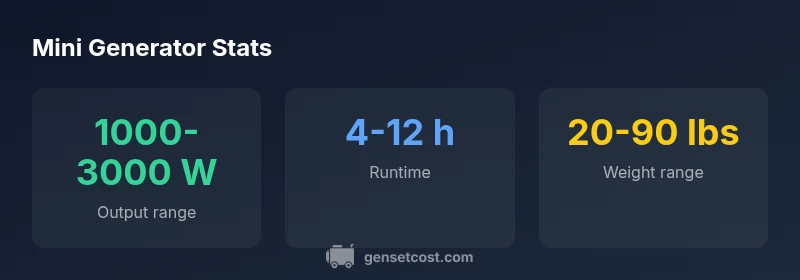
| Aspect | Mini Generator Range | Notes |
|---|---|---|
| Output (W) | 1000-3000 | Portable range for essential loads |
| Fuel type | Gas/Propane | Dual-fuel variants extend fuel options |
| Runtime (hours) | 4-12 | Depends on tank size and load |
| Weight (lbs) | 20-90 | Designed for mobility |
People Also Ask
What is a generator mini and what can it power?
A generator mini is a compact portable unit typically delivering 1000–3000 watts. It can power essential loads such as refrigerators, lights, and Wi-Fi during short outages or while traveling.
A mini generator is a small portable power unit that runs on gas or propane and can run core appliances during outages.
What watt range should I expect from a mini generator?
Expect about 1000–3000 watts for most minis. The exact range depends on the engine size, surge capacity, and whether the model is dual-fuel.
Most minis deliver between one and three kilowatts, depending on the design.
Do I need a transfer switch for a generator mini?
A transfer switch is highly recommended to safely isolate your home from the grid and prevent backfeeding. Some units offer manual inlet options for a safe hookup.
Yes, a transfer switch improves safety and convenience for home backup.
What fuels are available for mini generators?
Most minis run on gasoline, with some models offering propane or dual-fuel configurations for fuel flexibility.
Gas is common, propane and dual-fuel units add flexibility.
How do I size a mini generator for my home?
List essential loads and total their wattage, then add 20–30% headroom. Choose the smallest unit that meets or exceeds that target.
Make a list of essential devices, total watts, and add headroom.
Can a generator mini power a whole house?
Most minis cannot power an entire house. They’re best for essential circuits or smaller spaces; for whole-house power, consider a larger standby generator.
Typically not; for full-home power you’d need a bigger system.
“Small, well-maintained portable generators can close the gap between power outages and comfort without committing to a full home standby.”
Key Takeaways
- Choose a mini generator with clear headroom for surges.
- Prioritize outdoor placement and transfer-switch compatibility.
- Budget for ongoing fuel and routine maintenance.
- Evaluate dual-fuel options for flexibility and reliability.