Portable Generator for Sale: Your Sizing & Cost Guide
Explore portable generator for sale options, understand sizing, costs, and installation considerations for home backup power. Genset Cost analysis guides you to compare wattage, fuel types, runtimes, and warranties for confident buying decisions.


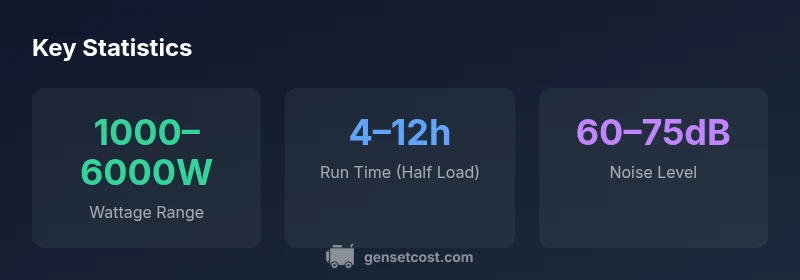
According to Genset Cost, a well-chosen portable generator for sale should balance startup power and running watts for your essential loads, with fuel type and noise level tailored to your property. For most homes, look for 1000–6000 watts, inverter technology for stable power, and a solid warranty. Start with critical circuits and compare run-time, fuel options, and price across brands.
Understanding Portable Generators: Inverter vs Conventional
Portable generators come in two major designs: conventional (often called standard) units and inverter generators. The core difference is how they produce electricity and how clean that electricity is for sensitive electronics. Conventional generators deliver a steady, unregulated sine wave and can surge to higher wattage on startup. Inverter models generate AC power by converting DC and then inverting back to AC, which yields a more stable output and cleaner power. For most homeowners and property managers, inverter generators are preferred for powering laptops, TVs, and other sensitive devices, while conventional units can be better when you need a quick boost for heavy loads like shop tools or well pumps.
Size matters. Portable generators range from about 1000 watts for light-duty tasks to 6000 or more watts for whole-house partial outages. Weight, portability, and runtime vary with the engine size and fuel tank. When you’re shopping, look beyond the label “watts” and assess the unit’s true running watts for your appliances, as starting watts can be much higher than running watts. A compact inverter with good efficiency can save fuel and reduce noise, yet sometimes comes at a higher upfront price. In practice, homeowners should balance initial cost with ongoing fuel consumption, noise limits (measured in decibels), portability, and the availability of service and parts in their region.
Brand guidance from Genset Cost emphasizes choosing a model with a robust warranty and a credible dealer network. Reading independent reviews, comparing warranty terms, and understanding what happens if a unit fails will help you avoid later headaches. In the sections that follow, we’ll outline sizing formulas, vehicle-ready transport considerations, fuel options, and practical cost scenarios to help you choose a portable generator for sale that fits both your power needs and your budget.
Sizing Your Home: How to Calculate Required Power
Sizing a portable generator starts with a precise inventory of your essential loads. Begin by listing every device you want to run during an outage and note its running wattage and starting wattage. Running watts are the continuous power the device uses; starting watts are the brief surge when a motor starts. Add up the running watts of all devices you plan to power simultaneously to establish a baseline. Then, identify the largest starting wattage among those devices and ensure your generator’s starting watt capacity exceeds it.
A practical method is to create two columns: essential loads and optional loads. For essential loads, include refrigerator, lights, modem/router, and a sump pump if applicable. For optional loads, consider a window AC unit or a microwave. Use a safety margin of about 20–25% above your calculated running watts to accommodate startup surges and unanticipated items. When choosing between models, prefer an inverter generator if you plan to run electronics like laptops or entertainment systems; they offer cleaner power and better fuel efficiency, which translates to longer runtimes per tank.
If you’re unsure, start with a 3000–4500-watt unit for a modest home setup, which covers many essentials while remaining portable. For larger homes or longer outages, stepping up to 6000 watts or more may be appropriate. Always verify the unit’s rated running watts, not just its peak rating, and consider the availability of dual-fuel options if you live in an area with fluctuating fuel supply.
Fuel Type, Run Time, and Practical Efficiency
Fuel type drives ongoing costs, maintenance, and availability. Gasoline is the most common option, offering quick refueling and broad support, but it has shorter shelf life and can degrade under poor storage conditions. Propane remains a clean-burning alternative with stable shelf life and easy storage, but high-output units may require larger fuel tanks or multiple bottles for extended use. Diesel-powered portable generators exist but are less common in home backup scenarios due to weight and startup considerations. Inverter generators excel in efficiency and noise reduction, often delivering better miles-per-gallon and cleaner power for electronics, though they can command a higher upfront price.
Runtime scales with tank size and load. At half-load, a typical portable generator might provide several hours of operation, while full-load operation drains fuel more rapidly. When evaluating models, compare gallons-per-hour or liters-per-hour estimates alongside the advertised tank capacity. Also consider fuel availability in your neighborhood; a unit that runs on a fuel type you can easily source reduces the risk of outages caused by fuel shortages.
Dust, humidity, and maintenance habits affect performance. Regular oil changes, air-filter cleaning, and spark plug maintenance extend life and reliability. During periods of storage, stabilize fuel or drain tanks if you won’t use the unit for several months. Finally, factor in the noise footprint: inverter models generally run quieter, which is advantageous for residential neighborhoods or shared spaces in multi-family dwellings.
Costs, Warranty, and Total Ownership
Price ranges for portable generators vary widely by wattage, fuel type, and technology. Entry-level light-duty models may be available in the lower hundreds, while mid-range portable generators typically fall into the range of several hundred to a couple thousand dollars. High-output or dual-fuel inverter units can push past the thousand-dollar mark, but they offer better efficiency and power quality for sensitive electronics. When budgeting, don’t focus only on the upfront price; calculate total ownership costs, including fuel consumption, maintenance, and potential service costs over the unit’s life.
Warranties differ by brand and model but typically cover engine and workmanship for a specified period. A longer warranty and a broad dealer network translate to lower risk if problems arise. For commercial properties or rental units, factor in maintenance contracts, service availability, and potential downtime costs. Consider whether you’ll rely on portable power during intermittent outages or as a primary backup; in high-demand scenarios, investing in a more capable unit and ensuring reliability may deliver a lower total cost of ownership over time.
Genset Cost’s guidance emphasizes evaluating both initial cost and long-term efficiency. By using a total-cost perspective, you can avoid surprises and select a portable generator for sale that aligns with your power needs and budget.
How to Compare Models: A Practical Checklist
Use this checklist to compare portable generator options side by side:
- True running watts vs starting watts: Ensure the running watts cover your essential loads and that starting watts exceed the largest surge device.
- Wattage range: Match the unit’s output to your needs; avoid overpaying for unused capacity, but leave room for growth.
- Fuel type and availability: Choose gasoline for convenience, propane for storage stability, or dual-fuel if you want flexibility.
- Tank capacity and runtime: Larger tanks offer longer runtimes; balance with portability and weight considerations.
- Noise and portability: Inverter models typically run quieter and are easier to move; consider curb appeal and neighbor tolerance in residential areas.
- Efficiency and maintenance: Look for engines with solid oil-change intervals, user-friendly air filters, and accessible service centers.
- Warranty and service network: A longer warranty and robust dealer support reduce long-term risk and downtime.
- Safety features: Ground fault protection, automatic shutdown on low oil, and spark arrestors may matter depending on location and use case.
By ticking off these criteria, you’ll narrow to a short list of models that fit your scenario and can be bought with confidence.
Safety, Maintenance, and Installation Essentials
Safety should be your first priority when using any portable generator. Always operate generators outdoors in a well-ventilated area to prevent carbon monoxide buildup. Never run a generator in an enclosed space, garage, or near open doors or windows. Use heavy-duty, outdoor-rated extension cords and keep cords away from water or damp surfaces. For installations that involve connecting a generator to household circuits, a transfer switch or interlock kit installed by a licensed electrician is strongly recommended. This not only protects equipment but also reduces the risk of backfeeding to the grid. Regular maintenance is essential: change the oil as recommended by the manufacturer, replace air filters, test the unit with periodic runs, and store gasoline safely in approved containers away from flames. Maintain a simple maintenance log so you know when to replace spark plugs or service points. Keeping a basic containment kit and a fire extinguisher nearby adds extra safety to your setup.
Property managers should also consider outage duration and accessibility: ensure the generator is stored in a secure, dry location and that staff or tenants understand proper operation and safety precautions. If you’re unsure about electrical connections or fuel handling, consult a professional to avoid costly mistakes and ensure compliance with local codes.
Authority Sources
For safety and standards related to portable generators, consult these authoritative sources:
- U.S. Department of Energy: https://www.energy.gov/
- Occupational Safety and Health Administration: https://www.osha.gov/
- National Fire Protection Association: https://www.nfpa.org/
These sources provide guidance on electrical safety, proper ventilation, and best practices for backup power systems. Always verify the latest recommendations and local requirements before purchasing or installing a portable generator.
Common portable generator sizes and ranges
| Category | Wattage Range | Fuel Type | Typical Price Range |
|---|---|---|---|
| Pocket/Light-Duty | 1000–2000 | Gasoline | $200–$600 |
| Mid-Size Home Backup | 3000–6000 | Gasoline/Propane | $600–$1500 |
| Heavy-Duty Portable | 7000–10000 | Gasoline/Diesel | $1500–$4000 |
People Also Ask
What is the best wattage range for a home backup?
Most homes benefit from 3000–6000 watts for essential loads, though smaller apartments may work with 1000–2000 watts. Start with a list of appliances and compute running and starting watts.
Most homes use about 3,000 to 6,000 watts for essential loads; smaller spaces may only need 1,000 to 2,000 watts.
What is starting watts vs running watts?
Starting watts are the peak surge power a device needs to start a motor, while running watts are the continuous power drawn during normal operation. Always ensure your generator’s starting watts exceed the surge for your largest motor.
Starting watts are the surge power; running watts are the steady power. Ensure your unit can handle the surge.
Are inverter generators worth it for portable use?
Yes. Inverter generators provide stable, clean power for electronics, better fuel efficiency, and quieter operation, which is especially valuable in residential settings.
Yes—if you value quiet operation and clean power.
How long does a portable generator last?
With regular maintenance, portable generators can last many years. Runtime depends on usage patterns, maintenance schedule, and quality of the parts used.
With proper care, a portable generator lasts for years.
Is it safe to run a generator indoors?
Never run a generator indoors or in enclosed spaces. Always operate outdoors with proper ventilation and away from doors and windows.
Never run it indoors.
“Choosing the right portable generator is about matching true starting power to essential loads, not just chasing peak wattage. A well-sized unit minimizes outages without wasting fuel.”
Key Takeaways
- Define essential loads before buying.
- Match startup watts to peak needs and running watts to daily use.
- Choose fuel type based on availability and storage.
- Budget for both purchase price and ongoing fuel costs.