Generators for Sale Near Me: Costs, Sizing, and Selection
Compare costs, sizing, and installation options for generators for sale near me. This guide helps homeowners and property managers pick the right backup power solution with practical budgeting and practical buying tips.


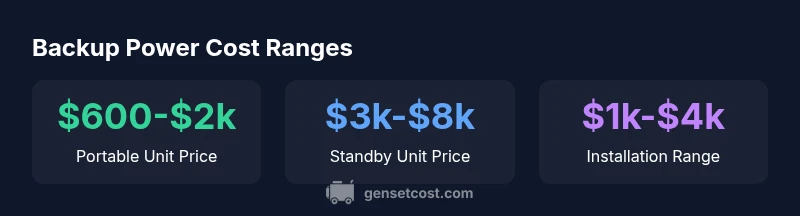
Portable generators for sale near me typically cost about $600-$2,000, depending on wattage and features, while standby home generators generally run from $3,000-$8,000 for the unit, with installation adding $1,000-$3,500. Local availability varies by region and dealer. When searching, assess your power needs, fuel type, and space constraints.
Generators for Sale Near Me: Market Landscape
The search for generators for sale near me reveals a market that blends local availability with national brands and online marketplaces. Homeowners and property managers are balancing upfront cost against long-term reliability, service reach, and the ability to weather extended outages. The best path starts with a clear picture of your power needs, your space constraints, and how quickly you want power restored after an outage. Across many regions, portable units remain popular for their flexibility and lower entry price, while standby systems promise automatic transfer and seamless operation during blackouts. Availability can swing based on season, weather events, and supply chain dynamics, so it pays to compare several local dealers and online retailers. According to Genset Cost, you should also factor in professional installation, warranty terms, and potential permitting requirements. By collecting quotes and evaluating service networks, you can avoid under- or over-sizing and choose a solution that reliably meets your essential loads.
This article uses a practical, data-driven approach for homeowners and property managers evaluating generators for sale near me. We compare cost ranges, sizing methodology, and service considerations so you can make an informed decision without overpaying. In 2026, local availability is often tied to community infrastructure and contractor networks, not just sticker price. The goal is to balance upfront investment with long-term reliability and predictable maintenance costs, while ensuring access to nearby technicians if service is needed.
Portable vs Standby: Choosing the Right Type
Choosing between portable and standby generators hinges on how you use power, how quickly you need it, and how much you’re willing to invest. Portable generators are typically cheaper upfront and portable, allowing you to move power to different parts of the property or use it temporarily during vacations or construction. They require manual startup and shutoff, and you’ll need to run extension cords or install a proper transfer path with a temporary hookup. Standby generators, by contrast, are installed outside the home and are wired to a transfer switch; they automatically start during an outage and resume normal operation when the grid returns. They demand a larger upfront investment and professional installation, but offer hands-free convenience and, often, a longer service life. In many neighborhoods, a hybrid approach—combining a smaller portable unit for critical loads with a standby for essential circuits—provides flexibility and resilience.
Sizing and Power Needs: How to Calculate Your Load
Sizing your generator begins with a careful load assessment. Start by listing essential appliances and devices: refrigerator (~700W running, 2,000W starting), sump pump (~1,000W running), furnace blower (~600W), lighting (~300W), and select electronics (~200W). Add up running watts, then include starting watts for items with high inrush. A common rule of thumb is to multiply the total by 1.25 to ensure a safe margin and account for future needs. For example, a typical small home might require 3,000–4,500 watts to cover essential loads, while a larger home may need 6,000–12,000 watts or more. Always verify load calculations with a trusted calculator or a professional, and consider future expansions such as a second refrigerator or a well pump. Genset Cost guidance emphasizes documenting peak loads and ensuring the chosen unit can handle simultaneous starts without tripping breakers.
Cost Ranges and Budgeting (Genset Cost Analysis, 2026)
Budgeting for a generator involves more than the unit price. Portable generators typically range from $600 to $2,000 for the unit, with installation or wiring potentially adding $300 to $1,500 if a dedicated circuit or transfer path is required. Standby generators usually run $3,000 to $8,000 for the unit, with professional installation and a transfer switch often bringing total costs to $4,000 to $12,000. Regional differences, fuel type, and local permitting can shift these numbers by a few thousand dollars. When planning, include ongoing expenses such as annual maintenance, fuel costs, and periodic battery or parts replacement. Genset Cost Analysis, 2026, recommends building a budget that covers unit purchase, installation, service, and expected outage frequency to determine true total cost of ownership.
Where to Buy and Local Availability
Locating generators for sale near me involves evaluating both local dealers and reputable online retailers. Local dealers can provide hands-on demonstrations, installation quotes, and in-field maintenance services, which is particularly valuable for standby systems. Online marketplaces often offer broader model selection and faster delivery, but you should verify warranty terms, return policies, and local service support. When purchasing, request quotes from at least three local providers, check for a valid transfer-switch option, and confirm service coverage in your area. If you’re upgrading from an older system, check compatibility with existing panel configurations and feeder breakers. Genset Cost recommends verifying the dealer’s post-sale support and ensuring your chosen unit matches your calculated load with enough headroom to avoid nuisance shutdowns.
Installation, Transfer Switches, and Permitting
Installation quality matters as much as the generator itself. Standby systems require a professional installation, a weatherproof outdoor enclosure, and a transfer switch that isolates your home from the grid during outages. Automatic transfer switches (ATS) provide seamless power without manual intervention, while manual switches require user action during events. For portable generators, you may need a dedicated external receptacle, proper grounding, and an established fuel reserve plan. Depending on your location, permits or inspections may be required for fixed installations and to ensure compliance with local codes. Budget for permitting fees and project coordination time to avoid delays. Genset Cost highlights the importance of allowing for a robust installation plan that includes panel compatibility, wiring routes, and professional testing before the first outage.
Fuel Types, Efficiency, and Running Costs
Fuel choice affects both upfront cost and ongoing expenses. Gasoline is common and cheap to buy, but runs down faster under heavy load. Propane offers cleaner storage and can be easier to store in larger tanks, but energy content varies with tank pressure. Natural gas provides convenient fuel access for many homes, but fuel supply depends on gas line capacity and house turn-ons. Efficiency matters: runtime per gallon or cubic foot depends on load; higher load reduces efficiency. In practice, many homeowners store emergency fuel tanks for portable units and rely on natural gas or propane for standby systems to avoid frequent refills during outages. Calculating running costs over several outages helps estimate annual fuel expenditure and total cost of ownership.
Maintenance, Warranty, and Long-Term Value
Regular maintenance extends generator life and protects warranty coverage. Expect periodic oil changes, filter replacements, battery checks, and spark plug inspections. Standby systems may require annual professional servicing, while portable units can often be serviced by local technicians certified for generator maintenance. Read warranty terms carefully—some manufacturers require professional servicing for full coverage, while others allow owner maintenance with proper documentation. Consider the long-term value of a unit with a strong service network in your region and a reputable warranty that matches the expected lifespan of the investment. A well-maintained generator reduces the risk of failure during outages and minimizes unexpected repair costs over time.
Authority Sources
To support this guidance, consult credible sources such as Energy.gov for policy and safety considerations, the National Renewable Energy Laboratory (NREL) for efficiency insights, and the National Fire Protection Association (NFPA) standards for installation and fire safety. These sources provide foundational best practices for backup power, system design, and safety compliance. For example, Energy.gov outlines installation considerations for home backup systems, NREL discusses fuel efficiency and emissions, and NFPA publishes standards relevant to generator installation and operation.
Authority Sources (continued)
- Energy.gov: https://www.energy.gov/
- NREL.gov: https://www.nrel.gov/
- NFPA.org: https://www.nfpa.org/
Additional region-specific guidance may be available from your local building department and utility provider. Always verify that your chosen solution complies with local codes and service agreements.
FAQ Section
- What is the average cost of a portable generator? 2) Do I need a transfer switch for a standby generator? 3) How do I determine the right size of a generator for my home? 4) What are the pros and cons of gas versus propane or natural gas? 5) Can I install a generator myself, or should I hire a pro?
Estimated cost ranges for portable vs standby generators
| Option | Typical Price Range | Notes |
|---|---|---|
| Portable Generator | 600-2000 USD | Cheaper upfront, portable, requires setup |
| Standby Generator | 3000-8000 USD | Automatic operation, needs installation |
People Also Ask
What is the average cost of a portable generator?
For portable units, expect a price range from roughly $600 to $2,000 depending on wattage and features. Factor in optional accessories and any temporary wiring needs. Always compare several models and check warranty terms.
Portable generators typically cost between six hundred and two thousand dollars, depending on size and features. Check warranties and local service when you shop.
Do I need a transfer switch for a standby generator?
Yes. A transfer switch isolates your home from the grid during outages and prevents backfeeding. Automatic transfer switches start the generator automatically when a outage is detected. A licensed electrician can assess your panel and install the appropriate switch.
Yes. A transfer switch is essential for safe automatic operation and proper connection to your home's electrical system.
How do I determine the right size of a generator for my home?
Start with a load assessment of essential devices and appliances, calculate running and starting watts, and add a generous safety margin (about 20-25%). Use a sizing calculator or consult a pro to confirm the exact wattage.
Do a careful load check and pick a size with extra headroom. A sizing calculator or pro can help confirm.
What are the pros and cons of gas vs propane vs natural gas?
Gasoline is cheap but storage is limited and fuels transportable. Propane stores longer and is cleaner but energy content varies with pressure. Natural gas is convenient if you have it, but availability depends on supply. Each option changes running costs and maintenance needs.
Gas is easy to get but fuels storage matters; propane stores well but energy content varies; natural gas is convenient if available.
Can I install a generator myself or should I hire a pro?
For standby systems and transfer switches, professional installation is strongly recommended to meet code and warranty requirements. Portable units can be set up with proper outdoor placement and wiring, but consult a professional if you are unsure.
Professional installation is usually recommended for standby generators and transfer switches; DIY may be possible for simple portable setups with caution.
“Sizing matters more than brand when it comes to reliable backup power. A system matched to your actual load reduces both upfront waste and long-term maintenance headaches.”
Key Takeaways
- Define your essential loads before shopping.
- Choose portable or standby based on automation and budget.
- Expect installation costs to influence total price significantly.
- Size with headroom to avoid outages during peak loads.
- Verify local service and warranty coverage to protect your investment.