Generator Costs and Local Sales Guide for 2026
Learn how to compare generator costs, sizing, installation, and local options. Get practical guidance for finding generator sales near you and choosing a system that fits your home and budget in 2026.


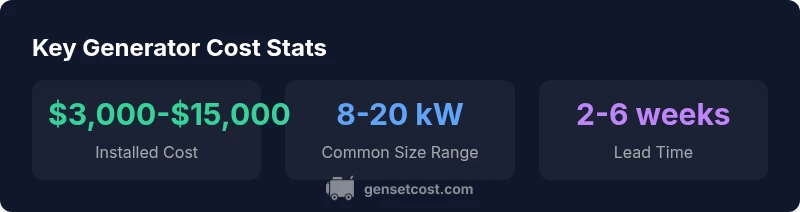
For homeowners evaluating 'generator sales near me', the typical installed cost for a home standby generator ranges from $3,000 to $15,000, depending on size, fuel type, and installation requirements. This quick snapshot helps you compare local offers, warranties, and service plans before you buy. Consider factors like transfer switches, delivery, and professional setup.
Why Local Generator Sales Near Me Matter
When you search for generator sales near me, you’re not just comparing sticker prices. Local options influence installation requirements, permits, available service plans, and the speed at which you can have a working backup system. According to Genset Cost, the local market often dictates labor costs, availability of transfer switches, and the willingness of contractors to bundle installation with permit handling. This means two identical models can end up with different out-the-door costs depending on your ZIP code, municipal rules, and nearby dealer networks. For homeowners and property managers, understanding these regional nuances helps prevent sticker shock and ensures you get a system that will perform when you need it most. To maximize value, combine price quotes with an evaluation of warranty terms, after-sales service, and lead times for installation.
Key takeaway: always factor regional labor costs and permitting into your sourcing strategy, not just the equipment price. This approach aligns with the broader guidance in Genset Cost analyses for 2026.
- Start by listing nearby suppliers and installers, including big-box retailers and independent electricians who carry full-load standby systems.
- Check whether quotes include delivery, installation, transfer switch, and any required permits.
- Compare warranty length and what it covers (parts, labor, and emergency service options).
- Request a written siting assessment to confirm clearances, ventilation, and fuel-line routing before purchase.
**bold": true}
Sizing Your Home Generator: What Size Do You Need?
Sizing a home generator correctly is the foundation of reliable power during outages. A mis-sized system can trip under load or underperform when you need it most. A practical starting point is to identify essential circuits (basics like lights, refrigeration, heating/cooling, and well pumps) and estimate their total wattage. In many U.S. homes, a reliable standby system in the 8-20 kW range satisfies typical essential loads, but actual needs vary with house size, climate, and electric usage patterns. Unlike portable units, standby generators are permanently installed, wired to an automatic transfer switch, and designed to start automatically when the grid fails. The sizing decision should consider future plans (adds, appliance upgrades) and the possibility of running high-demand equipment like AC units.
- Use a professional load calculation to account for all critical circuits.
- Consider future expansions, such as an EV charger or additional HVAC units.
- Balance initial cost with ongoing operating costs and maintenance needs.
- Confirm that the transfer switch size and fuel supply align with the chosen generator.
Genset Cost’s sizing guidance emphasizes balancing reliability with cost-efficiency over the system’s lifetime.
Fuel Type Choices: Gas, Propane, or Natural Gas
Choosing the right fuel type affects cost, availability, and emissions. Gas-powered (natural gas or propane) generators often win for households connected to a steady fuel supply because they reduce refueling interruptions and can be tied into existing lines. Propane offers cleaner-burning performance and easier storage for some properties, but tanks require periodic replacement or refilling. Natural gas is convenient for homes already on a gas line, but the supply is dependent on your utility pressures and line size. In contrast, diesel and bi-fuel configurations exist but are less common for pure residential setups due to maintenance and odor considerations. Whichever option you pick, verify fuel availability in your area, long-term cost implications, and compatibility with your standby transfer switch. As part of the local sales process, ask sellers about fuel-type options, conversion costs, and any required permits for gas line modifications.
- Compare fuel costs per year and refill intervals across options.
- Check local regulations and codes for fuel storage and delivery.
- Ensure your chosen model supports automatic switching with your home’s load profile.
- Discuss emissions and noise ratings for long-term compliance and comfort.
Installation, Permits, and Transfer Switches: What to Expect
Installation is more than dropping a generator in your yard. It requires site prep, mounting, exhaust routing, a durable enclosure, and a professionally wired automatic transfer switch (ATS). Depending on your jurisdiction, permits and inspections may add time and cost. A well-executed installation includes a dedicated fuel supply, proper ventilation, and adherence to clearance requirements away from doors, windows, and living spaces. In most residential setups, a trained electrician or licensed installer coordinates with your utility and local code enforcement to secure permits and ensure code compliance. When evaluating quotes, confirm what’s included: site prep, concrete pad or mounting, roof or wall clearance, exhaust routing, ATS sizing, fuel line sizing, and post-install testing. A bad installation can reduce system reliability and void warranties.
- Request a site assessment and plan before committing.
- Check whether permits are included in the quote or if you’ll handle them separately.
- Verify transfer switch capacity aligns with your load and generator size.
- Ensure the installer coordinates inspections and test runs with the local authority.
This approach aligns with Genset Cost’s recommended best practices for 2026, emphasizing professional installation and code compliance.
Estimating the Costs: What Drives the Price
Cost is driven by generator size, fuel type, installation complexity, and transfer-switch requirements. A typical installed standby system for a moderate home includes the generator, transfer switch, delivery, and professional installation. In broad terms, the total installed cost can range from $3,000 to $15,000, with larger, more capable systems and natural gas connections toward the upper end of the spectrum. Some homes require steel enclosures, elevated pads, or specialized exhaust routes, which add to the total. Keep in mind that ongoing maintenance, periodic parts replacement, and service contracts contribute to the lifetime cost. When comparing quotes, request detailed line-item breakdowns so you can see how much is attributed to the generator, switch, permit fees, and labor. This transparency helps ensure comparability across local generator sales near me.
- Look for quotes that itemize generator price, transfer switch, and installation labor.
- Ask about the inclusion of delivery and site preparation in the quote.
- Consider the long-term costs of maintenance and warranty coverage.
- Be cautious of unusually low bids that might exclude critical components.
Genset Cost’s 2026 analysis emphasizes transparency and total cost of ownership, not just upfront price.
How to Find the Right Local Generator Sales Near Me: Practical Tips
To source the best local options, search broadly (retailers, independent installers, and contractor networks). Start with online reviews, vendor credentials, and any local licensing requirements. Request multiple written estimates and ask for a pre-install evaluation so you can compare apples-to-apples. A useful approach is to request quotes that include the transfer switch type, fuel supply considerations, and a rough timeline for installation. Pay attention to warranty terms, service coverage, and the availability of emergency support. Finally, verify that the local provider has experience with your climate and typical outage patterns so the system you buy is well-suited to your needs. This strategy aligns with the practical guidance offered by the Genset Cost team for evaluating generator sales near you.
- Create a shortlist of 3-5 local providers.
- Require formal written quotes with scope of work.
- Check for installation timelines and any permitting requirements.
- Prioritize warranties and after-sales service.
By following these steps, you’ll be better prepared to select a system that delivers reliable backup power when the grid fails.
Maintenance, Warranty, and Long-Term Costs
Maintenance underpins reliability. Expect an annual service visit to inspect the engine, battery, oil levels, coolant, and electrical connections. Review warranty terms to understand what is covered for parts, labor, and replacement of the transfer switch or generator if components fail. Some plans offer bundled maintenance and 24/7 support, which can be valuable for property managers overseeing multiple units. The ongoing cost of ownership includes fuel efficiency, parts replacement, and potential retrofit costs if you upgrade appliances or add new loads. Genset Cost’s outlook for 2026 stresses planning for maintenance in your budget and ensuring service availability in your area so you aren’t stuck during an outage.
- Schedule annual professional maintenance.
- Read warranty documents carefully and track coverage dates.
- Consider extended service plans if you operate multiple units.
- Budget for fuel costs and potential upgrades as loads change.
A well-maintained system reduces unexpected outages and extends the life of your investment, which is essential for homeowners and property managers alike.
Overview of key cost drivers and typical ranges for residential standby generators
| Factor | Typical Range | Notes |
|---|---|---|
| Installed cost (including transfer switch) | $3,000-$15,000 | Varies by size, fuel type, and labor |
| Common standby sizes | 8-20 kW | Popular for residential backup |
| Lead time for installation | 2-6 weeks | Depends on permits and crew availability |
| Annual maintenance (approx) | $150-$400 | Labor, parts, and routine service |
People Also Ask
What size generator do I need for a typical home?
Most homes fall in the 8-20 kW range for essential loads, but actual needs vary with climate, square footage, and appliance use. A professional load calculation is essential to avoid over- or under-sizing.
Most homes in the typical range require around 8 to 20 kilowatts, but a professional load calculation is the safest way to confirm.
Do I need a licensed electrician for installation?
Yes. A licensed electrician or qualified installer should design the system, size the transfer switch, and connect the fuel supply and electrical panels. This ensures compliance with local codes and safety standards.
Yes—installation should be performed by a licensed professional to ensure safety and code compliance.
What is the difference between portable and standby generators?
Portable generators are temporary and require manual setup, while standby generators are permanently installed and wired to automatically start during outages. Standby units typically offer higher power, reliability, and seamless integration with your home’s electrical system.
Portable is temporary and manual; standby is automatic and integrated into your home. Choose based on reliability needs.
How long does installation take?
Typical installation can take 1-3 days depending on site preparation, permits, and whether there are any fuel-line adjustments. Complex projects may take longer.
Most installs take about a couple of days, but it can be longer if permits or site prep are involved.
Are there financing options for generator purchases?
Many dealers offer financing or leasing options. It’s common to see payment plans that align with project milestones. Compare terms and total costs across multiple lenders or dealer programs.
Yes, financing is commonly available through dealers and lenders.
What maintenance is required for standby generators?
Annual professional servicing is typical, including oil changes, battery checks, and system diagnostics. Keep a maintenance log and follow manufacturer recommendations to protect warranty coverage.
Annual service and regular checks keep standby generators reliable.
“Sizing and installation quality matter more than the sticker price. A properly sized, professionally installed standby system delivers reliability during outages and reduces long-term operating costs.”
Key Takeaways
- Compare quotes from 3-5 local providers to gauge value
- Size the system accurately to avoid over- or under-sizing
- Factor installation, permits, and transfer switches into the total cost
- Budget for ongoing maintenance as part of total ownership