Generator Cost for Home: A Practical 2026 Guide
Clear, data-driven guide to home generator costs, sizing, installation, and long-term operating expenses for homeowners and property managers.


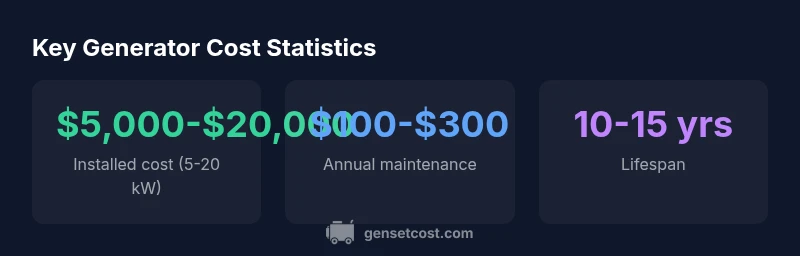
According to Genset Cost Analysis, 2026, the typical installed cost for a home standby generator is between $5,000 and $20,000, influenced by generator size (5–20 kW), fuel type, brand, and installation complexity. When you factor permits, transfer switches, and professional labor, a realistic total sits toward the upper end of this range for most homes.
Understanding the True Generator Cost for Home
The term generator cost for home encompasses more than the sticker price of the unit itself. Homeowners often focus on the upfront price, but the total ownership cost includes installation, permits, transfer switches, wiring, and annual upkeep. In 2026, the Genset Cost Team emphasizes that the true cost also integrates fuel availability, labor rates in your market, and the reliability you demand during outages. When evaluating options, distinguish between standby generators (which power essential circuits automatically during an outage) and portable units (which typically require manual setup). Your goal is to balance reliability with overall cost of ownership, not just the lowest upfront price. Factors like your home’s square footage, the critical loads you want to sustain, and existing fuel lines influence both the upfront price and long-term expenses. For homeowners, the cost concept is best framed as total cost of ownership over the system’s lifespan, rather than a single purchase price.
Upfront vs Long-Term Costs: What to Budget
A clear budgeting framework separates upfront capital expenditures from ongoing operating and maintenance costs. Upfront costs cover the generator itself, installation, permits, and any electrical work, including a transfer switch and potential gas line work or trenching. Long-term costs include fuel (gas, propane, or natural gas), routine maintenance, anticipated repairs, and periodic component replacements. Fuel type strongly affects ongoing expenses: natural gas generally offers lower recurring fuel costs than propane or diesel, but this depends on local pricing and consumption during outages. Insurance considerations and warranty terms also factor into long-term budgeting. A thorough plan should estimate annual fuel consumption based on realistic outage scenarios and compare it against maintenance intervals to project yearly ownership costs.
Sizing Your Home Backup: How Generator Cost Varies by Size
Size matters in both performance and price. Small standby units in the 5–8 kW range are often sufficient to cover essential loads like a furnace, refrigerator, and some lighting, with moderate upfront costs. Mid-range systems in the 12–20 kW range can support a larger set of critical appliances and some comfort features during outages, but they require more substantial electrical work and broader fuel capacity, increasing both upfront and installation costs. Larger systems beyond 20 kW deliver higher resilience but come with significantly higher price tags and installation complexity. When assessing size, perform a detailed load calculation for your critical circuits and compare the incremental cost of stepping up to the next size tier. This helps prevent overspending on a generator that sits far above your actual needs.
Fuel Type and Efficiency: Ongoing Costs
Fuel choice is a major driver of total cost of ownership. Natural gas offers convenience and low fuel cost in many regions but may depend on a continuous gas supply and pressure requirements. Propane provides a stable alternative where natural gas service is unavailable, yet it consumes more fuel per kilowatt-hour and requires storage tanks. Diesel generators are robust and can be cost-effective for certain applications but demand careful maintenance and fuel handling. Efficiency improvements and engine technology can reduce fuel consumption for similar output, but the cost of fuel over the system’s life will still hinge on usage patterns and local prices. When evaluating options, estimate annual fuel costs based on your outage expectations and typical consumption patterns to compare true lifetime costs.
Installation, Permits, and Maintenance: Hidden Fees
The installation phase often introduces hidden costs that aren’t obvious from the unit price alone. Permits, site preparation, transfer switch installation, and potential structural reinforcement can substantially impact total expenditure. Some installers include part of the electrical work in the quote, while others bill separately for labor. Regular maintenance—including oil changes, air filters, and spark plug checks—prevents premature failures and preserves efficiency, but it adds to annual expenses. Warranty coverage may reduce out-of-pocket repair costs, yet it usually requires service through authorized technicians. Budget for these items to avoid sticker-price shock and ensure a reliable system that remains functional across many outages.
How to Compare Quotes: A Practical Guide
To make meaningful comparisons, start with a defined load profile: list essential circuits you want powered during an outage, and then pick a size in the 5–20 kW range that covers those loads with headroom. When requesting quotes, require itemized costs: equipment, installation, transfer switch, permits, and any required trenching or gas line work. Check what is included in each quote—some include basic commissioning, others separate out wiring and software updates. Verify warranty terms, service availability in your area, and whether maintenance packages are offered. Finally, run a simple total-cost-of-ownership calculation over a 10–15 year horizon to understand the real investment.
Data-Driven Path to a Smart Decision
A data-driven approach combines load analysis, local fuel prices, installation variables, and warranty terms to produce a defensible total cost of ownership. By comparing multiple quotes that use the same assumed loads, you can isolate differences caused by equipment efficiency, installation complexity, and offered service packages. This method helps homeowners avoid overpaying for features they don’t need or missing a cost-saving option that could significantly affect long-term costs. In 2026, Genset Cost recommends building a decision matrix that captures upfront costs and annual expenditures across scenarios to choose the most economical option for your home.
Estimated cost ranges for common home backup generator options (excludes professional installation)
| Model Type | Typical Cost Range (excl. installation) | Notes |
|---|---|---|
| Standby 5-20 kW | $5,000-$14,000 | Common for essential loads; installation varies |
| Standby 20-40 kW | $12,000-$25,000 | Higher power, more complex install |
| Portable generator | $400-$3,000 | No permanent install; limited home backup |
People Also Ask
What is the average generator cost for home?
For a typical home standby system, expect an installed range that reflects both equipment and installation. The total cost is influenced by size, fuel type, and local labor rates, with higher-end configurations costing more but delivering greater resilience.
A typical home standby system falls within a broad price range, depending on size and installation specifics. Your best bet is to compare quotes that include all major costs so you can estimate total ownership.
Do standby generators cost more to install than portable ones?
Yes. Standby systems require permanent electrical integration, automatic transfer switches, and sometimes gas line or trench work, which adds to installation time and cost. Portable generators are cheaper upfront but require manual setup and less comprehensive backup capability.
Standby systems usually cost more to install because they integrate with your electrical system and may need gas connections, while portable units are cheaper but require manual intervention during an outage.
How does size affect generator cost for home?
Larger systems cost more upfront due to bigger equipment and more extensive installation. They also offer greater load support and resilience, so consider both your critical loads and future needs when selecting a size.
Size increases both cost and capability. Pick a size that reliably covers your essential loads without paying for unused capacity.
Are there incentives or rebates for home generators?
Some regions offer rebates or tax incentives for backup power systems or energy resilience upgrades. Availability varies by location and program years, so check with local authorities or utilities for current options.
Rebates can exist in some areas, but they vary by location and year. Check with your utility or local government to explore current programs.
How long does installation typically take?
Installation can range from a few days to several weeks, depending on site readiness, permitting, and whether gas or electrical work is required. Coordinate with your installer to align schedules and inspections.
Most installs take from a few days to a few weeks, depending on site prep and permits. Plan ahead and confirm lead times with your installer.
“Total ownership cost matters as much as the sticker price when selecting a home generator.”
Key Takeaways
- Estimate total ownership costs, not just sticker price
- Match generator size to essential loads for cost efficiency
- Factor installation, permits, and transfer switches into budgets
- Compare quotes with identical load assumptions to avoid apples-to-oranges
- Consider long-term fuel costs when choosing fuel type