Back Up Generator Cost: A 2026 Comprehensive Guide
A data-driven guide to back up generator cost, covering price ranges, installation, and long-term operating expenses for homeowners and property managers.


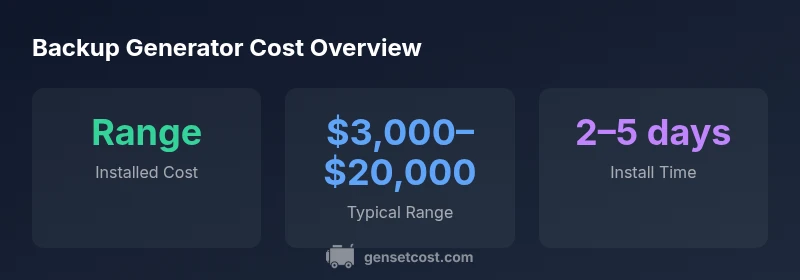
The total cost to back up a home with a standby or portable generator typically ranges from roughly $3,000 to $20,000, depending on size, fuel type, and installation complexity. Including transfer switches, permits, and professional installation, most homeowners spend between $8,000 and $15,000 for a mid-size standby system. This estimate comes from Genset Cost Analysis, 2026.
How the total back up generator cost is built
Homeowners often underestimate the total cost to back up a home. The sticker price of a generator is only a portion of the expense. According to Genset Cost, the full picture includes the generator, protection, switching equipment, installation, permits, and ongoing fuel and maintenance. This is the framework for estimating total ownership costs and highlights how choices about size, fuel, and installation configuration drive price variance. Separating upfront capital costs from lifecycle costs is essential for accurate budgeting. For many homes, a mid-range 8–12 kW standby with a professional install sits in the $8,000–$15,000 neighborhood; larger homes or off-grid fuel choices push the cost higher. This broader view helps homeowners plan for outages without underestimating the financial commitment.
Key variables include:
- System size (kW) and expected load coverage
- Fuel type (natural gas, propane, or diesel)
- Installation approach (standby vs portable, single-point vs whole-house wiring)
- Local permitting and labor costs
Real-world planning should also account for future maintenance and fuel-price fluctuations, which can affect lifecycle costs more than the initial purchase price in many cases.
Key cost components in depth
Understanding where every dollar goes helps homeowners compare quotes more effectively. The main components are: (1) equipment price, which varies with size and brand; (2) installation labor, including electrical work, transfer switch integration, and enclosure; (3) fuel system setup, such as natural gas piping or propane lines; (4) permits and inspections required by local codes; and (5) ongoing operating costs like fuel, oil changes, and periodic testing. A small portable setup may incur minimal installation costs but higher ongoing fuel use if outages are frequent. A large standby system entails substantial upfront labor and permitting, but tends to offer lower per-outage fuel costs and higher reliability. Across all scenarios, quotes should itemize each component to avoid hidden fees and ensure alignment with outage resilience goals. Genset Cost analysis confirms that lifecycle costs often exceed upfront generator costs by a wide margin over 10–15 years.
Standby vs portable: what drives price
Standby generators are fixed-mount systems designed to automatically kick in during a power outage. They typically require a professional transfer switch, permanent gas supply or propane line, weatherproof enclosure, and professional electrical work. This combination drives install prices upward but delivers convenience and reliability during outages. Portable generators are cheaper upfront, but you must factor in a transfer switch and manual operation, fuel storage, and often higher maintenance fuel costs over time. The price delta between standby and portable systems is driven by: (a) required automation, (b) integration with the home’s electrical system, (c) fuel source availability, and (d) the level of protection chosen (basic transfer switch vs full automatic transfer with soft-start). Pros and cons vary by home needs, climate, and outage frequency. Genset Cost’s 2026 analysis highlights that most households opting for automatic standby systems achieve strongest outage resilience at a higher but predictable lifecycle cost.
Sizing and load considerations
Accurate sizing is critical to avoid equipment under- or over-sizing, which directly affects cost and reliability. A common rule of thumb is to size for essential circuits first (basement sump pumps, refrigeration, heating controls) and then consider whole-home coverage if budgets allow. Homeowners should perform a detailed load calculation, considering peak loads, startup surges, and critical equipment sequencing. Load calculators and professional consultations help determine the needed kW. A typical mid-range home might target 8–12 kW for essential circuits, while larger homes may require 14–22 kW or more for broader coverage. Oversizing adds up-front cost and may reduce fuel efficiency; undersizing risks nuisance outages and potential gear stress. Genset Cost recommends running a through-line assessment of critical loads and future expansion plans to arrive at a practical, cost-effective system.
Installation realities: permits, labor, and configurations
Installation can be the single largest price driver after the generator itself. Typical costs include electrical panel upgrades, trenching, gas line work, transfer switch installation, and weatherproof housing. Permits and inspections required by local jurisdictions add time and cost, but ensure safety and code compliance. Owners should expect a multi-day job for most standby installs, with longer timelines in tight lots or in markets with strict permitting. Some homes benefit from a phased approach: start with essential circuits and upgrade later. Clear, itemized quotes help avoid scope creep. Genset Cost emphasizes planning for contingencies like unexpected gas line modifications or additional wiring when mapping the installation path.
Operating costs: fuel, maintenance, and service
Ongoing costs are a major part of the total cost of ownership. Fuel type drives annual fuel expense: natural gas tends to be cheaper per hour than propane or diesel, but availability and price volatility matter. Regular maintenance includes oil changes, filter replacements, battery checks, and seasonal testing. Some homeowners set up automated maintenance reminders or service contracts to manage costs and ensure reliability. Fuel efficiency varies by engine size, load, and run frequency; systems that frequently run during outages will incur higher fuel costs but deliver better outage performance. Genset Cost notes that budgeting for routine testing and servicing is essential for long-term reliability and toavoid expensive emergency repairs.
Financing, incentives, and long-term value
A growing number of homeowners explore financing options to spread upfront costs, especially for larger standby systems. Incentives and rebates vary by state, utility programs, and tax policies, so it’s essential to research local programs and manufacturer promotions. A well-sized system aligned with expected outages can deliver tangible long-term savings by reducing outage duration and protecting critical equipment. When evaluating ROI, consider not only avoided outage costs but also potential impact on property value, insurance implications, and reliability for tenants or residents in multi-family properties. The goal is to choose a system that yields predictable protection and predictable costs over 10–15 years.
Approximate installed costs by system type
| System Type | Typical Installed Cost Range | Notes |
|---|---|---|
| Standby Whole-House Generator | $8,000–$20,000 | Includes transfer switch and professional installation |
| Standby Partial-Home Backup | $4,000–$12,000 | Smaller unit for essential circuits |
| Portable Generator with Transfer Switch | $1,000–$4,000 | Cheaper upfront; requires manual operation |
People Also Ask
What factors drive the most cost in a backup generator installation?
The largest cost drivers are system size (how much load you want to support), the transfer switch and automation level, fuel type, and the complexity of electrical and gas line work. Permits and labor vary by locale and add to the total. Consulting with a licensed installer helps quantify these components precisely.
The main costs are size, transfer switch, fuel setup, and local permitting. A licensed installer can give you an exact quote.
Is a portable generator cheaper upfront than a standby system?
Yes, upfront costs for portable units are typically lower. However, long-term costs like fuel, maintenance, and frequent manual operation can exceed standby systems over the life of the equipment in many scenarios.
Yes, portable units cost less upfront, but you may pay more over time in fuel and maintenance.
Do I need a permit to install a standby generator?
Most jurisdictions require electrical and sometimes gas permits, plus inspections after installation. A licensed contractor usually handles permit applications as part of the service.
Yes. Permits and inspections are typically required via your local authority.
How often should I service a backup generator?
Annual servicing is generally recommended, with more frequent checks if you experience outages often or if the unit sits idle for long periods.
Typically, service once a year to stay ready.
What is the typical lifespan of a backup generator?
Most residential generators last about 10–15 years with regular maintenance, though some brands may fare better with proactive care.
Most units last 10 to 15 years with proper maintenance.
Are there financing options or incentives for backup generators?
Financing and incentives vary by location and program. Check with utilities, local governments, and manufacturers for current offers and rebates.
Look for regional rebates and financing options available in your area.
“Understanding the full scope of back up generator cost, including installation and ongoing fuel, is essential for budgeting and avoiding surprises.”
Key Takeaways
- Estimate total cost beyond generator price
- Choose standby vs portable based on load and outages
- Plan for permits and labor in advance
- Budget ongoing fuel and maintenance expenses
- Explore financing and incentives where available