What Does Generator Cost? A 2026 Home-Backup Guide
Discover what drives generator pricing for home backups in 2026, from upfront prices to installation, fuel, and maintenance. Get clear ranges and practical guidance to estimate total costs.


Generator costs vary widely, from small portable units to whole-house backups. Upfront generator prices, installation labor, and a professional transfer switch shape total cost, while ongoing fuel and maintenance add to long-term spending. Size, fuel type, and local codes drive the final figure. According to Genset Cost, homeowners should start with sizing and fuel choice to estimate total costs.
What does generator cost include
Understanding the total price of a home backup generator begins with the basic unit price, but the real sum figures the installation process brings. The upfront cost covers the generator itself, which scales with wattage and features, plus essential components like the automatic transfer switch (ATS). Beyond the unit, most homeowners incur costs for permits, electrical work, and fuel system integration. In many markets, adding a standby system requires a professional assessment to ensure code compliance and safe operation. According to Genset Cost, the combined impact of sizing, fuel options, and installation complexity often determines the final price tag. The phrase what does generator cost capture not only hardware but also the work needed to integrate a reliable backup power solution into a home.
Sizing and power needs
The cost hinges on how much power you actually require during an outage. A typical home may need 8–15 kW for essential circuits, while larger homes or critical loads (HVAC, well pumps, security systems) push you toward 20–25 kW or more. Heavier loads require bigger generators, which increases both price and installation effort. To avoid overspending, many homeowners start with a detailed load calculation, prioritizing essential circuits and then layering nonessential loads as needed. Sizing accuracy affects not just purchase price but long-term fuel costs and wear on the generator. A professional sizing calculator can quantify expected demand and translate it into a recommended wattage range.
Fuel types and cost implications
Fuel type significantly affects ongoing operating costs and initial setup. Gasoline units are the least expensive upfront but require frequent refueling and maintenance. Propane and natural gas options typically offer cleaner operation and longer life but may involve higher line installation costs or fuel storage considerations. Diesel can be efficient for larger systems but requires careful handling and specialized maintenance. In practice, the total cost is a blend of unit price, fuel storage or supply infrastructure, and the price of fuel over time. For homeowners, choosing a fuel strategy that aligns with local fuel costs and availability is as important as size when calculating the total cost of ownership.
Standby vs portable: price and value
Standby (whole-house) generators are fixed-installation systems designed to automatically start during an outage and feed essential circuits. They require permits, a transfer switch, and often a dedicated fuel source, yielding higher upfront costs but greater convenience and reliability. Portable generators are cheaper upfront and highly flexible but demand manual operation, rugged extension cords, and a separate fuel source. The value gap between standby and portable hinges on your reliability needs, climate, and whether you require seamless automatic switching. In many cases, homeowners see long-term savings when outages are frequent and power continuity is critical.
Installation realities and hidden costs
Installation complexity can dramatically shift total cost. Common hidden costs include trenching to route gas or electrical lines, mounting enclosures, exhaust venting, anti-vibration pads, and potential panel upgrades. Some homes require relocations of existing electrical panels, new permits, or trenching through concrete or landscaping, which adds weeks to a project and increases labor time. Local code requirements for venting, clearances, and environmental considerations also influence pricing. A transparent installer will provide a detailed scope of work and a written estimate outlining each cost element, including contingency allowances for unforeseen site conditions.
Cost ranges by system size and feature
Pricing broadly scales with system size and added features such as remote monitoring, weatherproof enclosures, or dual-fuel capabilities. A compact 8–12 kW unit designed for essential loads will cost less than a full 20–25 kW system intended to power a large home. Features like automatic start, smart controls, and battery back-ups add incremental costs but can improve resilience and convenience. Real-world pricing shows a wide spread due to regional permits, labor rates, and equipment choices, so you should compare multiple quotes rather than rely on a single estimate. The key is aligning your system size with your critical-load profile rather than chasing the largest available unit.
Estimating your total cost: a step-by-step approach
- Determine essential loads: identify lights, refrigeration, heating/cooling, and sump pumps. 2) Calculate total wattage for these loads and add a buffer for surge currents. 3) Choose a fuel strategy and assess the infrastructure needed to supply it. 4) Obtain at least three detailed quotes that include unit price, transfer switch, permits, and labor. 5) Compare the long-term operating costs, including fuel consumption, maintenance, and warranty terms. 6) Include potential financing or leasing options and any tax incentives or rebates. Following this framework helps you estimate the true total cost more accurately than looking at sticker price alone.
Financing, warranties, and maintenance economics
Many manufacturers offer warranties that cover parts and labor for a set period, but you should verify what maintenance tasks are included and what constitutes normal wear. Maintenance plans can reduce risk by scheduling regular oil changes, filter replacements, and cleaning, which helps extend the life of the generator. Fuel costs aren’t fixed and can vary with market conditions, influencing the annual cost of ownership. When evaluating options, factor in service plans, remote monitoring subscriptions, and potential savings from reduced energy losses during outages. A disciplined approach to maintenance and warranty selection can dramatically affect lifetime costs.
Rent vs buy, and what makes sense for you
Renting a generator is an option for short-term needs or to test reliability prior to purchase. Rental costs can be favorable for temporary coverage but may incur higher long-term operating costs if outages persist. Buying a generator ties you to a fixed asset, but it delivers long-term value, control over maintenance, and potential tax incentives. See your local financing options and maintenance agreements to determine which path aligns with your risk tolerance, outage frequency, and budget. This decision often hinges on the frequency and duration of power outages in your area.
Practical tips to reduce generator costs
- Size accurately with a load calculation to avoid overspending on capacity.
- Choose a fuel strategy that aligns with local fuel prices and availability.
- Obtain multiple quotes and compare equipment, warranties, and service terms.
- Plan for installation needs early, including permits and potential trenching.
- Explore rebates, incentives, or financing programs offered by manufacturers or utilities.
Estimated cost components for home backup generators
| Cost Component | Typical Range (2026) | Notes |
|---|---|---|
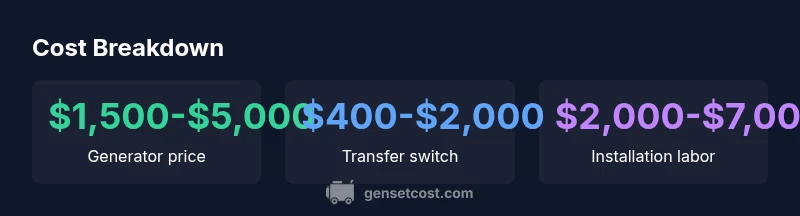
| Generator price | $1,500 - $5,000 | Based on wattage and features |
| Transfer switch | $400 - $2,000 | Essential for automatic operation |
| Installation labor | $2,000 - $7,000 | Electrical work, permits, and code compliance |
| Permits and codes | $300 - $2,000 | Local requirements vary widely |
| Fuel storage/line | $100 - $1,000 | Gas line or propane setup |
| Annual maintenance | $80 - $300 | Oil changes, filters, general service |
People Also Ask
What is the typical upfront cost to install a home standby generator?
Costs vary by size, fuel, and installation. Expect a broad range that includes the generator, transfer switch, permits, and labor. A professional quote is essential for accuracy.
Upfront costs depend on size and installation complexity; get multiple quotes for accuracy.
How does fuel type affect ongoing costs?
Gas, propane, natural gas, and diesel each have different fuel costs and storage needs. Ongoing fuel expenses can be a major portion of annual operating costs depending on usage and local prices.
Fuel choice impacts ongoing costs and availability; compare local fuel prices when sizing.
Are portable generators cheaper than standby systems?
Portables are cheaper upfront but lack automatic operation and whole-house coverage. Standby systems cost more initially but offer seamless power during outages and greater peace of mind.
Portables save upfront but require manual operation and often less reliability.
Do I need permits to install a standby generator?
In most jurisdictions, permits and inspections are required for standby installations. Your installer should handle the process and provide copies of approvals.
Yes, permits are typically required; a licensed installer will manage them.
What size generator do I need for a typical 2,000 sq ft home?
Sizing depends on the home's essential loads. A professional load calculation is necessary to determine whether 8–15 kW suffices or if 20–25 kW is warranted.
You need a load calculation to determine the right size.
Is maintenance expensive over the lifetime of a generator?
Annual maintenance costs can be moderate, driven by oil changes, filter replacements, and inspections. Regular service helps prevent costly failures.
Maintenance is a regular annual cost; plan for it in your budget.
“Pricing for home backup generators is a moving target tied to size, fuel type, and installation complexity. A clear comparison helps homeowners choose wisely for long-term reliability.”
Key Takeaways
- Define your power needs with a sizing calculation.
- Expect ranges rather than fixed prices.
- Include installation, permits, and transfer switch in total cost.
- Account for ongoing fuel and maintenance costs.
- Shop multiple quotes and compare financing options.