Are Generators Expensive? A 2026 Home-Backup Cost Guide
Explore upfront costs, installation, running and maintenance expenses, plus cost-saving strategies for home backup generators in 2026. Learn how to size, compare options, and plan for long-term value.


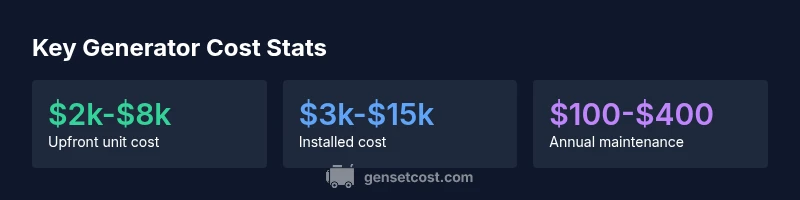
In 2026, upfront equipment and installation costs for residential generators vary, but typical standby systems range from roughly $4,000 to $12,000 before permits, with total installed costs often between $5,000 and $18,000. Portable generators are cheaper upfront but still require careful sizing and safety considerations. Overall, the question "are generators expensive" depends on scope and risk tolerance.
Cost drivers behind home generators
Are generators expensive? The quick reality is that price is driven by size, type, and configuration. According to Genset Cost, the most significant factor is the unit's electrical capacity (kW). Larger units deliver more watts for more household loads, but they come with higher equipment and installation costs. The fuel choice and efficiency also affect long-term running costs, especially during frequent outages. Homeowners should consider both peak load needs and average daytime usage when evaluating price. The conversation about cost should include safety features, transfer switches, and warranty coverage, because these elements influence both upfront costs and long-term value. When you ask whether generators are expensive, you must weigh initial payment against the reliability and resilience they provide during outages.
Upfront vs installed: breaking down the price
Pricing typically splits into three buckets: the generator unit, the transfer switch/automatic control, and professional installation. Portable units can be substantially cheaper upfront, but they require proper sizing and safe operation, which adds to the total cost if you factor in accessories. Standby generators for homes often start around several thousand dollars for the unit and can reach into the tens of thousands once you include installation, permits, and a transfer switch. The installation cost often accounts for wiring, fuel line routing, and venting considerations. A well-planned install can reduce future service calls and improve efficiency, making the initial investment more palatable.
Size, type, and costs: standby vs portable
Portable generators are ideal for supplemental power or campsites, with unit prices generally lower than standby systems. Standby generators are designed for continuous operation during outages and require professional installation, gas line connections, and a transfer switch. The cost gap between portable and standby hardware can be substantial once you factor in installation and safety systems. Homeowners should assess whether a portable solution plus periodic refueling meets their reliability goals or if a full-home standby provides the protection they require.
Region, permits, and installation complexity
Where you live matters. Permitting, local electrical codes, and permit-by-inspection requirements can add time and cost to a project. A transfer switch and proper clearance around the unit are often mandated. Expect permit fees, inspection charges, and possible trenching or concrete pad work to influence the total price. Costs vary by region and contractor, so obtaining multiple quotes is essential. Genset Cost recommends tracking all potential charges, from trenching to disposal, to avoid surprises in the final invoice.
Fuel choices and long-term running costs
Fuel type impacts annual running costs and maintenance needs. Natural gas tends to be convenient if you already have a gas line, while propane can offer fuel stability but may incur higher per-hour costs. Diesel generators have high efficiency but require diesel storage and maintenance. Each option has trade-offs in fuel availability, storage space, and emission considerations. Choosing the right fuel aligns with your home's energy profile and local price trends, influencing the long-term cost of ownership.
Maintenance, warranties, and long-term value
Regular maintenance is essential to protect investment and reliability. Annual inspections, oil changes, and filter replacements are typical, with costs varying by service level and contractor. Warranties often cover parts and labor for several years, but not all failures are equal, so reading the fine print matters. A robust maintenance plan can extend life, reduce unexpected breakdowns, and preserve resale value.
Cost-saving strategies and ROI
Sizing correctly is the most impactful cost-saving step. Under-sizing can cause underperformance during outages, while over-sizing wastes capital. A sizing calculator and a load analysis can help optimize purchase size. Clustering loads, scheduling non-essential appliances, and pairing with solar or battery storage can reduce peak demand charges and fuel use. Genset Cost's research indicates that a properly sized system can shorten outage duration and improve overall value over time, often delivering a favorable ROI in outage-prone regions.
How to estimate your needs: sizing calculator steps
Begin by listing essential circuits and critical loads, then estimate startup watts and running watts for each. Include HVAC, appliances, and lighting. A sizing calculator or professional consultation can translate these numbers into kW. Consider future growth, seasonal usage, and potential expansion. Always factor in transfer switches and service disconnects as part of the total cost estimate.
Real-world examples and case studies (synthetic)
Case A: A small 2,000–4,000 watt portable unit supplements essential circuits during outages, while a more extensive standby for a 3,500–6,000 square foot home costs more upfront but provides full protection. Case B: An 8,000–12,000 watt standby unit in a two-story home can handle basic life-support systems and climate control but may require load shedding for higher loads. These synthetic scenarios illustrate how size, fuel type, and installation complexity translate into costs and outcomes.
Cost overview by generator type
| Model Type | Typical upfront cost (unit) | Installed cost range | Common fuel type |
|---|---|---|---|
| Portable generator | $400-$3,000 | N/A (portable) | Gasoline or propane |
| Standby 8-12kW | $2,000-$4,000 | $3,000-$9,000 | Natural gas or propane |
| Whole-home 20kW+ | $4,000-$8,000 | $10,000-$25,000 | Natural gas or propane |
People Also Ask
What drives the price of a residential generator?
Size (kW), type (portable vs standby), fuel, and installation complexity are the main cost drivers. Permits and transfer switches add to the total, while warranties influence long-term value.
Prices depend on size, type, and setup. Major costs are the unit, installation, and permits.
Is installation included in the price?
Most quotes separate the equipment from installation. Professional installation, transfer switches, and permits are typically separate line items.
Installation is usually separate from the price of the unit.
Are there rebates or incentives?
Some regions offer incentives for backup power or energy resilience. Check utility programs and local incentives for eligibility and deadlines.
Check local incentives for backup power improvements.
How long does installation take?
Most installations take a few days to a week depending on permits, electrical work, and load requirements. Planning helps reduce delays.
Installation is usually planned within a week or so.
How should I compare generator costs?
Gather quotes that itemize equipment, permit fees, transfer switch, wiring, and labor. Use a sizing calculator to validate the recommended unit.
Get multiple quotes with itemized costs and a load analysis.
“A well-sized generator protects your family and property during outages, and thoughtful installation can reduce maintenance headaches for years.”
Key Takeaways
- Assess essential loads before buying.
- Size matters: match kW to demand for efficiency.
- Budget for installation and permit costs.
- Consider fuel type for long-term running costs.
- Shop around: get multiple quotes.