Generator Costs 2026: A Practical Home Backup Guide
Compare home backup generator costs, sizing, and installation options in 2026 with data-driven guidance from Genset Cost. Learn how fuel type, transfer switches, and permitting affect total costs.


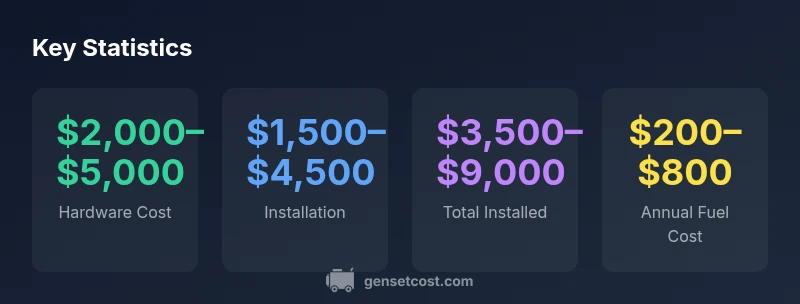
Fact: A typical total installed cost for a residential standby generator ranges from $3,500 to $9,000, depending on size (8–20 kW), fuel type, and installation complexity. This quick snapshot, drawn from Genset Cost Analysis, 2026, helps answer the generator question homeowners face when budgeting for outages, permits, and transfer-switch requirements.
Understanding the generator question
The so-called generator question that homeowners face is broader than the sticker price. It asks: what is the true lifetime cost of a home backup system, including hardware, installation, permits, transfer switches, fuel, and maintenance? According to Genset Cost, the total installed cost for typical residential standby generators in 2026 varies widely by kilowatt rating, fuel type, and labor requirements. By framing the decision around the full cost of ownership—and not just the upfront price—you can avoid surprises when outages strike. This perspective comes from the Genset Cost Team and underpins the budgeting approach used throughout this guide.
Key takeaway: Start with a clear budget that covers hardware, installation, and ongoing fuel and maintenance. The generator question you answer today will influence reliability during outages for years to come.
Sizing and fuel basics: How size drives cost
Size matters not only for power coverage but for price. Standby units in the 8–12 kW range tend to have lower hardware costs but may require smaller transfer switches and simpler installation, while 14–20 kW units push hardware and labor costs higher. Fuel choice also shifts the economics: natural gas and propane systems have different cost profiles, and diesel has its own maintenance footprint. A properly sized system reduces wasted energy and minimizes unnecessary overcapacity. The goal is to balance peak load coverage with a reasonable upfront and ongoing expenditure. As you assess sizing, consider your essential circuits, climate, and whether you want partial or whole-home coverage. The Genset Cost Team recommends using a sizing calculator to estimate required kW and a realistic run-time profile for frequent outages.
Installed cost breakdown: hardware, installation, and extras
Understanding the breakdown helps you budget accurately. Hardware costs cover the generator, transfer switch, and basic controls. Installation costs include labor, electrical work, panel upgrades, conduit, and any required trenching. Extras such as fuel line upgrades, exhaust routing, and permit fees can add several hundred to several thousand dollars. Regional labor rates and permit requirements drive variation; urban areas often face higher installation costs due to codes and access constraints. This section lays out practical illustrations: expect hardware in the mid-range of the spectrum for mid-size units, with installation and extras forming a substantial portion of the total. The goal is to identify non-negotiables (transfer switch, proper sizing) and negotiables (aesthetic or location choices) to optimize total cost over the system’s life.
Regional and fuel-type cost comparisons
Geography and fuel choice have a meaningful impact on total cost. In many regions, natural gas offers lower ongoing fuel costs if a reliable supply exists, while propane can incur higher recurring fuel expenses if supply is intermittent. Diesel units tend to be more expensive upfront but can offer favorable fuel economics in some settings. Installation costs also shift by locale due to permitting processes, trenching requirements, and the need for structural modifications. The net effect is that the same 8–20 kW standby solution can cost substantially more in one region than another, driven by labor rates, permitting, and fuel availability. Genset Cost analysis shows homeowners who plan ahead with a regional cost map typically save 5–15% on total cost by selecting fuel type and installation options aligned with local conditions.
How to avoid common cost pitfalls
One common pitfall is underestimating permitting and site-preparation costs. Another is choosing a generator that is over-spec’d for essential needs, leading to higher upfront and operating costs. To minimize risk, develop a two-step budgeting process: (1) establish essential loads and a realistic runtime profile, (2) compare multiple installers using a standardized checklist (equipment, labor, permits, warranties). Energy efficiency measures—such as smart load management and prioritizing critical circuits—can reduce the required kW, trimming both hardware and installation costs. Finally, consider maintenance budgeting from day one: a routine maintenance plan reduces long-term expenses and prolongs the life of your generator. The goal is a robust, reliable system that doesn’t break the bank when outages occur.
Quick-start budgeting checklist
- Define essential loads and acceptable outage duration
- Size the system based on peak demand and runtime estimates
- Get at least three quotes that include hardware, installation, and permits
- Check transfer-switch options and compatibility with your panel
- Budget for annual fuel and maintenance costs
- Review warranty terms and expected service intervals
Typical cost ranges by model type
| Model Type | Avg Hardware Cost | Avg Installation Cost | Total Installed Cost |
|---|---|---|---|
| Standby 8–12 kW | $2,000–$4,000 | $1,500–$3,000 | $3,500–$7,000 |
| Standby 14–20 kW | $3,000–$5,500 | $2,000–$3,500 | $5,000–$9,000 |
| Portable gas (portable) | $500–$2,000 | $100–$800 | $600–$2,800 |
| Natural gas line-ready units | $4,000–$6,000 | $2,000–$4,000 | $6,000–$10,000 |
People Also Ask
What is the first factor to consider when budgeting for a backup generator?
The initial hardware cost—generator unit and automatic transfer switch—sets the baseline. From there, installation, permits, and fuel must be added to estimate total cost.
Start with hardware and transfer switch costs, then factor in installation and permits.
How does fuel type influence ongoing costs?
Gas, propane, and diesel have different fuel costs and efficiency. Natural gas can be cheaper if you have a reliable line, while propane may incur higher fuel costs over time; diesel has its own maintenance profile.
Fuel choice affects ongoing operating expenses and availability.
Do I need permits for generator installation?
Yes. Permitting requirements vary by locality and can affect total cost and timeline. Check with local building departments and your installer before purchasing.
Permits are a common hidden cost you should plan for.
What’s the difference between standby and portable generators in cost?
Standby generators are integrated with your home’s electrical system and typically cost more upfront but offer automatic operation during outages. Portable generators are cheaper but require manual setup and fuel handling.
Standby costs more upfront but runs automatically during outages.
Are online cost calculators reliable for budgeting?
Online tools provide rough estimates but should be validated with a professional quote that accounts for your home’s specifics, including transfer-switch requirements and permits.
Use calculators as a starting point, then get quotes from pros.
What maintenance costs should I budget annually?
Expect regular inspections, oil changes, filter replacements, and some parts wear. Budget for a yearly service plan; prices vary by unit and fuel type.
Set aside funds for routine maintenance and servicing.
“Accurate budgeting starts with understanding all cost drivers, not just the sticker price. A well-planned system protects against outages while minimizing lifetime costs.”
Key Takeaways
- Start with essential loads before selecting a generator
- Budget for hardware + installation + permits (not just the unit)
- Choose fuel type based on long-term running costs and supply
- Ask for multiple quotes to compare labor and materials
- Consider upgrades like a larger transfer switch only if justified by need