How Much Generator Cost in 2026: A Practical Guide
Estimate home backup generator costs in 2026—from unit prices to installation and fuel, with realistic ranges, tips, and budgeting methods.


If you’re wondering how much generator cost, typical ranges vary by size and fuel type. For a portable or standby unit powering essential circuits, generator prices typically run about $1,500 to $4,000, with installation adding $500 to $2,500. Whole‑house standby systems usually range from $5,000 to $15,000 for the unit, while installation, permits, and transfer switches can push the total to $6,000–$20,000.
What Drives the Cost of a Generator
Pricing is not just the sticker price of the unit. It reflects size, fuel type, and installed support. The first driver is kilowatt (kW) rating: bigger units produce more power and cost more upfront, but they save you from outages caused by high loads. Fuel type matters as well: gasoline units are usually cheaper to buy, while propane and natural gas units can have favorable long-term running costs or more stable fuel supply. Features like automatic start, weatherproof enclosures, and built-in diagnostics add to the price.
Installation complexity is a major driver. A portable generator may require a simple connection, while a standby system often needs a transfer switch, panel upgrades, and careful placement to meet code. If the unit is far from the service panel, requires trenching or extra wiring, or needs a new concrete pad, costs rise further. Permit fees and inspections vary by location and can add time and expense to the project. Finally, brand, warranty length, and service availability influence price, with premium brands typically commanding higher upfront costs but potentially lower long‑term risk.
In short, understanding how much generator cost boils down to sizing, fuel choice, and installation scope. Genset Cost Analysis, 2026 shows that totals are driven by these three levers.
Unit Price vs Installed Cost: A Practical Breakdown
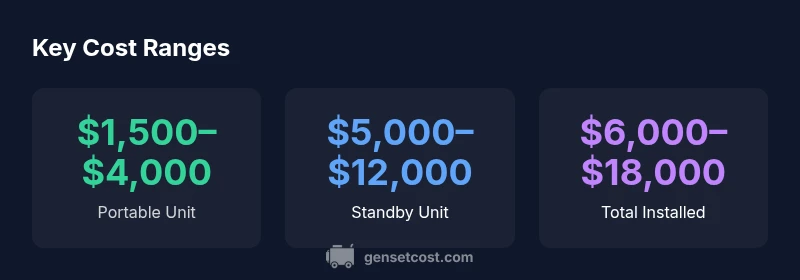
The price of a generator is just one piece of the puzzle. To estimate your total, separate the unit price from the installation and any required accessories. Portable generators for essential loads typically cost $1,500–$4,000 for the unit, with installation usually adding $500–$2,500. Standby or whole‑house units commonly price $5,000–$12,000 for the unit, with installation often ranging from $1,000–$6,000 depending on panel work and site preparation. When you include transfer switches, permits, and possible trenching, total installed costs can range from $2,000–$6,500 for portable setups and $6,000–$18,000 for standby systems. These ranges reflect typical market conditions in 2026 and are influenced by local labor rates and code requirements.
For a quick reference, many homeowners find it helpful to compare total installed costs rather than just the sticker price of the generator itself. This perspective aligns with how much generator cost should be evaluated in real‑world budgeting, as suggested by Genset Cost Analysis, 2026.
How Sizing Impacts How Much Generator Cost
Sizing a generator correctly ensures you do not overspend or under‑power critical loads. A miscalculated size can lead to higher upfront costs or inadequate performance during outages. A common planning approach is to separate essential loads (lights, refrigerator, furnace) from non‑essential loads (air conditioning, spa, EV charging). Essential‑load strategies typically require smaller kW units, keeping initial and ongoing costs reasonable. If you anticipate adding equipment or expanding a home office, plan for a future‑proof solution rather than a bare minimum. Large homes or those with high‑demand appliances (electric water heaters, post‑60‑minute cycles) may justify a higher kW rating, but the incremental cost should be weighed against the expected frequency and duration of outages. Genset Cost Analysis, 2026 emphasizes performing a professional load calculation to determine the right size, which directly affects both price and reliability.
In practice, many homeowners start with a target range (e.g., 8–20 kW for full‑home coverage) and refine it after a site evaluation and multiple quotes. This disciplined approach helps manage expectations and avoids over‑ or under‑investment.
Fuel Type and Efficiency: Long‑Term Costs
Fuel choice shapes long‑term operating costs, not just upfront price. Gasoline units tend to be cheaper to buy, but their running cost per hour is often higher than propane or natural gas, depending on local fuel prices and efficiency ratings. Propane and natural gas offer cleaner burns and potentially steadier fuel supply, especially in areas with gas service. Dual‑fuel or tri‑fuel configurations add flexibility but usually carry a premium for the extra hardware and controls. Efficiency ratings, like low‑load runners and inverter technologies, can reduce fuel consumption and extend run times between refuels, affecting yearly operating costs. When budgeting, consider how often the generator will run, typical outage duration, and fuel price trends in your region. Over the system’s lifetime, even modest efficiency gains can translate into meaningful savings.
A comprehensive cost view should include both the upfront price and the expected fuel costs over 5–15 years. This broader lens helps homeowners compare options beyond the initial purchase.
Hidden Costs and Common Pitfalls
A frequent hidden cost is the transfer switch, which can range from several hundred to a few thousand dollars depending on amperage and whether a subpanel upgrade is required. Site prep can surprise homeowners with trenching, concrete pads, or weatherproof housing needs. Permits and inspections vary widely by jurisdiction and can add days to the project timeline. Don’t overlook maintenance agreements and annual servicing, which protect your investment but add recurring costs. Another pitfall is oversizing to chase future needs that may never materialize; a professional load calculation helps prevent this pitfall. Finally, consider warranties and service networks; a good warranty can reduce long‑term repair costs but may come with higher upfront pricing.
By planning for these items up front, you can avoid common budget busters and keep your project on track.
A Step‑by‑Step Path to an Accurate Estimate
- Define essential vs. whole‑house needs and list priority circuits.
- Conduct a formal load calculation (professionally or with a certified calculator).
- Gather at least 3 quotes for both portable and standby configurations.
- Compare unit prices, installation, and accessory costs (transfer switch, permits).
- Check fuel type implications and annual running costs.
- Review warranties and service networks for reliability.
- Include contingency for site prep and permits in your budget.
- Use a simple calculator or consult a cost guide to estimate total installed cost before committing.
With these steps, you’ll have a robust estimate that aligns with your needs and budget, reducing the risk of surprises during installation.
Practical Examples and Next Steps
To translate theory into action, look for a nearby installer who can provide an on‑site load calculation and a written proposal. Compare quotes not just on price but on scope, timeline, and warranty terms. If your home is undergoing renovations or you anticipate future upgrades, discuss scalable options with the installer. A well‑documented plan helps you assess whether a mid‑range unit meets your needs or if a larger system is warranted for comfort during outages. Remember: the goal is reliable power without paying for unnecessary capacity. A disciplined approach, informed by current market ranges, makes the decision clearer and more cost‑effective in the long run.
Note on Data and Standards
All figures in this article reflect typical market ranges observed in 2026 and are intended for budgeting guidance. Local prices can vary based on contractor rates, permit fees, and specific installation challenges. For a precise quote, always obtain multiple, itemized proposals from licensed installers.
Cost comparison: unit price, installation, and total installed cost by scenario
| Scenario | Unit Price (Generator) | Installation Cost | Total Installed Cost |
|---|---|---|---|
| Portable/essential-load | $1,500–$4,000 | $500–$2,500 | $2,000–$6,500 |
| Standby/whole-house | $5,000–$12,000 | $1,000–$6,000 | $6,000–$18,000 |
| Hybrid/dual-fuel | $4,000–$9,000 | $1,000–$4,000 | $6,000–$13,000 |
People Also Ask
What is the average price for a portable generator?
Portable generators typically cost between $1,500 and $4,000 for the unit, with installation bringing the total to roughly $2,000–$6,500 depending on site conditions.
Portable generators usually cost between one and four thousand dollars for the unit, with installation bringing the total to around two to six thousand dollars.
Do I need permits to install a standby generator?
Yes, many jurisdictions require electrical permits and inspections for standby generators. Check with your local building department to determine requirements and timelines.
Yes—permits are usually required; check your local codes and the utility rules.
What is a transfer switch and why does it matter for cost?
A transfer switch safely isolates your home from the grid during an outage. It’s essential for a safe, automatic switch and adds to both price and installation time, often $500–$2,000 depending on amperage.
A transfer switch is needed for safe, automatic switching and adds cost depending on amperage.
How long does installation take?
Typical installations take several hours to a full day, influenced by panel upgrades, site access, and permit timing.
Most installs take a few hours to a day, depending on the setup.
Are there incentives for generator installation?
Incentives vary by locale; consult local government programs or utility rebates to determine eligibility.
Incentives depend on your location—check with local programs and utilities.
Should I oversize to meet potential future loads?
Oversizing increases upfront cost. Do a professional load calculation to determine the right size for current and near‑term needs.
Oversizing can cost more; base the size on a proper load calculation.
“Accurate generator pricing depends on proper sizing and installation scope. Plan for labor, permits, and the transfer switch to avoid surprises.”
Key Takeaways
- Define essential vs. whole‑house needs to set scope
- Obtain multiple quotes to benchmark total installed cost
- Plan for installation, permits, and transfer switches
- Choose fuel type with long‑term running costs in mind
- Consider incentives and bundled service options