How Much Is a Home Generator? Costs & Sizing Guide
Explore the typical price range for home generators, what drives cost, and practical sizing tips to help homeowners and property managers estimate, compare, and plan for backup power with Genset Cost.


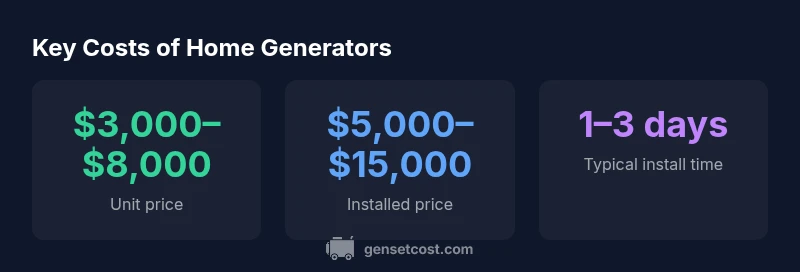
For a home standby generator, you’ll typically pay about $3,000 to $8,000 for the unit itself, and installed systems usually run from $5,000 to $15,000, depending on size, fuel type, and installation complexity. Local permitting, transfer switches, and gas or electrical work can push totals higher. According to Genset Cost Analysis, 2026, pricing shows broad ranges, but correct sizing drives long-term value.
Cost drivers for home generator pricing
If you're asking how much is a home generator, the answer starts with understanding what drives price. In practice, pricing hinges on five core factors: required wattage (how much power you want during an outage), the type of fuel, installation complexity, permitting and labor, and any optional accessories such as the transfer switch or an automatic start feature. According to Genset Cost, 2026, the installed price can swing widely even for similarly sized homes. For example, standard standby units in the 8–12 kW range typically incur unit costs of roughly $3,000–$8,000, while total installed prices commonly land between about $5,000 and $15,000, depending on how much gas piping or electrical work is needed. The blend of these factors means you should expect a broad range rather than a single fixed number. Homeowners who plan for future load expansion, or who want seamless integration with existing gas lines, should budget on the higher end of the range to avoid surprises during installation. In short, the final price reflects both your home’s demands and the local installer’s scope of work, not just the generator’s sticker price.
Unit price vs installed price: what's included
The price you see for a home generator usually consists of two parts: the unit price (the generator itself) and the installed price (everything required to make it run in your home). The unit price covers the engine, alternator, and enclosure, but it rarely includes essential add-ons such as an automatic transfer switch, conduit, wiring, and gas piping. The installed price includes labor, permits, and any site preparation work. In many regions, installers also quote an extended warranty or maintenance plan, which can influence the total cost. When comparing quotes, be sure to itemize these components so you can see where costs differ. For example, two quotes at the same kilowatt rating may diverge by $2,000–$5,000 once you factor in: permit fees, trenching, gas line work, and the ease of integration with your electrical panel. If you want to minimize surprises, request a fixed-price proposal that includes all required components and a clearly defined scope of work. This approach helps ensure your final bill aligns with expectations and avoids unexpected add-ons.
Sizing basics: how to pick the right wattage
Determining the right wattage is crucial to avoid under- or over-speccing a generator. Start with critical loads: sump pump, HVAC, well pump, lighting, and refrigeration. Use a load calculation method: sum the watts of essential appliances and apply a safety factor. A typical 8–12 kW standby can cover many homes, but larger houses with electric heating or multiple A/C units may need 16–20 kW. If you’re unsure, involve a licensed electrician or generator installer who can perform a formal load analysis. Remember that higher kilowatt ratings increase unit and installation costs, so balance reliability with long-term value. Consider future needs like EV charging or home office equipment as part of your calculation. Genset Cost’s 2026 framework emphasizes sizing accuracy as the strongest predictor of total cost efficiency, since oversized systems add upfront cost and undersized units may require costly upgrades soon after installation.
Fuel options and maintenance considerations
Gas-powered standby units are common and offer steady operation. Natural gas often provides the lowest ongoing fuel cost, but availability depends on your service line and gas pressure. Propane units can be installed where natural gas is not available, though propane typically has higher running costs per kilowatt-hour and requires trustworthy refueling arrangements. Diesel units are powerful and durable but involve higher maintenance and noise, and are more common in commercial settings or rural installations. Regular maintenance—oil and filter changes, battery checks, and thermostat calibration—affects long-term costs and reliability. When choosing a fuel type, consider your utility rates, supply stability, and local climate. A well-chosen fuel strategy reduces operating costs over the system’s life and improves resilience during outages.
Permitting, installation, and hidden costs
Permitting requirements vary by locality and can add time and expense to the project. Installation costs depend on site work: trenching for gas lines, upgrading the service panel, and routing electrical conduits. Gas line work and distance to the main supply influence both labor costs and risk profiles. Some homes need a new gas meter, a relocation of existing utilities, or additional surge protection. Hidden costs can include weather-related delays, extra permits, and system testing. To control surprises, obtain a detailed written estimate that breaks out all components and recognizes regional permit fees. Request a pre-installation assessment from a licensed installer to identify potential challenges and ensure your plan aligns with code requirements and utility access.
Financing, warranties, and cost-saving tips
Many homeowners financing options exist for home generators, ranging from loans to installment plans offered by installers or manufacturers. Warranties and maintenance plans vary, with longer coverage often bundled with higher upfront costs but lower risk over time. Consider whether a maintenance contract, annual inspections, and included parts are worth the investment. Tax incentives or rebates for backup power may apply in some regions; consult a local professional to determine eligibility. To maximize value, compare quotes from multiple reputable installers, verify references, and ensure the scope includes all essential components (transfer switch, permits, and gas line work). A well-documented plan that combines sizing accuracy, proper installation, and aftercare delivers the best long-term return on investment.
Getting the most value: cost-saving tactics
Engage early in the design process to align equipment choices with your home’s load profile. Choose a generator size with some headroom rather than the absolute minimum—this reduces the need for future upgrades. Favor installers who provide fixed-price bids and detailed scope rather than hourly estimates. When possible, schedule installation during a contractor’s low-demand season to reduce labor costs. Investigate utility programs or manufacturer promotions for bundled equipment or extended warranties. Finally, keep records of all quotes and communications; a transparent comparison makes it easier to justify selections to stakeholders and support long-term budgeting.
Typical cost components for home generator projects
| Cost Aspect | Typical Range | What It Includes |
|---|---|---|
| Unit price | $3,000–$8,000 | Standalone generator unit |
| Installed price | $5,000–$15,000 | Generator, transfer switch, labor, permits |
| Gas line installation | $500–$2,000 | Gas piping or propane setup |
| Electrical upgrades | $500–$3,000 | Panel work, wiring, conduits |
People Also Ask
What is the difference between a stand-by generator and a portable generator?
Standby generators are permanently installed and automatically start during an outage via a transfer switch. Portable generators require manual setup and operation. For reliable, hands-off power, most homes choose standby units with automatic transfer switches.
Standby units stay ready and switch on automatically; portable ones need you to start and manage them yourself.
Do I need permits for installation?
Most jurisdictions require electrical and sometimes gas permits for a standby installation. Requirements vary by location, so check with your local building department and your installer to ensure compliance and avoid fines or delays.
Yes, permits are typically required; your installer will help obtain them.
How long does installation typically take?
A standard standby installation often takes 1–3 days, depending on site accessibility, gas line work, and electrical panel upgrades. Complex installations can take longer, especially if permits or trenching are involved.
Most installs take a day or two, with longer times for gas work.
What fuel type is cheapest to run?
Natural gas is typically the least expensive fuel option for standby generators with an existing gas supply. Propane or diesel may cost more per kilowatt-hour, depending on local fuel prices and usage patterns.
Natural gas is usually cheaper to run if you have a supply, but check local prices.
Are there tax incentives or rebates for home generators?
Some regions offer incentives for backup power installations, including tax credits or rebates. Eligibility varies by locale and program year, so consult a local installer and tax advisor to determine what applies to you.
There can be incentives in some areas; verify with local authorities.
“Choosing a generator isn’t simply about the sticker price; correct sizing and professional installation determine long-term value.”
Key Takeaways
- Compare installed price components before selecting a contractor
- Size the system to your actual load to maximize value
- Permits and labor are major cost drivers to plan for
- Fuel choice influences running costs and availability