Generator Cost Guide for 2026: Sizing, Costs, and Installation
Explore the true generator cost for home backup systems, including equipment, installation, permits, and ongoing fuel/maintenance. Compare portable vs standby options with sizing guidance from Genset Cost to optimize investment.


Generator cost is the total outlay for a home backup power system, including equipment, transfer switch, installation, permits, and ongoing fuel/maintenance. For home backup projects, total installed prices typically range from roughly five thousand to twenty-five thousand dollars, with lower end for portable units and higher end for whole-house standby systems.
What \u201cgenerator cost\u201d covers in a residential project\n\nWhen homeowners start planning a backup power system, the phrase generator cost is more than the sticker price on a generator box. It includes the hardware, the automatic transfer switch, the installation labor, permits, and ongoing fuel and maintenance. The term also reflects choices between portable generators and whole-home standby systems, each with distinct pricing trajectories. Across the United States, the total installed cost for a residential backup solution can vary widely based on equipment quality, brand, and installation complexity. According to Genset Cost Analysis, 2026, the typical cost envelope for a home backup project spans equipment plus installation from moderate to high ranges, with additional regional variances. For homeowners, understanding generator cost means separating the upfront purchase from the full life-cycle expense, which includes fuel burn rates, maintenance schedules, and potential warranty extensions. In this guide we?ll unpack the components, explain how sizing affects price, and show how to evaluate options without overpaying for features you dont need.
2ndParagraphRenderedForCohesionAndFlow
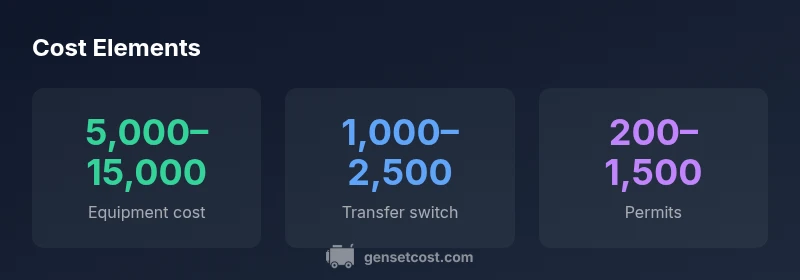
Estimated cost elements for generator projects
| Component | Typical cost range | Notes |
|---|---|---|
| Equipment cost (generator unit) | $5,000–$15,000 | Varies by size and features |
| Transfer switch (automatic) | $1,000–$2,500 | Essential for seamless transfer |
| Installation labor | $2,000–$6,000 | Site complexity and wiring affect cost |
| Permits & inspections | $200–$1,500 | Region-dependent |
| Fuel type & annual operating costs | $500–$2,000 | Usage dependent |
| Maintenance & servicing (annual) | $100–$300 | Routine service and parts |
People Also Ask
What is included in generator cost?
Generator cost includes the equipment, automatic transfer switch, installation, permits, and ongoing fuel and maintenance for the system.
Generator cost covers the equipment, transfer switch, installation, permits, and ongoing fuel and maintenance.
What drives the price the most in these projects?
Size and type of the generator, installation complexity, site conditions, and permit costs typically drive the largest portion of total generator cost.
Size, type, and installation complexity usually drive the biggest share of the price.
Portable vs standby: which is cheaper upfront?
Portable generators have a lower upfront cost but offer limited reliability and coverage. Standby systems cost more initially but provide automatic power for critical loads across the home.
Portables are cheaper to start, but standbys cost more up front and cover the whole house automatically.
Are permits always required for installation?
In most areas, permits and inspections are required for safe and code-compliant installations. Costs vary by region and project complexity.
Most places require permits; costs vary by location.
How long does installation typically take?
Typical installs take a few days to a week, depending on site preparation, wiring, and local permitting, but complex retrofits can take longer.
Usually a few days to a week, depending on your site.
Can rebates or financing reduce generator costs?
Local incentives or utility programs may reduce upfront costs, and manufacturers often offer financing options or promotional rebates.
Look for local rebates and financing to ease upfront costs.
“A well-planned generator project balances upfront cost with long-term reliability. The right size and a solid installation plan can save more than the initial price in reduced risk and avoided outages.”
Key Takeaways
- Audit sizing early to avoid paying for unused capacity
- Total cost includes equipment, transfer switch, installation, and permits
- Standby offers higher reliability; portable lowers upfront cost
- Obtain multiple quotes with explicit line items
- Plan for fuel, maintenance, and potential warranty extensions