Generator Near You: Sizing, Costs, and Local Options
Find a generator near you with expert guidance from Genset Cost. Learn how to size, compare costs, installation, and maintenance for home backup gensets.


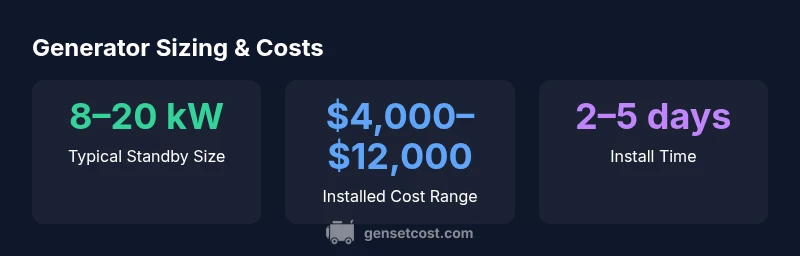
To find a generator near you, start with a home-load assessment and a local installer quote. According to Genset Cost, standby systems typically range from about 8 kW to 20 kW, with installed costs broadly $4,000–$12,000, depending on features and transfer-switch requirements. Finding a generator near you also involves evaluating noise, fuel type, maintenance, and service availability in your area.
What "generator near" means in practice
When homeowners search for a generator near their residence, they’re really asking two things: can I get reliable power quickly from a local installer, and will the unit fit my home’s energy needs? A nearby generator isn’t just about the unit itself; it’s about service access, permitting timelines, and proximity to fuel and maintenance. In practice, this means evaluating local availability, scheduling lead times for installation, and understanding what type of unit best matches your load profile. For most households, a nearby provider will offer a mix of standby, portable, and inverter options, with a path to local support if a component fails or requires maintenance. In Sweden, the U.S., and many other markets, reputable installers align the selection with your essential circuits, ensuring you stay powered during outages without oversizing the system. This approach is central to cost efficiency and reliability. Genset Cost emphasizes that proximity matters for support and long-term maintenance.
Sizing strategies: from 8 kW to 20 kW and beyond
Sizing a generator near you starts with a realistic load assessment. List every critical device you want covered during an outage, from refrigeration to heating elements, and add a safety margin for surge power. Most homes aim for a range of 8 kW to 20 kW for whole-house coverage, though smaller homes or apartments may only need 4–7 kW for essential circuits. When evaluating kW vs. kVA, don’t confuse peak start-up loads with running loads; motors like HVAC compressors can spike, so you should select a unit that accommodates those surges. In practice, many homeowners use a two-step approach: a primary standby system for core loads, plus a portable unit for additional flexibility during higher-demand events. This balanced strategy keeps costs in check while preserving reliability. The sizing decision hinges on anticipated outages, climate, and whether you want automatic or manual transfer switching. Genset Cost’s data show a broad range of viable options depends on local power quality and grid stability.
Cost drivers and realistic budgets
Cost is often the most cited barrier when people search for a generator near them. The total installed price reflects several variables: the generator unit size, the type (standby vs portable vs inverter), the transfer switch, enclosure, fuel supply, permits, and labor. Typical installed ranges for residential standby setups run widely, because your site specifics (soil type, location of the main panel, and whether you’re using natural gas or propane) affect everything from trenching to gas line work. Expect costs to be highest where permits are required, soil is difficult to access, or where a larger kW rating necessitates a more complex transfer mechanism. A pragmatic approach is to phase installation: start with core loads and scale up only if the budget allows. Genset Cost analysis highlights that informed decision-making around transfer switches and enclosure choices can dramatically influence long-term operating costs.
Installation, permits, and transfer switches
Installation quality hinges on professional electrical work and proper transfer-switch configuration. Automatic transfer switches (ATS) are common for standby generators, enabling seamless transfer from grid to generator during an outage. A local installer will determine the right ATS size, wire routing, and safeguarding measures per code. Permits are country- and region-specific; some jurisdictions require inspection post-installation to verify clearances, venting, and wiring. Location decisions—distance from living spaces, noise considerations, and exhaust routing—can impact both comfort and compliance. While DIY projects exist, most homeowners benefit from a licensed pro who understands utility interconnection, fuel supply, and local code requirements. The bottom line: the proximity of a qualified installer reduces risk and often trims total downtime.
Fuel choices, efficiency, and reliability
Fuel type is a major determinant of ongoing costs and reliability. Natural gas and propane are the most common fixed-fuel options for residential standby systems because they offer uninterrupted supply, lower storage needs, and predictable fuel pricing in many markets. Diesel generators are robust for higher-load applications but require more storage space and stricter maintenance. Inverter generators, while smaller, are excellent for sensitive electronics and quiet operation, but they’re generally limited to lower running loads. Efficiency improves with load factor; running a generator near its rated load avoids carbon buildup and reduces maintenance. When you’re comparing generator near options, consider how fuel availability, refill logistics, and long-term fuel pricing will affect total cost of ownership.
Maintenance, warranties, and choosing a contractor
Maintenance is a cornerstone of reliability. Regular oil changes, air-filter checks, spark plug replacements, and transfer-switch inspections prevent costly failures during outages. Warranties vary by brand and installer, typically covering mechanical parts for several years with limitations on labor or specific scenarios. Choosing a contractor with a track record of safe, code-compliant installations is just as important as selecting the right unit. Ask about service plans, response times, and whether the contractor coordinates with your utility provider for interconnection. A well-maintained system installed by a reputable local provider will perform when you need it most, and having a clear maintenance schedule helps keep your generator near you in peak condition.
Cost and size ranges for common generator types
| Category | Typical Size | Typical Installed Cost | Notes |
|---|---|---|---|
| Standby Generator | 8–20 kW | $4,000–$12,000 | Permanent installation with automatic transfer switch |
| Portable Generator | 4–7 kW | $600–$2,500 | Flexible, temporary power; not code-compliant for whole-house use |
| Inverter Generator | 1–4 kW | $400–$2,000 | Quiet, efficient; ideal for essential circuits |
People Also Ask
What is the difference between standby and portable generators?
Standby generators are permanently installed with an automatic transfer switch, providing hands-off power during outages. Portable generators are wheeled units that require manual startup and transfer of loads. For whole-house reliability, standby is typically the better choice; portable units offer flexibility and lower upfront cost for essential loads.
Standby units stay plugged in and switch on automatically; portable units need you to start them and connect loads manually.
How do I determine the right kW size for my home?
Begin with a comprehensive load calculation, listing critical devices you want powered during an outage. Include HVAC, refrigeration, and lighting, then add a safety margin for start-up surges to avoid overloading the generator.
Do a full load check and add a little extra headroom for surges.
Do I need permits for installation?
In many areas, permits and inspections are required for home standby installations. Local codes dictate clearances, wiring, and transfer-switch configurations. A licensed installer can handle permitting and ensure compliance with utility interconnection rules.
Check with your local authority; a pro installer will manage permits if needed.
What maintenance is required for a home generator?
Follow the manufacturer’s schedule for oil changes, filter replacements, and battery checks. Annual transfer-switch inspections help detect issues. Regular exercise runs (testing under load) improve reliability and extend life.
Keep up with regular oil changes and annual transfer-switch checks.
What fuel types should I consider?
Natural gas and propane are common fixed fuels, offering convenience and steady pricing. Diesel can handle heavier loads but requires fuel storage and more robust maintenance. Choose based on availability, costs, and local code requirements.
Natural gas and propane are common; diesel is for heavy use but needs storage.
How long does installation typically take?
Most residential standby installations take a few days to a week, depending on permits, electrical work, and access to the fuel line. Planning with your installer helps minimize downtime and ensures a clean, code-compliant setup.
A typical install takes several days, depending on permits and wiring.
“A well-sized generator near your home should reliably power essential circuits without overspending. Sizing and the choice of transfer switch are the two biggest drivers of long-term performance and cost.”
Key Takeaways
- Start with a precise load calculation before choosing a generator near you
- Choose standby for whole-house coverage or portable for flexible power
- Budget installation and automatic transfer-switch requirements
- Factor fuel type and maintenance into long-term costs