Generator Service Near Me: Costs, Sizing & Installation
Learn how to pick a generator service near me with guidance on costs and sizing. This guide helps homeowners compare providers and minimize outage downtime.


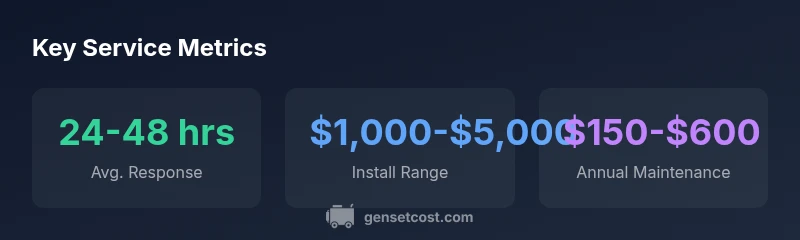
According to Genset Cost, a generator service near me can typically dispatch technicians within 24-48 hours and tailor maintenance plans to your unit. This proximity reduces downtime risk, simplifies scheduling, and makes warranty support more accessible. Local providers also tend to offer clearer cost estimates and faster parts availability, which helps you plan for outages with confidence.
Why proximity matters for generator service near me
For homeowners and property managers, the phrase generator service near me isn’t just about convenience. Local providers are more likely to understand regional weather patterns, building codes, and utility interconnection requirements. A nearby technician can access your site quickly after a power outage, perform faster diagnostic work, and expedite parts orders that would otherwise involve cross-state shipping delays. Proximity also improves warranty claims, as local technicians can document ongoing issues on-site and coordinate with the manufacturer more efficiently. In short, local service reduces downtime, speeds maintenance cycles, and minimizes the administrative hassle that often accompanies larger, distant providers.
Additionally, being close makes it easier to schedule regular preventive maintenance—critical for backup generators that sit idle for long periods. Routine checks, oil changes, and battery tests become less burdensome when the service window aligns with your calendar. For property managers juggling multiple units, a nearby partner offers scalable scheduling, better communication, and simplified invoicing. Finally, consider the environmental and logistical benefits of working with a local business that can respond quickly to emergencies, seasonal outages, and neighborhood power events.
How to evaluate local generator service providers
Selecting a dependable local partner requires a structured approach. Start by verifying licensing and insurance, including general liability and workers’ compensation. Confirm that technicians hold current electrical certifications and that the company adheres to local code requirements for generator installation and transfer switches. Request at least three references and check recent install or service histories—preferably for systems similar to yours (size, fuel type, and configuration).
Quality conversations matter: ask about response times, on-site diagnostic fees, and the process for emergency calls. Compare written estimates that itemize labor, parts, permits, and any travel charges. Look for providers with transparent warranty terms and clear maintenance plans that outline inspection frequency, oil changes, air-filter replacements, and load testing. Finally, evaluate customer feedback across multiple sources and favor providers who publish documentation of safety practices and ongoing training.
These steps help ensure you’re partnering with a reputable, responsive local team rather than a general contractor who handles occasional generator work.
Service capabilities you should expect
A robust local generator service should cover preventive maintenance, diagnostics, repairs, and emergency response. Expect at minimum:
- Routine inspections, load testing, and oil/filter changes
- Battery health checks and charging system assessment
- Transfer switch and automatic-start testing
- Emergency on-site repair within stated response times
- Parts availability for common models and manufacturer-approved replacements
A strong provider will offer maintenance plans that bundle inspections, discounts on parts, and priority scheduling for outages. They should also explain how they verify fuel type compatibility (gas, propane, or diesel) and how fuel stabilization is maintained. For larger multi-unit properties, inquire about scalable service contracts and a dedicated account manager to coordinate seasonal maintenance and rapid dispatch when storms threaten the grid.
Sizing, installation, and permitting considerations
Sizing a generator correctly is essential to avoid nuisance trips or insufficient power. Local technicians should perform a detailed load calculation that accounts for essential loads (hvac, lighting, critical outlets) and peak demand. They should also verify the compatibility of your transfer switch, panel space, and natural gas or propane supply. In many areas, permitting is required for installation, and experienced local teams will manage the paperwork, inspections, and utility interconnection coordination on your behalf.
During installation, ensure the installer uses manufacturer-recommended equipment and adheres to airtight grounding, proper venting, and clearances. Ask for a written plan that specifies fuel type, generator location, exhaust routing, and noise mitigation strategies. For property managers, it helps to have a single point of contact who can schedule sequencing for multiple units to minimize disruption.
Understanding these elements helps you avoid delays and unexpected expenses when upgrading to a residential backup system.
Maintenance plans and preventative care
Preventative maintenance is the cornerstone of reliability. A solid plan typically includes periodic oil and filter changes, air-filter inspection, battery testing, and transfer switch checks. Many providers offer tiered maintenance contracts with annual or semi-annual inspections and priority scheduling during outages. Ask about diagnostic reporting, recommended replacement intervals for parts (belts, coolant, and gaskets), and whether the plan includes on-site emergency diagnostics or remote monitoring.
Keep in mind that maintenance costs can vary based on generator size, fuel type, and climate. In regions with harsh winters or hot summers, more frequent inspections may be warranted. A dependable local service will tailor a plan to your specific usage profile—homeowner usage, commercial building requirements, or multi-unit properties—so you get the right coverage without paying for unused services.
Cost considerations and budgeting
Cost is a major concern when evaluating generator service near me. Typical upfront items include the generator itself, installation, permits, and any transfer switch or enclosure components. Ongoing costs cover maintenance, fuel, and potential reselection of components if you upgrade the system later. Based on industry data, you should expect a wide range in installation costs depending on location, permit requirements, trenching needs, and whether a new transfer switch is included.
A practical budgeting approach is to separate initial capital from ongoing operating costs. For example, plan for installation in the range of several thousand dollars, with annual maintenance and parts costs that reflect the unit size and local labor rates. Use a conservative contingency for unexpected repairs, such as battery replacement or wiring adjustments. Working from a written estimate helps you compare proposals fairly and avoid scope creep.
Scheduling, response times, and service windows
Responsive scheduling is a decisive factor in choosing a generator service near me. Verify the provider’s stated response times for non-emergency service and their escalation process for outages. A dependable company will offer 24/7 emergency support with clear triage steps and on-site arrival windows. When arranging service, confirm that the technician can access your electrical panel and outdoor generator area without compromising safety or creating additional hazards.
For property managers, it’s beneficial to have a service calendar that coordinates units by priority, especially during peak outage seasons. Ask about remote diagnostics and fleet management options that allow your provider to monitor multiple units and pre-empt issues before they trigger a service call.
Warranty, monitoring, and parts availability
A credible local provider will help you understand warranty terms on both parts and labor, including what is covered and for how long. Look for remote monitoring options or at least status checks that can trigger alerts if voltage or frequency drift beyond acceptable limits. Confirm that the service offers a parts inventorying strategy so common failures (starter motors, relays, batteries) can be addressed quickly.
Ask for a written warranty summary and ensure the coverage aligns with the manufacturer’s warranty on the generator itself. A transparent partner will also explain maintenance intervals that maximize warranty eligibility and provide documentation you can attach to your property records.
How to choose the right partner for your backup generator
Choose a partner who clearly communicates scope, pricing, and timelines before commencing work. Start by validating licenses, insurance, and manufacturer certifications, then request a written, itemized estimate. Check references and confirm the provider’s ability to service multiple units if you manage a portfolio. Finally, evaluate the provider’s ability to adapt to your scheduling constraints, handle permits, and deliver predictable maintenance cycles so your backup power is reliable when you need it most.
Comparison of service costs and timeframes
| Service Aspect | What it Covers | Typical Range | Notes |
|---|---|---|---|
| Response Time | Time to reach site after request | "24-48 hours" | Local service focus |
| Maintenance Window | Routine service duration | "1-2 hours" | Includes oil/filter changes |
| Installation Cost Range | Professional setup | "$1,000-$5,000" | Scope varies by model/location |
| Maintenance Cost Range | Annual upkeep | "$150-$600" | Fuel and parts may vary |
People Also Ask
What does a typical generator service near me include?
A typical local service includes regular inspections, load testing, oil/filter changes, battery checks, transfer switch testing, and emergency repair options. A qualified local team will tailor service to your model and fuel type, and provide a written maintenance plan.
Most local services include inspections, testing, oil changes, and emergency repair options; they tailor the plan to your generator.
How do I verify a local provider’s credentials?
Check for state electrical licensing, valid insurance, and manufacturer certifications. Ask for recent project references and verify their ability to service your exact model and fuel type.
Make sure they’re licensed, insured, and have references for similar units.
What is a reasonable response time after outage?
Non-emergency responses typically occur within 24-48 hours, while critical outages may get faster prioritization depending on service level agreements and local demand.
Most outages are addressed within a day or two unless it’s an emergency.
Are maintenance contracts worth it?
Maintenance contracts can provide predictable costs, prioritized scheduling, and discount on parts. They’re often beneficial for multi-unit properties or systems with high usage.
If you depend on backup power, a maintenance contract can save time and money over the long run.
What factors influence service cost near me?
Costs vary with generator size, fuel type, labor rates, permit requirements, and whether transfer switches or enclosures are included. Get a written estimate with a detailed scope.
Size, fuel type, and permits drive the price.
How should I evaluate installation and transfer switches?
Ask about the type of transfer switch, load testing, and panel integration. Ensure the installer follows manufacturer installation guidelines and local code requirements.
Check the transfer switch type and code compliance with the installer.
“Reliable generator service hinges on local expertise, transparent pricing, and proactive maintenance that keeps your system ready when outages strike.”
Key Takeaways
- Locate a nearby generator service to shorten outage response times
- Verify licensing, insurance, and certifications before hiring
- Expect preventive maintenance, diagnostics, and emergency support
- Budget for installation, maintenance, and potential upgrades
- Ask for quotes with detailed scope and a written schedule of activities