Finding a Generac Generator Near Me: Sizing, Costs, and Local Installers
Find Generac generator near me options, size correctly, and estimate installation costs with Genset Cost's 2026 analysis. Learn standby vs portable models and how to work with trusted local installers.


To find a Generac generator near you, start with the Generac dealer locator to locate authorized installers in your area, then compare standby vs portable models based on your load. Schedule an on-site assessment to size a system correctly and understand transfer-switch requirements. According to Genset Cost, installation timelines and upfront costs vary by region.
Why 'generac generator near me' matters for homeowners
If you’re a homeowner or property manager, finding a reliable backup power source begins with locating a Generac generator near me and confirming you’re working with an authorized installer. Sifting through local options helps you compare models that match your load and climate, rather than guessing from a catalog. According to Genset Cost, the dealer network and local installers influence not only price but also warranty coverage, service availability, and post-install support. A sound search also helps you anticipate permit requirements, transfer-switch compatibility, and service window estimates, so you don’t face costly delays when outages hit. A correctly sized system protects essential circuits, keeps refrigerators cold, and ensures essential lights stay on during a blackout. The goal is to balance upfront costs, long-term reliability, and ongoing maintenance, so you have predictable performance when you need it most.
Beyond the mechanics of parts and prices, the practice of selecting a nearby Generac installer is about trust and timeliness. A regional network means faster service, easier maintenance scheduling, and quicker emergency responses. The Genset Cost team emphasizes that local knowledge matters: codes vary by city, and nearby technicians often know the quirks of your utility’s outages and permitting processes. When you combine an informed sizing approach with a reputable installer, you gain a dependable asset that protects your home during outages and preserves your family's routines during emergencies.
Sizing and load calculations for Generac systems
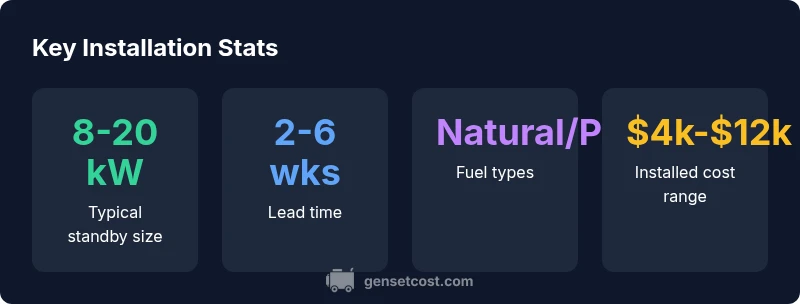
Sizing a Generac system starts with a precise assessment of your home’s electrical load. List essential circuits (refrigeration, lighting, heating/cooling, medical devices) and estimate their continuous wattage. Add nonessential loads conservatively and apply a 1.25 safety factor to handle startup surges. In practice, most single-family homes fall into the 8-20 kW range for standby systems, but actual needs vary with square footage, climate, and lifestyle. A proper on-site evaluation, including a transfer-switch plan, ensures the generator can handle the critical loads without overloading the panel. Use reputable calculators and confirm with the installer that the proposed model aligns with your service panel capacity and fuel source. Documented load calculations also help justify the investment to insurers and lenders during financing discussions. The net result is a generator that starts automatically after an outage and powers what you truly rely on every day, not just the latest gadget you wish to run.
Standby vs portable Generac units: pros and cons
Standby generators are hard-wired to your home's electrical system and automatically start after a outage. Portable units sit outside and use extension cords; they require manual operation and may not power all critical loads simultaneously. Pros of standby: seamless power, automatic transfer switch, better fuel options. Cons: higher upfront cost, professional installation required. Pros of portable: lower initial cost, flexibility for outdoor use, no permanent installation. Cons: manual startup, power management challenges during outages, potential noise and refueling needs. For many homes, a standby solution from Generac provides more reliable, hands-off protection, especially if outages are long or frequent. If you have limited access to a qualified installer, a portable unit can still provide essential relief, but sizing and power distribution should be optimized with a professional.
Installation considerations and costs (what affects price)
Installation cost depends on equipment, permit requirements, transfer switch size, and labor rates in your area. Expect to work with an electrician to connect to the fuel supply and the main panel, and with a licensed contractor to secure permits. Location of the generator, distance to fuel source, and whether you need a new slab or enclosure can add to price. Genset Cost analysis shows that regional variation influences total expenditure, with labor and permitting accounting for a significant portion of the cost. Additionally, the choice between a natural gas or propane fuel line and the size of the automatic transfer switch can alter both upfront and ongoing costs. Getting multiple quotes that include equipment, installation, and permitting helps you benchmark true installed cost and prevent sticker shock during outages.
Maintenance, warranty, and service: keeping a Generac running
Maintenance is essential for reliability. Schedule oil changes, filter replacements, and battery checks according to Generac’s recommendations and your installer’s program. Regular testing and exercise runs help prevent cold-weather failures and ensure the system auto-starts when power is out. Warranty coverage varies by model and installation package; read the contract carefully and ask about service contracts, remote monitoring, and panel protection. If you move or remodel, check whether the warranty transfers and what documentation is required. A proactive maintenance plan with an authorized dealer reduces the risk of unexpected failures and extends the life of your investment.
How to assess a local installer and get the best deal
Start by verifying licenses and insurance, then review customer testimonials and local project galleries. Ask for a detailed on-site load calculation, a clearly itemized quote, and a written transfer-switch plan. Confirm permit responsibilities, scheduling windows, and post-install support—especially for commissioning and training on safe operation. Request references and warranty terms, and compare financing options if needed. Finally, negotiate inclusions such as extended warranties, maintenance plans, and a on-site start-up after installation. The Genset Cost team recommends you secure quotes from multiple authorized Generac installers, validate the sizing with a second method, and choose a partner who offers transparent pricing and dependable follow-up service.
Representative generator types for home backup
| Model Type | Typical Load Handling | Fuel Type |
|---|---|---|
| Standby (Residential) | 8-20 kW | Natural gas/Propane |
| Portable | 2-3 kW | Gasoline |
| Inverter/Hybrid | 1-3 kW | Natural gas/Propane |
People Also Ask
What is the difference between standby and portable Generac generators?
Standby generators are hard-wired to your electrical system and automatically start after a outage. Portable units sit outside and require manual operation. Standby is usually more reliable for whole-house power; portable offers flexibility for occasional needs.
Standby is automatic and wired; portable is manual and movable.
How do I determine the right size in kilowatts for my home?
Begin with essential loads, then add nonessential loads as needed, and confirm with a professional load calculation. This ensures the chosen unit can handle peak demand without overloading the panel.
Do a professional load calculation to size accurately.
Do I need permits to install a Generac generator?
Yes, most jurisdictions require permits for standby installations, especially when a transfer switch is involved. Your installer typically handles permit applications.
Permits are usually needed; your installer will handle them.
Can I finance a generator installation?
Many installers offer financing or manufacturer-backed programs. Compare interest rates, terms, and total cost, and consider long-term savings from outages.
There are financing options; ask your installer.
What maintenance is required after installation?
Follow Generac’s recommended service intervals: periodic oil changes, filter checks, battery tests, and annual professional inspections. Regular exercise runs help keep the unit ready.
Stick to the maintenance schedule and annual checks.
How long does installation typically take?
Most residential projects take a few weeks from survey to commissioning, depending on permits and crew availability. Your installer can provide a timeline after load calculations.
It usually takes a few weeks, with scheduling dependent on permits.
“Accurate sizing and a quality installation are the backbone of reliable backup power. The Genset Cost Team emphasizes partnering with an authorized installer to ensure safe operation and long-term performance.”
Key Takeaways
- Size the system with a professional load calculation.
- Prefer standby for hands-off outages and automatic transfer.
- Expect regional variation in installation costs and permits.
- Work only with authorized Generac installers for warranty validity.
- Plan maintenance and training to maximize reliability.