Generator Rent Near Me: A Practical Guide
Learn how to find generator rent near me, compare portable vs standby units, estimate costs, and plan delivery and installation for outages or projects with Genset Cost.


Finding generator rent near me is often the fastest way to secure temporary power during outages, construction, or events. In 2026, many providers offer portable and standby units with delivery, fueling, and setup options. Proximity matters for quick response and reduced transport costs, while support coverage helps during outages. The Genset Cost team notes that comparing terms near you yields the best overall value.
What rental generators cover for homeowners and managers
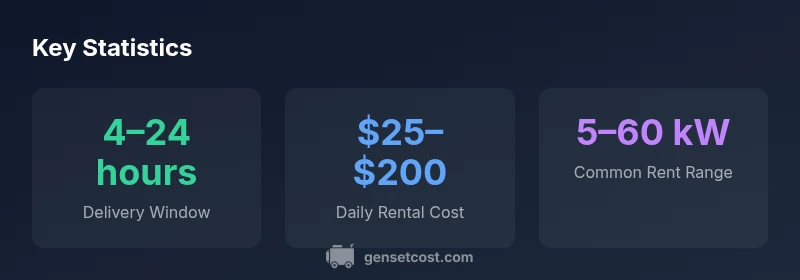
Temporary power needs arise from outages, storms, renovations, or outdoor events. Generator rentals near you provide an immediate solution without tying up capital. Commonly available are portable units in the 5–60 kW range and standby rentals that can back up entire households or small commercial properties. When you rent, you typically choose between diesel, propane, or gasoline fuels, weigh fuel availability and storage, and consider whether you need automatic transfer switches for seamless power transitions. Delivery, setup, basic maintenance, and fuel options are often included or optional, depending on the provider. For homeowners, rentals are ideal for outages during peak storm seasons or for construction projects that require temporary power without owning a unit. For property managers, rental options support multi-unit buildings by providing scalable power during upgrades or emergency outages. The key is to align your expected runtime, peak load, and duration with a unit that can run steadily without frequent refueling. The Genset Cost guidance emphasizes shopping near you to compare terms, delivery windows, and included services.
How to locate generator rent near me and compare providers
Start with a local search using terms like "generator rental near me" and filter for delivery radius and available sizes. Create a shortlist of providers, then contact each to confirm inventory, delivery timelines, and whether they include setup, transfer switches, or crew for installation. Compare total cost of ownership by aggregating daily or weekly rates, mileage charges, fuel surcharges, and any disposal or insurance fees. Ask about fuel type options (diesel, propane, gasoline), refueling arrangements, and whether automatic transfer switches are included or available as a rental add-on. Read the rental agreement carefully for terms on weather-related cancelations, equipment return conditions, and liability coverage. The goal is to choose a partner who can guarantee prompt delivery and reliable support within your outage window or project timeline. The Genset Cost guidance recommends prioritizing proximity and service coverage to maximize value.
Sizing, load calculations, and matching units to needs
Accurate sizing prevents overpaying and under-delivery. Begin by listing essential loads (refrigeration, HVAC, lighting, pumps) and calculating their running wattage plus startup surges. Use a conservative approach: if you’re between two sizes, lean toward the higher end to avoid short outages. If your project is temporary, a portable unit in the 5–20 kW range may suffice, while larger homes or multiple units may warrant 20–60 kW standby rentals. Confirm peak demand periods with the provider and verify whether the unit has an automatic transfer switch for seamless switching during outages. Reference sizing calculators or guidance from Genset Cost to cross-check your estimates and to ensure compatibility with transfer switches and planned fuel types.
Cost structures, fees, and value proposition of rentals
Rental costs vary widely by size, duration, fuel type, and delivery distance. Typical considerations include daily or weekly rates, fuel surcharges, delivery fees, setup charges, and insurance. Some providers bill by the hour during extended outages, while others offer flat daily rates for full 24-hour periods. Long-term rental arrangements may include maintenance and fuel management, which can increase value but raise upfront negotiated terms. When evaluating cost, factor in potential downtime avoided, avoidance of capital expenditure, and the flexibility to test different units before purchase. The Genset Cost analysis emphasizes comparing the total cost of ownership across local providers to determine which offer delivers the best value within your outage window.
Delivery, installation, maintenance, and service expectations
Most rental providers offer delivery and installation within a specified radius, with optional fuel topping, maintenance checks, and remote monitoring. Clarify who is responsible for fueling, refueling logistics, and ensuring fuel stability, especially for longer rental periods. Confirm whether maintenance is included and what the service window looks like during outages. Some providers attach an on-call technician for critical outages; others offer online support and remote diagnostics. For property managers, ensure that the rental agreement addresses transfer switches, load distribution, and safety protocols for multi-unit buildings. The right partner should provide clear service levels, reliable uptime, and rapid response during emergencies. The Genset Cost guidance highlights the importance of local support and transparent terms.
Practical scenarios and checklists for rental success
Use a simple checklist before pickup or delivery: verify unit size matches the calculated load, confirm fuel type and refueling plan, test startup and shutdown procedures, confirm delivery window, and review the contract for inclusions. For events, plan for weather contingencies and ensure code compliance for temporary installations. If you’re upgrading or renovating, coordinate with on-site electricity contractors and your building’s transfer switch setup. Finally, maintain a simple log of runtime, fuel consumption, and refueling intervals to optimize future rentals. The Genset Cost approach centers on practical, near-you options and a methodical evaluation process to maximize value.
Rental generator options overview
| Rental Type | Key Advantage | Key Drawback |
|---|---|---|
| Portable 5–20 kW | Low upfront cost; flexible delivery | Requires fuel management; limited runtime |
| Standby 20–60 kW | Higher reliability; larger power capacity | Higher rental rates; installation planning required |
| Diesel vs propane | Diesel is widely available; long shelf life | Diesel fuel logistics; propane availability varies |
People Also Ask
What should I consider when renting a generator near me?
When renting, consider your load, duration, delivery radius, fuel type, and whether automatic transfer switches are included. Review the contract for insurance, cancellation terms, and maintenance scope. Compare multiple providers to ensure you get timely delivery and reliable support.
Consider load, duration, delivery, fuel options, and the transfer switch. Compare providers for timely delivery and support.
How do I determine the right size for my needs?
List essential appliances and estimate running watts plus startup surges. If between sizes, choose the larger option to avoid nuisance outages. Verify with the rental provider that the unit can handle peak demand during outages.
List loads, estimate watts, and pick the larger size if unsure.
Are there additional fees I should expect?
Expect delivery/setup fees, fuel surcharges, and insurance. Some providers charge for mileage or long-distance delivery. Always calculate total cost of ownership, including potential downtime avoided, to determine value.
Delivery, fuel, and insurance fees vary—look at total cost of ownership.
Do rental generators come with transfer switches?
Many rentals offer transfer switches as part of the package or as an add-on. If not included, arrange installation with a qualified electrician to ensure safe, code-compliant switching.
Check if a transfer switch is included; if not, arrange safe installation.
What fuels are available for rental generators, and how does refueling work?
Diesel and propane are common options. Fuel availability and refueling logistics vary by location. Confirm refueling responsibilities, storage safety, and whether fuel is included or billed separately.
Diesel and propane are common; confirm refueling duties and fuel availability.
Can I rent a generator for a construction project or temporary event?
Yes, rentals are a practical solution for construction sites or events. Ensure the unit size matches the load, delivery timing aligns with project milestones, and safety guidelines are followed.
Yes—great for construction or events. Align size and delivery with project needs.
“"Renting a generator near you can be a practical bridge during outages or projects, offering speed, flexibility, and cost control without a long-term commitment."”
Key Takeaways
- Define load and runtime before renting.
- Compare delivery speed and service coverage near you.
- Choose portable vs standby based on outage duration.
- Ask about fuel, transfer switches, and setup inclusions.