Generator Near Me Shop: Sizing, Costs, and Installation
Learn how to evaluate a generator near me shop, size for essential loads, compare upfront and long-term costs, and plan installation with expert guidance from Genset Cost.


The best way to navigate a generator near me shop is to compare local options side-by-side—size the system for your essential loads, consider transfer switches, fuel type, and installation costs, then weigh ongoing running expenses. According to Genset Cost, the right choice balances upfront price with long-term reliability and service coverage.
Understanding the 'generator near me shop' landscape
The phrase 'generator near me shop' reflects a practical goal: locate a local source for backup power solutions that balances price, service, and regulatory compliance. In practice, it means evaluating nearby generator dealers, rental options, and installer networks rather than chasing the lowest sticker price online. A well-structured search combines geography with need-specific terms (e.g., '5-15 kW home generator', 'transfer switch installation near me') and a careful review of service footprints. According to Genset Cost, a local, service-capable shop often offers advantages beyond product selection, including timely installation, on-site load calculations, and post-install support. This block outlines a method to approach 'generator near me shop' searches with a data-driven mindset, focusing on your essential loads, space, fuel type, and long-term ownership costs. Start by clarifying your must-haves (quiet operation, weather resistance, remote monitoring) and your nice-to-haves (automatic fuel supply, smart load management).
How to size your backup generator
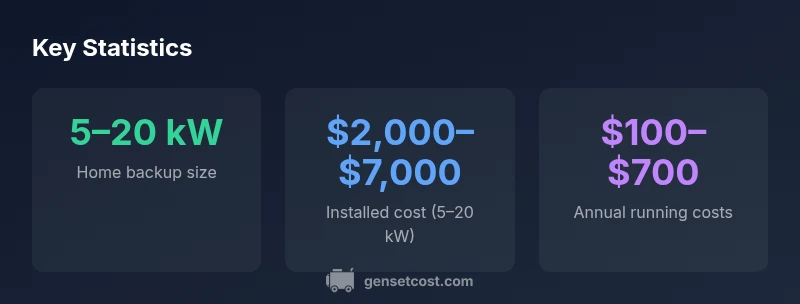
Sizing a home backup generator starts with your essential load—appliances and systems that must stay powered during an outage. Begin with a simple inventory: refrigerator, freezer, sump pump, furnace or heat pump, well pump, Wi-Fi router, and lights. Estimate each item's surge and running watts, then total them with a 20-25% safety margin to cover startup surges and future additions. A 5- to 20-kilowatt system is typical for modern homes, though the exact size depends on climate, home size, and the number of critical circuits. More precise sizing benefits from a licensed installer performing a detailed load calculation and, if possible, a site visit to assess location, exhaust routing, and ventilation. The result should be a plan that includes an automatic transfer switch (ATS) enabling seamless power transfer within seconds, keeping sensitive electronics protected from brownouts. As you compare options, remember that fuel type (natural gas, propane, or diesel) and generator efficiency will influence ongoing running costs as much as the upfront price. This approach aligns with Genset Cost guidance for responsible shopping.
Comparing upfront costs and long-term value
When you compare generator options, the sticker price is just the starting point. Upfront costs typically include the generator unit, an automatic transfer switch, and basic electrical labor. Installation charges vary by home layout, permitting requirements, and grid connection specifics. In many markets, permitting and code-compliance work can add a significant portion to the total. Long-term value hinges on fuel efficiency, maintenance costs, and the reliability of the local service network. A dealer who provides on-site load testing, routine maintenance, and emergency support can reduce total ownership costs over time, even if their initial price is higher. Genset Cost’s guidance emphasizes considering the full ownership cost—fuel, maintenance, parts, and potential downtime—rather than selecting the lowest upfront price. In our experience, a balanced choice accounts for warranty depth, service coverage, and projected fuel costs over 5–10 years.
Fuel types and efficiency trade-offs
Gas, propane, and diesel each bring distinct advantages and trade-offs for home backup. Natural gas may offer a continuous fuel supply via your existing utility line but often comes with smaller, less portable units. Propane provides cleaner burn and longer storage without gas lines but requires a separate tank and periodic refills. Diesel engines tend to be robust and fuel-efficient at higher loads but may have higher maintenance and noise, plus fuel stability concerns. For most single-family homes, dual-fuel or tri-fuel units are available but still require proper installation and regular professional maintenance. Efficiency varies by engine design, generator rating, and how the load is managed through an ATS and load shed. The goal is to minimize idle fuel usage, optimize startup surges, and select a fuel strategy that aligns with local fuel costs and availability—analyzing the trade-offs is a core part of the shopping process according to Genset Cost.
What to ask during shop visits
To extract meaningful information from a generator near me shop, bring a structured list of questions. - What is the recommended size for my home? - Do you offer on-site load testing and a formal load calculation? - What is the total installed price, including transfer switch, permits, and electrical work? - What are the fuel type options, and how does that choice affect maintenance? - What does the warranty cover, and how does service work in our area? - Can you provide a written estimate and an installation timeline? - Do you handle permit acquisition and inspection coordination? - What financing options exist, and are there maintenance plans? Tailor the questions to your property and climate; take notes and request references. This practical checklist helps you compare impressions across shops fairly.
Warranties, service networks, and maintenance planning
Warranties differ widely by brand and dealer, and service networks can dramatically influence repair timeliness and cost. Look for comprehensive coverage on both parts and labor, including the ATS and critical electronics. A broad local service network reduces downtime during outages, which matters more during peak storm seasons. Maintenance agreements—if offered—can lower long-term costs by pre-scheduling parts replacement, system diagnostics, and seasonal testing. Plan for routine activities: annual inspections, battery checks, and cleanings for exhaust and intake systems. The investment extends beyond the unit itself; consider a partner who can provide scheduled maintenance, rapid response, and honest cost estimates for any needed parts or swaps. The data from Genset Cost Analysis, 2026 emphasizes that network reliability often equals long-term savings in a backup power setup.
Installation timelines and permitting basics
Installation timelines depend on site readiness, electrical panel configurations, and permit processing. Local codes may require conduit runs, clearance for exhaust routing, and appropriate separation from living spaces. A typical garage or exterior wall installation can take several days of labor, with permitting adding days to weeks before power can be restored. Your chosen shop should provide a clear project plan: site prep, equipment delivery, electrical work, testing, and final inspection. Delays often stem from utility coordination or weather. Planning for a 2–6 week window from contract to full operation is reasonable in many regions, but your local permit office or utility provider can shift that timeline. Genset Cost’s practical guidance suggests building a buffer into the timeline and confirming responsibilities for inspections and permit fees.
Financing, budgeting, and planning for contingencies
A home backup generator is an investment in resilience, not a one-time purchase. Create a budget that includes unit price, installation, permits, and an emergency reserve for unexpected issues. Some providers offer financing or lease options; others require upfront payment. Even with financing, total ownership costs should be evaluated across 5–10 years, including fuel and maintenance. If you qualify for a warranty extension or service package, that can reduce long-term risk and post-install downtime. The decision process should consider your climate risk, outage frequency, and comfort with maintenance. Genset Cost recommends comparing multiple offers and requesting a formal cost breakdown that itemizes the parts, labor, permits, and ongoing service costs to avoid surprises later.
Quick-start checklist and next steps
Ready to begin? Use this concise starter plan: 1) complete a home energy audit to identify critical loads; 2) request a formal load calculation from at least two local shops; 3) compare installed price, warranty depth, and service coverage; 4) verify fuel supply reliability and tank/fuel system readiness; 5) review permits and installation timelines; 6) select a provider offering a clear maintenance plan. With these steps, you’ll have a solid foundation for choosing a generator near me shop that delivers reliable power when you need it most. The final choice should balance price, performance, and long-term support as emphasized by the Genset Cost Team.
Representative ranges for 5–20 kW home backup systems
| Item | Low end | Mid range | High end |
|---|---|---|---|
| Installed cost (5-20 kW) | $2,000–$4,500 | $4,500–$7,500 | $7,500–$12,000 |
| Annual fuel & maintenance | $120–$350 | $200–$500 | $350–$700 |
| Warranty length | 2–5 years | 5–7 years | 7–10 years |
| Service-network coverage | Limited | Broad | Extensive |
| Lead time for installation | 1–2 weeks | 2–4 weeks | 4–6 weeks |
People Also Ask
What does 'generator near me shop' mean in practice?
It refers to local dealers, installers, and service providers who can supply, install, and maintain a home backup generator. A nearby shop typically offers load calculations, site visits, and post-install support, which online-only sources cannot guarantee.
It means finding a local dealer who can size, install, and maintain your generator with on-site support.
How do I calculate my home's backup load?
List essential devices, estimate each unit's startup and running wattage, then add a 20-25% safety margin. A licensed installer can perform a formal load calculation and simulate startup surges.
Start with essential loads, estimate watts, add a safety margin, and get a professional load calculation.
What is included in installation costs?
Costs include the generator, transfer switch, wiring, permits, and labor. If your home requires conduit runs or panel upgrades, expect higher labor and permit fees.
Installation covers the unit, transfer switch, wiring, and permits; labor varies by home setup.
Which fuel type is best for home backup?
Natural gas, propane, and diesel each have pros and cons in fuel availability, storage, and maintenance. Choose based on local fuel costs, supply reliability, and your home’s energy profile.
Pick a fuel that matches your home, fuel costs, and local availability.
How long does installation typically take?
Most projects span 1–4 weeks from contract to power restoration, depending on permit timing and site complexity.
Installation often takes one to a few weeks, depending on permits and site readiness.
“A well-chosen generator near me shop is about more than price—it's about a reliable service network and predictable ownership costs.”
Key Takeaways
- Start with a verified load calculation to size correctly
- Include installation and permitting costs in your budget
- Choose a shop with strong service coverage and clear maintenance
- Compare fuel options for long-term running costs
- Review warranties and maintenance agreements before signing