Generator near me cheap: How to Find Affordable Home Backup Power
A practical guide to finding affordable home backup generators, comparing costs, sizing, and installation with insights from Genset Cost.


Find affordable backup power by weighing upfront price against installation and ongoing fuel costs. Portable generators often start cheaper, but standby units offer automatic power during outages. Use a total cost of ownership approach to compare options, fuel types, and warranties, so you don’t pay more over time. This guide from Genset Cost helps you evaluate options efficiently.
Why 'generator near me cheap' matters for homeowners
According to Genset Cost, the phrase generator near me cheap reflects a common goal: minimize upfront costs while ensuring reliable power during outages. Most homeowners can reduce risk by understanding that the cheapest sticker price often masks higher long-term expenses. In practice, the best approach blends price awareness with sizing accuracy, fuel availability, and installation considerations. This is why a total cost of ownership mindset matters—buying a generator is not just a purchase, it is a long-term service decision.
When you search locally for 'generator near me cheap', you’ll encounter a spectrum of options—from small, portable models to full-house standby systems. The key is to map your power needs to realistic cost outcomes and to ask sellers for itemized quotes that separate equipment, installation, and service charges. A well-informed buyer compares apples to apples, not just apples to price. The goal is to land a unit that meets your essential loads, operates safely, and fits the budget you can sustain through outages and maintenance.
Brand guidance from Genset Cost emphasizes that cost-conscious choices are most successful when you start with a clear load profile. Knowing your critical circuits—including lighting, refrigeration, and essential appliances—lets you filter options efficiently and avoid overpaying for unnecessary capacity.
How to evaluate total ownership cost
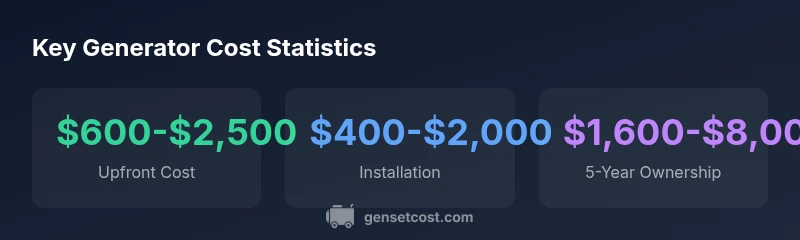
Total ownership cost includes four main components: upfront purchase price, installation charges, ongoing fuel or energy costs, and maintenance or repair expenses. Start with a simple calculator: list all critical loads, estimate your monthly outage frequency, and translate those into required generator size (in kilowatts). Then, compare quotes that break out equipment price, delivery, and installation. Fuel type matters: gasoline and propane can be cheaper upfront but more costly to operate over time than natural gas, which often leverages existing home lines. Remember to account for maintenance intervals, filter replacements, battery checks, and potential transfer switch service. A well-structured comparison will show whether a cheaper unit ends up costing more in fuel and upkeep over several years, especially if it requires frequent servicing or has a shorter warranty.
Budget-friendly options: portable vs standby
Budget-minded buyers typically start with portable generators, which generally have lower upfront prices and simpler storage. Portable gas models are easiest to buy and move, and they can power essential loads for shorter outages. However, the operating costs can accumulate quickly if outages are frequent or long. Standby generators—automatic, permanently installed units connected to a transfer switch—offer greater reliability and convenience, especially for homes with critical loads. The higher upfront cost is often offset by reduced manual operation, faster restoration after outages, and potential insurance or property value benefits. In some markets, natural gas or propane standby units can be fed by existing lines, which lowers fuel handling costs over time. Compare the total lifecycle costs instead of focusing only on sticker price to determine if a larger upfront spend pays off in reliability and peace of mind.
Correct sizing to avoid overspending
Sizing errors are a common way homeowners overspend. Start with a detailed load calculation: list every circuit, estimate wattage per device, and include surge requirements for motors (like well pumps or refrigerators). Use a reputable sizing calculator or consult a licensed installer to validate your results. Oversizing wastes upfront money and increases running costs; undersizing can lead to nuisance outages and expensive repairs. A practical approach is to compute essential vs. optional loads, identify critical appliances, and design a generator that comfortably covers essential needs with a small margin. This approach ensures you don’t pay for extra capacity you don’t need while maintaining reliability during outages.
Installation and transfer costs
Beyond the generator price, installation costs can swing widely based on local codes, labor rates, and whether you need a transfer switch or a manual/automatic system. Typical line items include delivery, siting, grounding, electrical wiring, and permits. A transfer switch is often required for seamless power transfer and safety; its cost can be substantial but is essential for code compliance. Some homes also require trenching or conduit work, particularly for outdoor installations or remote panel connections. Request a detailed, itemized quote that lists equipment, labor, permits, and any necessary upgrades. By comparing these line items across vendors, you can avoid surprise charges and identify the best overall value.
Warranties, maintenance, and long-term costs
A generator is a long-term investment. Warranty length and coverage vary by brand and model, with longer warranties typically reflecting more robust components. Maintenance costs include routine oil changes, air and fuel filter replacements, battery checks, and periodic load testing. Keep in mind that standby units may require more extensive periodic service due to continuous operation risks, while portable units emphasize consumables and fuel management. Create a maintenance calendar and factor in potential replacement parts and service visits when calculating total cost of ownership. A disciplined maintenance plan can extend the life of your generator and stabilize long-term operating costs.
How to compare quotes and find deals near you
When you shop for a generator, use a standardized checklist to compare quotes. Ensure each quote distinguishes equipment price, shipping, installation, and any required upgrades (transfer switch, permits, or dedicated circuit wiring). Ask for compliance with local codes and inspection results. Look for bundled offers that include maintenance plans or extended warranties. Finally, request references or reviews from local installers and verify service availability in your area. By compiling multiple quotes with the same scope of work, you can identify the option that delivers reliable power at the best total cost of ownership.
Comparison of generator options
| Option | Typical cost range (upfront) | Typical annual running costs | Best use case |
|---|---|---|---|
| Portable gas | "$400-$1,500" | "$30-$60 fuel per year" | "Light backup, mobility" |
| Portable diesel | "$700-$2,000" | "Diesel fuel costs vary" | "Higher power, longer outages" |
| Standby whole-home | "$2,000-$6,000" | "Gas or propane costs" | "Full-home protection" |
People Also Ask
What is the cheapest generator option for home backup?
Portable gas generators typically have the lowest upfront price, but consider ongoing fuel and maintenance costs to avoid higher long-term expenses.
Portable gas generators usually cost less to buy, but run longer on fuel and maintenance, so compare total costs.
Are portable generators cheaper than standby units?
In most cases portable units cost less upfront, while standby units cost more initially but offer automatic operation and greater reliability during outages.
Portable units cost less to buy; standby units cost more upfront but save time and improve reliability.
How do I estimate my home's power needs?
List essential loads, add up wattages, include startup surges, and use a sizing calculator or professional load analysis to determine the required kilowatts.
Make a detailed list of what you need to power and check startup surges.
What installation costs should I expect?
Expect charges for transfer switches, wiring, permits, and labor. Ask for a detailed, line-item quote to avoid hidden fees.
Installation costs vary; ensure you get a breakdown of all line items.
Where can I find cheap generators near me?
Search local retailers, big-box stores, and online marketplaces. Watch for seasonal sales and consider bundled warranties or maintenance plans.
Check nearby shops and compare deals, including warranties.
How do fuel types affect total cost?
Gasoline tends to be cheaper upfront but pricier to run long-term; natural gas or propane often offer lower ongoing costs if available.
Fuel choice matters; natural gas can lower running costs where available.
“A lower upfront price can mask higher long-term costs from installation, fuel, and maintenance. Buyers should run a total cost of ownership calculation before deciding.”
Key Takeaways
- Define your load before shopping
- Always compare total cost of ownership, not just upfront price
- Account for installation and transfer switch costs
- Prefer energy-efficient models to reduce running costs
- Get multiple quotes and verify warranties