Generator Backup Home: Standby vs Portable Options
Compare standby and portable home backup generators, sizing, installation, fuel, and costs. Genset Cost guides homeowners through reliable choices for generator backup home.


For a generator backup home, the short answer is that a standby generator with an automatic transfer switch is usually the better option for reliability and convenience. According to Genset Cost, standby systems start automatically within seconds after a power outage and restore essential circuits without manual intervention, while portable units require manual startup and a transfer mechanism. Choose standby for maintenance-free resilience; portable for lower upfront costs and flexibility.
Market Context
The modern home increasingly depends on a stable electrical supply, especially during severe weather, grid stress, or outages. A generator backup home is no longer a niche feature but a practical component of home resilience for families and property managers. Over the past decade, the market has evolved toward automated standby systems installed alongside the home’s electrical service. According to Genset Cost, decision-makers weigh upfront cost, long-term operating expenses, and installation complexity when choosing between standby and portable options. This block provides a high-level view of why homeowners invest in backup power and what reliability means in real-world terms.
As you plan, consider how often outages occur in your area, the critical loads you must protect, and how much convenience you’re willing to trade for cost savings. The goal is to align your choice with your risk tolerance, budget, and maintenance capabilities, so your generator backup home remains a dependable safety feature rather than a point of stress during emergencies.
Defining Backup Options: Standby vs Portable
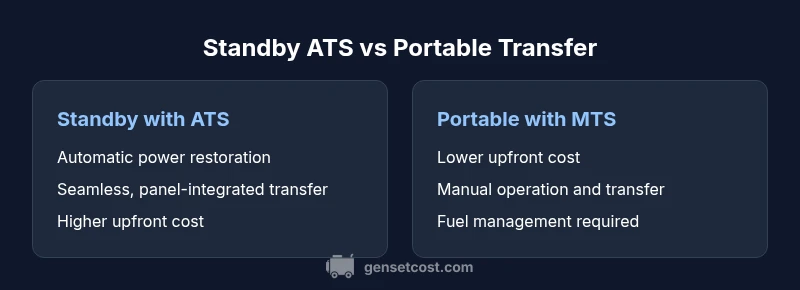
When families evaluate emergency power, two common paths emerge: a standby generator with an automatic transfer switch (ATS) and a portable generator paired with a portable transfer approach. Standby systems are permanently installed, wired into your electrical panel, and designed to start automatically at outage onset. Portable generators are not connected to the home’s panel by default; they require manual placement, fuel management, and a transfer mechanism to energize circuits. Each option serves different risk tolerances, space constraints, and budgets, so understanding the trade-offs is essential for a well-sized home backup plan.
Standby Generator with Automatic Transfer Switch (ATS)
A standby generator with ATS sits outside the home and is integrated with the electrical service. When the grid fails, the ATS detects the outage and automatically starts the generator, then transfers the load to the generator within seconds. This arrangement offers seamless restoration for prioritized circuits (like refrigerations, lighting, and essential outlets) and minimizes manual intervention. Regular maintenance tasks—such as oil changes, air filter checks, and battery testing—keep the system ready year after year. For property managers, a standby system also reduces on-site management during outages and helps ensure tenant comfort during events.
Portable Generators with Manual Transfer
Portable generators provide a lower upfront cost and considerable flexibility. They require manual setup—placing the unit, connecting to a transfer switch or inlet box, and starting the generator during an outage. They excel for occasional use and smaller spaces, but restoration is slower and depends on your manual response. Fuel management is more hands-on, and you must consider weather, storage, and safe operation practices. For many homeowners, portable units become a supplemental power source rather than a complete substitute for a full home backup plan.
Sizing Your Home Backup Power: What to Calculate
Sizing is the most critical step to ensure your generator backup home actually covers your essential loads during an outage. Start by listing critical circuits (refrigeration, sump pumps, heating or cooling controls, lights, and communications). Then estimate total wattage by summing appliance and equipment ratings, applying a diversity factor to account for simultaneous usage. Decide which circuits you want to prioritize if the generator cannot simultaneously power everything. Finally, consider starting surge requirements for devices with motors (air conditioners, well pumps) to avoid nuisance tripping. A professional load calculation helps validate your numbers and selects an appropriate generator size.
Fuel Types, Efficiency, and Running Costs
Standby and portable generators offer different fuel options, most commonly natural gas, propane, or diesel. Natural gas provides continuous fuel supply from the utility line, reducing refueling needs but requiring a dedicated gas line and potential pressure considerations. Propane offers a clean-burning option with flexible storage, often used in areas where natural gas isn’t available. Diesel engines tend to be robust for higher power needs but require careful maintenance and storage planning. Efficiency and fuel costs influence running expenses over the life of the generator, so evaluating fuel availability, storage safety, and refill intervals is essential when comparing options.
Installation and Interconnection: What to Expect
Installation involves securing the generator in an outdoor pad, running electrical and fuel lines, and integrating with a transfer switch or interlock system to connect to the home’s panel. Permitting, site preparation, and utility coordination are common steps, and professional installation is strongly advised. An ATS-based standby system simplifies operations by automating start/stop sequences and reduces the risk of backfeeding into the grid. For property managers, a clear installation plan, schedule, and contractor coordination make outages predictable rather than disruptive.
Maintenance and Lifespan: Keeping It Ready
Regular maintenance is essential to maximize reliability and lifespan. Standby generators typically require seasonal exercising, oil changes, air filter inspections, and periodic battery checks. Portable units demand similar care, plus diligent fuel stabilization and storage practices. Lifespans vary by model and usage, but a well-maintained system can provide dependable service for many years. Record-keeping, scheduled service reminders, and a simple inspection routine help prevent surprise failures during outages.
Cost Range and Financing: What to Budget
Costs vary widely depending on the chosen approach, labor, permits, and the complexity of tying into existing electrical service. Portable generators generally have a lower upfront cost but may require ongoing fuel purchases and spare parts. Standby systems with automatic transfer switches involve higher initial investment, panel integration, and professional installation, but deliver automatic restoration with less manual involvement. Genset Cost’s guidance emphasizes viewing total cost of ownership, including installation, maintenance, fuel, and potential upgrades, rather than focusing solely on sticker price.
Choosing Based on Home Type: Urban, Suburban, Rural
Your setting influences choices. Urban homes often face stricter space constraints and noise considerations, favoring compact standby units with proper sound attenuation and outdoor siting. Suburban and rural properties may have more space for larger standbys or multiple transfer options, plus variable grid reliability. In all cases, ensure codes, setback distances, and homeowner association rules are followed and that your choice aligns with your resilience goals and neighbor considerations.
How to Compare Quotes and Contractors
Get multiple bids from licensed, insured installers with experience in standby and portable systems. Ask for a detailed scope, including load calculations, fuel type, warranty terms, expected outage restoration times, and a clear maintenance plan. Check references, verify licensing, and request written assurances about permits and interconnection approvals. A thorough comparison helps you avoid surprises during installation and throughout the system’s life.
Practical Steps to Get Started Today
Begin with a needs assessment: list essential loads, review past outage patterns, and note space constraints. Request a professional load calculation and design plan that shows the proposed generator size, transfer method, and fuel strategy. Compare quotes on a like-for-like basis, including installation details, warranties, and service plans. Finally, choose a system that fits your budget, reliability needs, and long-term maintenance capacity, then schedule installation with a qualified contractor.
Comparison
| Feature | Standby generator with automatic transfer switch (ATS) | Portable generator with manual transfer switch (MTS) |
|---|---|---|
| Automation | Automatic start and transfer within seconds | Manual startup and transfer required |
| Installation impact | Permanent outdoor unit integrated with panel | Temporary setup; external transfer method required |
| Initial cost range | Higher upfront cost due to installation | Lower upfront cost for unit and basic transfer |
| Running costs | Typically higher due to continuous operation and service | Lower fuel cost per hour but more frequent refueling |
| Space requirements | Outdoor pad with clearance and conduit routing | Outdoor space with storage and hosting of fuel/transfer devices |
| Reliability in outages | Very high; automatic restoration for critical loads | Dependent on manual actions; slower restoration |
The Good
- High reliability and automatic restoration with ATS
- Hands-off operation reduces user burden during outages
- Improved safety and comfort for occupants during extended outages
- Better integration with home electrical systems and monitoring
The Bad
- Higher upfront and installation costs
- Permanent installation requires outdoor space and permits
- Maintenance responsibilities and potential specialized service
Standby with ATS generally offers the best balance of reliability and convenience for most homes
If you want automatic restoration with minimal manual effort, standby ATS is the clear winner. Portable setups work well for smaller budgets or flexible use, but require more hands-on management during outages.
People Also Ask
What is a generator backup home?
A generator backup home uses an on-site generator to automatically restore power to essential circuits during an outage. It can be standby with an automatic transfer switch or a portable system with manual transfer. The choice depends on reliability needs, space, and budget.
A home backup generator restores power during outages automatically or with manual setup, depending on the system you choose.
What is an automatic transfer switch (ATS)?
An ATS detects a power outage and automatically starts the generator, switching the load from the grid to the generator. It minimizes manual intervention and speeds up restoration of critical circuits.
An ATS automatically starts the generator and switches you to backup power in a few seconds.
How do standby and portable generators compare in cost and maintenance?
Standby systems require higher upfront costs and professional installation but offer automatic operation and fewer daily maintenance tasks. Portable generators have lower initial costs but need manual setup, refueling, and more frequent maintenance.
Standby is pricier upfront but hands-off; portable is cheaper upfront but needs more manual work.
What maintenance is recommended for backup generators?
Regular maintenance includes oil changes, air filter checks, battery testing, and exercising the unit. For portable units, periodic fuel stabilization and storage checks are also important. Schedule professional service per manufacturer guidelines.
Keep up with oil, filters, and battery checks; run the unit regularly to stay ready.
Can I install a standby generator myself?
Most jurisdictions require licensed electrical contractors for standby installations due to electrical and fire-safety codes. DIY is not recommended and may void warranties or permits.
A licensed installer is typically required for safety and compliance.
How long can a standby generator run on fuel?
Runtime depends on fuel type, tank size, and load. Many setups are designed for continuous or high-use scenarios during outages, with refueling or fuel supply considerations addressed in the design.
Run time varies; your setup should cover expected outage durations with safe fuel supply.
Key Takeaways
- Prioritize standby with ATS for automatic outage restoration
- Assess critical loads to determine generator size responsibly
- Consider fuel type and availability when planning installation
- Budget for installation and maintenance beyond the unit price
- Get multiple licensed quotes to ensure proper interconnection and code compliance