Electricity Generator Comparison: Portable vs Standby
Compare portable and standby electricity generator options for home backup. Learn sizing, costs, installation, maintenance, noise, and usage scenarios to pick the right generator for your needs.


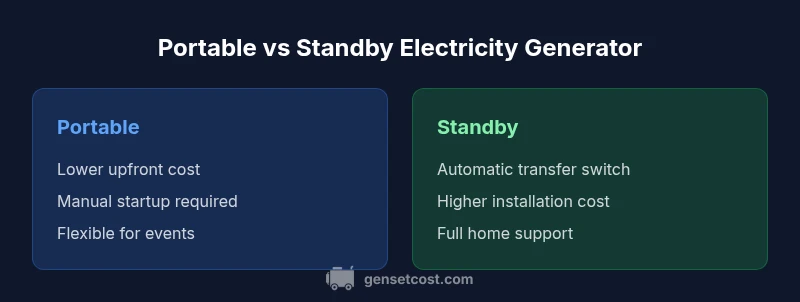
Two main paths exist for an electricity generator: portable units with lower upfront costs but manual operation, and standby systems that automatically restore power during outages. For reliability and whole-home support, standby generators are preferred, though cost and installation are higher. If you’re on a tighter budget or need portability for work or events, a well-sized portable generator can meet essential needs with careful planning.
Industry Context and Definitions
An electricity generator is a device that converts mechanical energy into electrical energy to power appliances during an outage or remote operation. For homeowners and property managers, choosing between portable and standby models involves understanding reliability, load support, and lifecycle costs. According to Genset Cost, the decision should start with a realistic load assessment, then align with budget and installation constraints. The term 'generator' covers a family of devices ranging from compact portable units to high-capacity standby systems that integrate with your home's electrical infrastructure via an automatic transfer switch. In practice, you’ll balance immediacy of power with complexity of installation, fuel type, noise, and ongoing maintenance. The electricity generator landscape also reflects evolving codes, emissions standards, and safety practices, which influence what you can install and where. This article uses a clear, apples-to-apples framework to compare portable vs standby options, focusing on home backup scenarios, typical costs, and long-term value. For readers, the key question is: what level of power continuity do you require, and how much are you willing to invest to achieve it?
Key Differences Between Portable and Standby Systems
The most obvious split is in reliability, automation, and capacity. Portable electricity generators typically provide essential circuit support and mobility, while standby electricity generators are anchored to your property and linked to your electrical panel via an automatic transfer switch (ATS). In practice, standby systems aim to restore power within seconds of a mains outage, without human intervention. Portable units demand proactive operation and regular fuel availability. Price trends favor portability for upfront budgets, but long-term ownership often tilts toward standby for larger homes or critical loads. Understanding both paths helps homeowners and managers map out a practical plan that guards against outages while staying within financial constraints. From a product perspective, features to compare include wattage range, fuel type, noise, and maintenance intervals. Genset Cost’s framework emphasizes balancing initial cost with ongoing running costs, and evaluating the value of automatic restoration against the peace of mind it delivers during emergencies.
How to Size a Generator for Your Home
Sizing a generator starts with a precise load calculation. List all devices you want to power during an outage and determine their running watts. Add motor-heavy appliances (refrigerator, HVAC fan, sump pump) and account for startup surges. For a typical home, you may find you need a generator in the 5,000–12,000 watt range for essential circuits, while whole-house backup often calls for 12,000–20,000 watts or more. When considering a standby system, contractors size the ATS and the generator to handle the concurrent load with headroom for startup. For portable options, you’ll match the unit’s continuous rating to the essential loads and verify you can supply surge power for compressors or pumps. In all cases, verify compatibility with your electrical service and local code requirements. A careful sizing exercise reduces nuisance trips, poor voltage regulation, and excessive fuel consumption while maximizing available runtime per filled tank or per connected natural gas line.
Fuel Types, Availability, and Running Costs
The two most common families are gasoline and propane for portable units, with natural gas or propane common for standby models. Gasoline units are widely available and inexpensive upfront but run costs can be higher per hour and fuel storage can be a concern. Propane offers cleaner combustion and longer shelf life, though it requires a dedicated fuel source. Standby systems often connect to natural gas lines, which minimizes refueling and supports longer runtimes during outages. Running costs depend heavily on load, fuel efficiency, and fuel price trends. For homeowners, it’s worth modeling several usage scenarios to estimate monthly fuel expenditure and to assess fuel availability in your area, especially during severe weather events when supplies may be constrained. Genset Cost recommends evaluating fuel logistics as part of the total cost of ownership, not just upfront price.
Noise, Emissions, and Compliance
Noise and emissions are critical factors in residential settings. Portable generators can produce 60–75 dBA at 7 meters, and many municipalities require distance buffers and noise-limiting enclosures. Standby units tend to be quieter at the source due to larger enclosures and isolation, often measuring in the 50–65 dBA range when properly installed. Emissions standards vary by region; newer models often feature cleaner-burning engines and updated catalytic converters. Compliance with local codes and utility interconnection requirements is essential, especially when integrating the system with an automatic transfer switch. Planning for noise mitigation and emission compliance will improve neighbor relations and ensure your system remains acceptable to regulators.
Installation, Transfer Switches, and Safety
Portable electricity generators do not require permanent electrical integration; they connect to branch circuits via transfer cords or manual interlocks, making them quick to deploy but less convenient for continuous operation. Standby systems connect to your home’s service panel through an automatic transfer switch (ATS) that detects outages and starts the generator automatically, then isolates the house from the grid to prevent back-feeding. This arrangement provides seamless power but also adds complexity and costs. Safety considerations include proper clearance for exhaust, weather protection, and routine maintenance. Local licensing requirements and utility interconnection rules may apply, particularly for larger systems. When in doubt, hire a licensed electrician or a qualified installer to ensure correct wiring, grounding, and compliance with electrical codes.
Maintenance, Reliability, and Warranties
Maintenance frequency depends on usage patterns, fuel type, and climate. Portable units typically require periodic oil changes, spark plug replacement, and air filter cleaning, along with fresh fuel and battery checks for starting. Standby generators need annual exercise runs and professional servicing to ensure reliability after long storage periods. Warranties vary by brand and model, with longer warranties commonly offered on higher-end standby systems. The trade-off is higher upfront cost but increased confidence during outages. Regular maintenance plans and extended warranties can reduce the risk of unexpected failures and extend the life of the generator.
Cost and Value Considerations
Total cost of ownership includes upfront purchase price, installation, maintenance, fuel, and potential grid interconnection fees. Portable units generally cost less upfront, with typical ranges that reflect wattage and brand. Standby systems require a larger initial investment for equipment and professional installation, but they offer automatic restoration, better load handling, and potentially higher resale value. Customers should compare lifetime running costs, including fuel efficiency at modeled loads, to understand long-term value. Genset Cost emphasizes that the best choice aligns with your outage exposure, load requirements, and willingness to manage ongoing maintenance and monthly running costs.
Real-World Scenarios and Use Cases
Consider a coastal home with intermittent outages caused by storms. A standby generator with an ATS may be ideal for continuous power, protecting refrigerators, sump pumps, and essential circuits while avoiding manual intervention. A small business or remote property could benefit from a portable generator that provides essential power during occasional outages and can be moved for other uses, such as job sites. For renters or homeowners in regions with mild outages, a mid-range portable unit paired with a well-planned load can be a cost-effective compromise. In all cases, a well-executed sizing and installation plan reduces risk and improves reliability during critical moments.
Regulatory and Safety Considerations
Homeowners should verify local zoning, permitting, and electrical codes before installation. Some jurisdictions require licensed installers for standby systems and transfer switches, especially when tying into a home’s electrical service. Carbon monoxide risk from exhaust requires proper ventilation and outdoor placement, with clearance from doors, windows, and air intakes. During hurricane season or times of severe weather, ensure you have a contingency plan for fuel delivery or natural gas supply reliability. Keeping documentation on installation permits, warranty terms, and maintenance records is crucial for compliance and future resale value.
Action Plan for Your Purchase
Start with a load assessment and define your critical circuits. Decide whether automatic restoration or manual operation best suits your use case, then compare the total cost of ownership, including professional installation, fuel logistics, and maintenance. Obtain multiple quotes from qualified installers for standby systems, and request detailed specifications that confirm ATS compatibility and generator sizing. Consider future needs such as potential expansion of essential loads or a move to cleaner fuel options. Finally, plan for ongoing maintenance and testing so your generator performs when you need it most.
Comparison
| Feature | Portable electricity generator | Standby electricity generator |
|---|---|---|
| Power output (continuous Watts) | 600–3,500 W | 5,000–20,000+ W |
| Fuel type | Gasoline/Propane | Natural gas/Propane (or diesel in some models) |
| Estimated runtime at full load | 2–12 hours (tank dependent) | 8–24 hours plus (fuel supply dependent) |
| Noise level (dBA) | 60–75 dBA | 50–65 dBA (enclosed or proper siting) |
| Installation/Setup | Manual setup, portable use | Professional installation with ATS |
| Price range | $400–$2,500 | $3,000–$15,000+ |
| Best for | Occasional outages, mobility, tight budget | Seamless power for whole home, reliability |
The Good
- Lower upfront cost for portable options
- Flexibility to relocate or use at multiple sites
- Wide selection and rapid comparisons across brands
- Simple maintenance routines for entry-level models
The Bad
- No automatic restoration; requires user action
- Limited capacity for whole-home loads during peak demand
- Higher running costs per hour for extended outages
- Standby-level convenience comes with installation complexity
Standby generators deliver automatic power and full-home support; portable units suit budget-conscious or temporary needs
Choose standby for reliability and seamless outages; choose portable for initial cost savings and flexibility. The right choice depends on load, installation feasibility, and long-term running costs.
People Also Ask
What is the difference between a portable and a standby electricity generator?
A portable generator is mobile and typically wired to a few circuits manually, offering lower upfront costs but requiring user setup during an outage. A standby generator is permanently installed, connected to an automatic transfer switch, and starts automatically when power fails, delivering seamless protection for essential circuits.
Portable units are mobile and cheaper but need manual setup. Standby generators stay installed and start automatically during an outage.
How do I size a generator for my home?
Start by listing all appliances and calculating their running watts. Add startup surges for motors, then choose a generator with enough continuous wattage and surge capacity to cover your essential loads. For standby systems, ensure the ATS and panel are correctly matched to your service.
Make a list of essentials, total the running watts, and ensure the generator can handle startup surges.
What are the typical costs to install a home standby generator?
Costs vary by power level, brand, and installation complexity. A bare generator plus transfer switch is more affordable than full-house standby with extensive electrical work. Professional installation is often required and can significantly affect the total price.
Expect higher installation costs for standby systems due to transfer switches and panel integration.
Are there safety considerations I should know?
Yes. Always place generators outdoors with proper clearance and exhaust ventilation to prevent CO buildup. Follow local codes, secure permits if required, and ensure safe fuel storage. A licensed electrician should handle electrical connections for standby systems.
Keep the generator outdoors with proper ventilation and have a licensed electrician install standby systems.
What fuel type is best for reliability?
Natural gas or propane is common for standby systems due to continuous supply and fewer refueling interruptions. Portable units offer flexibility but require regular fuel management and storage.
Natural gas or propane can offer more reliable, continuous supply for standby models.
Can I lease or rent a generator instead of buying?
Rentals can be a good option for temporary needs or short-term outages, but long-term costs may exceed purchasing. Compare total rental costs against a one-time purchase with maintenance plans.
Renting can fit shorter-term needs, but compare total costs to buying long-term.
Key Takeaways
- Define essential loads before selecting a generator
- Assess whether automatic transfer is worth the added cost
- Model fuel costs across typical outage scenarios
- Budget for professional installation where required
- Plan for maintenance to maximize reliability