Generator and Power Systems: Side-by-Side Comparison
An objective comparison of generator and power system options for homes, covering standby vs portable units, fuel choices, sizing methods, installation, and lifecycle considerations to guide your decision.


Standby and portable power systems both close the outage gap, but they serve different needs. Standby generators sit permanently and switch automatically for whole-home resilience, while portable units offer flexible, lower-cost power for targeted loads. Use sizing, fuel options, and installation constraints to choose the right fit.
Why generator and power systems matter
Power outages disrupt daily life, impact business continuity, and can compromise safety in extreme weather. For homeowners and property managers, a thoughtful approach to generator and power systems balances reliability, cost, and convenience. The term “generator and power systems” covers a spectrum from permanently installed standby units to portable machines that travel with you. In this guide, we explore how these systems fit into a broader strategy of resilience, fault tolerance, and energy management. We will also connect the dots between load priorities, fuel considerations, and installation requirements so you can make an informed decision that stands up to real-world outages and weather events.
Core components of modern power systems
A modern power system centers on three core elements: the generator, the transfer mechanism, and the control system. The generator is the energy source, available in various fuel configurations. The transfer mechanism automatically or manually routes power from the generator to the electrical panel when the grid fails. Controls range from basic manual switches to sophisticated smart controllers that coordinate load management and predictive maintenance. In many homes, additional components such as automatic transfer switches (ATS), fuel storage, and conditioning equipment help optimize performance and extend system life. Understanding how these parts interconnect supports better sizing, safer installation, and easier maintenance.
Fuel types and efficiency considerations
Fuel choice influences availability, cost stability, storage, and emissions. Common residential options include natural gas, propane, and diesel fuels. Natural gas offers a continuous supply from the utility line but depends on a reliable gas service and pressure. Propane provides on-site storage and can offer cleaner combustion in some units, though storage limits and refill logistics matter. Diesel generators are durable and often preferred for high-load, long-duration scenarios but require careful fuel management and more frequent maintenance. Efficiency is impacted by engine design, load factor, and start-up surges, so sizing and operation strategy should reflect actual energy needs rather than peak demands.
Sizing and load analysis: how to determine your needs
Accurate sizing starts with a load analysis. List essential circuits—heating, cooling, refrigeration, medical devices, and critical communication systems—and estimate their running and starting power requirements. Distinguish between continuous load (what you run most of the outage) and peak demand (the momentary surge when motors start). Use a reputable sizing calculator or work with a licensed installer who can model simultaneous loads and contingency margins. Remember to account for future expansion, such as a pool heater or additional circuits, to avoid underestimating capacity.
Standby vs portable vs microgrid: choosing the right approach
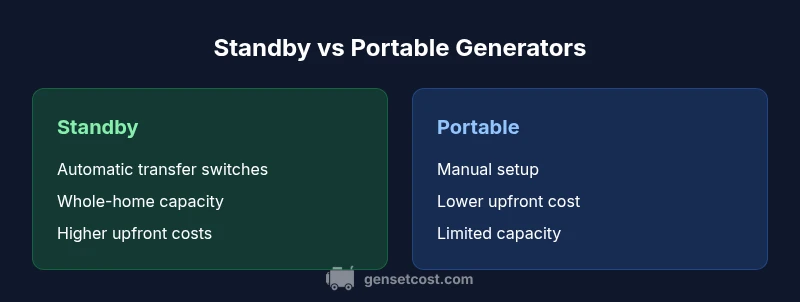
Standby systems are permanently installed and connect to the home’s electrical panel through an automatic transfer switch, delivering seamless power to essential circuits during an outage. Portable generators are mobile, typically cheaper upfront, and require manual setup, fuel handling, and a transfer method. For smaller properties or budget-conscious scenarios, portable units can meet supplemental needs but demand more active management and may not cover entire homes. Microgrids and hybrid approaches, though less common for single-family homes, can offer high resilience in larger properties or multi-tenant buildings, integrating solar, storage, and generators for optimized reliability.
Integration with home electrical systems and transfer switches
Effective integration hinges on a well-designed transfer mechanism. An automatic transfer switch (ATS) detects grid loss and starts the generator automatically, routing power to designated circuits without human intervention. A manual transfer switch (MTS) requires a person to start the generator and flip the switch, increasing response time but reducing complexity. Sizing and wiring must comply with local electrical codes and permit requirements, often necessitating a licensed electrician and, in some cases, a fuel technician. Proper grounding, surge protection, and routine testing are essential for reliability and safety.
Costs, budgets, and lifecycle considerations
Total cost is driven by system size, fuel type, installation complexity, and added features like smart monitoring or remote synchronizing. Expect a significant difference between portable and standby solutions, particularly when considering installation labor, permits, and integration with the electrical panel. Lifecycle costs include fuel, maintenance, oil changes, inspections, and potential component replacements. Efficient operation—such as running essential circuits only and scheduling regular tests—can improve return on investment and shorten payback periods over time.
Installation, maintenance, and reliability
Successful deployment relies on planning, permitting, and professional installation. A licensed contractor should design the system, size the equipment, route fuel lines, and install safe, code-compliant interconnections. Maintenance involves regular oil changes, filter checks, battery tests, and annual professional service. The reliability of a generator and power system also hinges on fuel stability, ventilation, and weather protection. Keeping a maintenance log and performing periodic self-tests improves readiness and reduces the risk of unexpected failure during outages.
Trends, standards, and future-proofing your power setup
The field is moving toward smarter, more integrated solutions. Expect enhancements in load management, remote monitoring, and software-driven diagnostics that simplify maintenance and optimize fuel efficiency. Standards and best practices emphasize safety, proper integrator training, and consistent testing routines. When planning for future-proofing, consider modular designs that allow upgrades, compatibility with renewable sources, and scalable storage to hedge against longer outages and evolving regulatory environments.
Comparison
| Feature | Standby/Whole-House Generator | Portable Generator |
|---|---|---|
| Typical power capacity | high capacity (can support whole-home loads) | low to moderate capacity (supplies selected circuits) |
| Installation complexity | high (permanent installation with electrical and fuel connections) | low to moderate (requires manual setup and safe fueling) |
| Fuel options | natural gas/propane or diesel (fuel supply fixed by site) | gasoline or propane on-site storage (portable use) |
| Noise level | typically higher due to larger engine and enclosure | generally lower due to smaller size and distance from living spaces |
| Best for | whole-home resilience and automatic response | short-term relief or supplemental power with flexibility |
The Good
- Automatic response for outages improves reliability
- Seamless integration with home electrical system
- Higher long-term value and resale appeal
- Minimal daily life disruption during outages
The Bad
- Higher upfront cost and longer lead times
- Requires professional installation and permits
- Ongoing fuel, maintenance, and insurance considerations
Standby systems are generally the better long-term investment for whole-home reliability.
For most homeowners, a professionally installed standby generator with an automatic transfer switch offers the best mix of convenience, safety, and resilience. Portable generators remain valuable for supplemental or targeted use when budget or space is limited.
People Also Ask
What is the difference between a standby generator and a portable generator?
A standby generator is a permanently installed unit connected to the electrical panel with an automatic transfer switch (ATS) that starts automatically during an outage. A portable generator is mobile, requires manual setup, fuel handling, and a transfer method. Standby systems offer convenience and speed; portable units provide flexibility but demand more active management.
Standby generators start automatically when the power goes out, while portable generators require manual setup and fuel handling. Standby is convenient for whole-home power; portable can fill gaps for specific loads.
How do I determine the right generator size for my home?
Begin with a load analysis of essential circuits and motor-start surges. Use a reputable sizing calculator or work with a licensed installer to model simultaneous loads and a margin for growth. Avoid undersizing to prevent nuisance outages or overloading the system.
Start with a careful load analysis and use a calculator or professional sizing service to ensure you pick the right size.
Is natural gas or propane better for residential generators?
Natural gas provides a continuous utility supply if available, reducing on-site storage needs. Propane offers on-site storage and can be easier to manage where natural gas lines are unavailable. Each fuel has trade-offs in price stability, availability, and energy density.
Natural gas is convenient if a line exists; propane is portable and storable, but both have trade-offs in cost and availability.
What permits are typically required for installing a home backup generator?
Most areas require electrical permits and a transfer switch installation, plus possible gas line or fuel storage permits. Inspections and compliance with local codes are common, and a licensed electrician should oversee the work.
Expect electrical permits and inspections; a licensed professional is usually required to pass code checks.
How often should I service my generator?
Follow the manufacturer’s schedule for oil changes, filters, and inspections. Many systems benefit from annual professional service to maintain warranty coverage and reliability.
Regular maintenance, including annual professional service, keeps the system reliable and within warranty.
Key Takeaways
- Assess essential vs. nonessential loads before sizing
- Prefer automatic transfer switches for rapid outage response
- Choose fuel type based on availability and storage capacity
- Plan maintenance and testing as part of the lifecycle
- Consult a licensed pro for sizing and installation