Generator Repairing Near Me: Local Help, Safer Fixes
Learn how to locate credible generator repair services near you, compare quotes, and budget fixes confidently. A Genset Cost guide to safe, compliant repairs.


Goal: Find credible generator repair services near you, diagnose common electrical and mechanical issues, and estimate repair costs. This guide shows how to verify licenses and insurance, compare quotes, and decide when a parts replacement or full unit overhaul is warranted. It also covers essential safety precautions, typical turnaround times, and how Genset Cost analyzes local options to help homeowners and property managers choose confidently.
Understanding generator repairing near me: why local fixes matter
According to Genset Cost, local generator repairing near me options matter because technicians who can arrive quickly reduce downtime during outages and keep warranty requirements intact. When a repair is performed close to your property, you benefit from faster response times, easier parts sourcing, and clearer communication about job scope. For homeowners and property managers evaluating options, a local provider often translates to better scheduling flexibility and support after service. In practice, the right local team can diagnose fuel, electrical, or cooling problems without sending your unit far away, which reduces risk and accelerates the repair cycle. This is especially important for standby generators that support critical loads during power outages. Reliability improves when the repair plan aligns with your location, climate considerations, and utility constraints. For many, the decision to seek generator repairing near me is not just about price but about speed, accountability, and ongoing support that keeps your system ready when it’s needed most.
The Genset Cost team found that a nearby, reputable technician can deliver clearer estimates, faster callback times, and better post-repair follow-up. Proximity helps with on-site testing, safety checks, and monitoring after startup. When you prioritize local options, you’re more likely to access a technician who understands regional fuel quality, weather patterns, and typical maintenance cycles that affect generator performance.
How to evaluate and choose a local repair service
Choosing a local generator repair provider requires a structured approach. Start by confirming credentials: licensing where required, technician certifications for electrical work, and proof of insurance. Seek a few quotes and ask for a breakdown of labor, parts, and travel charges. Look for evidence of prior work on similar generator models, and request references or online reviews from customers in your area. Pay attention to how the contractor communicates: do they respond promptly, provide clear timelines, and explain potential causes and solutions in plain language? Genset Cost analysis shows that comparing multiple quotes helps you gauge realism in pricing and avoid lowball offers. Also verify whether the provider will handle permits or coordinate with your utility if required. For homeowners, it’s worth asking about diagnostic fees and whether estimates are free after a diagnostic visit. Finally, clarify post-repair follow-up options, warranty terms, and what happens if a repair fails soon after kickoff. When searching for generator repairing near me, prepare questions about fuel type compatibility, parts sourcing, and the expected lifespan of the repair.
Common generator problems and practical fixes you can trust
Many generator issues fall into a few predictable categories: fuel delivery problems (stale gas, clogged carburetors, poor fuel quality), electrical faults (faulty wiring, weak connections, dead battery), cooling issues (overheating, clogged air intake), and control panel faults (reset/diagnostic codes). A basic on-site inspection can reveal corroded terminals, loose wires, or dirty air filters. For standby generators, issues with transfer switches or battery banks are common culprits that prevent automatic start. While it’s tempting to try DIY fixes, professional diagnosis is safer and more reliable, especially when dealing with high-voltage systems. If your unit is sparking, emitting unusual smells, or failing to start, schedule a professional diagnostic. Always confirm that the repair plan includes testing under load, which ensures the generator can sustain power for the intended appliances. In some cases, a repair is straightforward: replace a worn fuel filter, tighten connections, or reseat a relay. In others, it may require parts replacement or more extensive service for critical components. The key is to document symptoms before calling a technician so you can describe the issue accurately and obtain a precise estimate.
Cost ranges, insurance, and budgeting for repairs
Repair costs for generators vary widely based on model complexity, required parts, and labor. Common fixes like filter changes or battery replacements tend to be on the lower end, while electrical wiring, control panel replacements, or engine overhauls can push costs higher. You should expect to receive a written estimate detailing labor rates, parts costs, and any diagnostic fees. If you own a standby generator that supports essential loads, consider consulting multiple local providers to compare not only price but service commitments and warranty terms. Insurance may cover certain accidental damages or emergency repair costs, depending on your policy. For homeowners, a practical budgeting approach is to set aside a contingency for unexpected complications, particularly if the generator is older or has limited service history. Keep in mind that some manufacturers authorize certain repair work only through approved dealers, which can influence pricing and available parts. Genset Cost recommends requesting a courtesy inspection before committing to a major repair, which helps you weigh repair versus replacement decisions.
Safety, licensing, warranties, and documentation
Safety is non-negotiable when repairing generators. Ensure that any technician you hire follows local electrical codes, uses proper lockout-tagout procedures, and tests the system under safe conditions. Verify licensing requirements in your jurisdiction; some regions require specific electrical or gas-fitting licenses for generator work. Review warranty implications—some repairs may impact warranties, while others are fully covered if performed by authorized dealers. Documentation matters: obtain a detailed written report of all diagnostics, recommended fixes, parts used, and a clear warranty on labor and parts. Create a file with serial numbers, model codes, service dates, and contact information for your chosen provider. For property managers, maintain a centralized log of repair activities to streamline audits and future maintenance planning. The Genset Cost team emphasizes the importance of keeping records for future warranty claims and to improve the resale value of the property.
What to expect from the repair process and aftercare
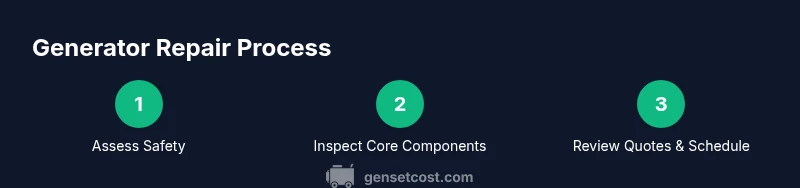
After you select a local repair provider, expect a structured sequence: an intake assessment, on-site diagnosis, parts procurement (if needed), repair execution, and post-repair testing. A reputable technician will test the generator under load, verify automatic start operation, and confirm that safety systems function correctly. They should explain the root cause, show you the replaced parts, and provide a written warranty for labor and components. Scheduling care for ongoing maintenance, like seasonal startup checks and fuel system cleaning, helps prevent future outages. Ask about maintenance plans that cover periodic inspections and prompt repairs, which can extend the life of the unit. If the repair is time-sensitive, discuss temporary power options or interim backup solutions during outages. Finally, ensure you receive all receipts and warranty documents, and ask for a recommended maintenance cadence tailored to your generator type and local climate. The Genset Cost team recommends tracking service history and setting reminders for routine upkeep to maximize reliability.
Tools & Materials
- Multimeter(Check voltage output and continuity; verify electrical circuits during/after repair)
- Torque wrench(Optional for precise bolt tightening on mounting hardware)
- Socket set(Remove covers and access panels; select correct sizes for model)
- Screwdrivers (flathead & Phillips)(For panel screws and terminal connections)
- Insulated gloves and eye protection(Personal protective equipment; essential for high-voltage work)
- Fuel stabilizer and clean air filter(Keep on hand for maintenance tasks and quick fixes)
- Owner’s manual or model spec sheet(Reference for wiring diagrams, torque specs, and service intervals)
Steps
Estimated time: 4-6 hours
- 1
Prepare safety and area
Power down the generator and disconnect from any loads. Place warning signs and keep children/pets away. Ventilate if you’re in a shed or enclosed space to avoid hazardous fumes.
Tip: Wear PPE including gloves, eye protection, and non-slip footwear to prevent injuries. - 2
Confirm model and service history
Locate the model and serial numbers. Check the service history and any previous repairs. This helps determine if parts are compatible and whether the repair affects warranty.
Tip: Take photos of serial labels for reference when sourcing parts. - 3
Inspect fuel, oil, and batteries
Check fuel quality, oil level, coolant, and battery charge. Replace stale fuel and clean or replace filters as needed to prevent poor performance.
Tip: If fuel smells off, avoid starting the unit and dispose of the fuel properly. - 4
Run basic electrical tests
Use a multimeter to verify battery voltage, grounding, and key circuit continuity. Inspect wiring for loose terminals and corrosion.
Tip: Document readings and compare with manufacturer specs in the manual. - 5
Identify likely failure points
Check for worn belts, clogged carburetors, dirty air filters, or degraded spark plugs. For standby units, inspect transfer switches and control boards.
Tip: Always test safety interlocks after any repair to confirm correct operation. - 6
Request quotes from local pros
Contact 3-4 local providers for diagnostic fees and repair estimates. Compare what’s included: parts, labor, travel, and warranty terms.
Tip: Ask for a written scope of work before work begins to avoid scope creep. - 7
Decide and schedule repair
Choose the most credible option based on price, warranty, and responsiveness. Schedule the repair and arrange access to your property as needed.
Tip: If the unit is old and repair costs approach replacement, get a replacement quote as a baseline before committing.
People Also Ask
What signs indicate I need generator repair near me?
Common signs include difficulty starting, unusual noises, overheating, poor electrical output, and frequent tripping of breakers. If you notice these, contact a local professional promptly to diagnose and prevent further damage.
Common signs include hard starts, noises, overheating, weak power, and breaker trips. Contact a nearby professional promptly to diagnose.
How long do repairs typically take?
Repair duration varies with the issue and parts availability. Simple fixes may complete the same day, while complex problems or back-ordered parts can take several days. A written repair window helps set expectations.
Repair time depends on the problem; simple fixes can be quick, more complex ones may take a few days. A written estimate will outline timing.
Should I repair or replace my generator?
If repair costs exceed 50-70% of a comparable new unit or the unit is unreliable, replacement may be wiser. Consider warranty status, fuel efficiency, and expected load needs when deciding.
If repair costs are high or the unit is unreliable, replacement can be smarter. Consider warranty and future power needs.
How can I verify a repair technician’s credentials?
Ask for license numbers, certifications, insurance proof, and references. Check reviews and confirm whether they are factory-trained for your generator model.
Ask for licenses, insurance, and references. Check reviews and training related to your model.
What factors affect repair costs?
Labor rates, parts price, diagnostic fees, accessibility, and whether specialty components are required all influence cost. Regional demand for skilled technicians also plays a role.
Costs depend on labor, parts, diagnostics, and accessibility, plus regional demand for skilled techs.
Are there cost-saving tips for generator repairs?
Request quotes with a detailed scope, seek warranty-covered repairs, and consider preventive maintenance to avoid future big-ticket fixes. Bundling maintenance may reduce overall costs.
Get clear quotes, use warranties where possible, and consider preventive maintenance to save later.
Watch Video
Key Takeaways
- Identify credible local repair options to minimize downtime
- Get multiple quotes and compare parts, labor, and warranty terms
- Prioritize safety and documentation in every repair
- Understand when repair makes sense versus replacement
- Maintain ongoing maintenance to extend generator life