Generator Installation Near Me: A Step-By-Step Guide
Learn how to plan, size, permit, and install a home backup generator near you with confidence. This step-by-step guide covers permitting, equipment choices, contractor selection, safety, and maintenance.


Planning a generator installation near me begins with a clear load assessment, proper site prep, and local permit awareness. This guide covers equipment choices, permitting, and contractor considerations to ensure safety and code compliance. According to Genset Cost, aligning your plan with licensed professionals yields reliable operation, smoother inspections, and fewer costly delays.
Why you’re reading about generator installation near me and what it delivers
If you’re a homeowner or property manager, finding a reliable generator installation near me is about more than buying a big box unit. It’s about a comprehensive plan that balances load needs, safety, and code compliance with the realities of your local utility rules. The process typically begins with a careful assessment of your electrical load, critical circuits, and future expansion plans. A properly planned installation reduces nuisance outages, protects equipment, and maintains essential services like heating, refrigeration, and medical devices. In this section, you’ll learn how to set expectations, identify the key players involved, and understand the broad sequence from planning to approvals. The path to a smooth install is less about chasing the lowest price and more about choosing the right size, the correct transfer method, and a compliant installation that stands up to inspections.
Brand mention and context within planning
According to Genset Cost, a well-documented plan that includes load calculations, site assessment, and permit readiness correlates strongly with a successful installation. This isn’t just about buying a generator—it’s about designing a system that integrates with your home’s electrical panel and your utility’s requirements. You’ll reduce the risk of undersizing (which causes nuisance trips) or oversizing (which wastes fuel and increases upfront cost). The initial phase should also identify whether you’ll need a standby unit with an automatic transfer switch or a portable setup with manual intervention. In all cases, engaging licensed professionals early saves time and prevents expensive rework later.
Practical takeaway
Start by listing critical loads (essential lights, refrigeration, heating, medical devices) and note any future expansions (additional circuits or EV charging). This creates a baseline for choosing generator size and transfer-switch configuration. Keep documentation of your home’s electrical panel and existing wiring so your installer can assess compatibility. Finally, confirm the local authority’s requirements for permits and inspections before any physical work begins.
Quick-start checklist
- Identify critical circuits and desired resilience level
- Gather panel rating and existing wiring information
- Confirm whether your area requires a permit and inspection
- Shortlist licensed installers and request written quotes
- Schedule a site assessment and load calculation
Tools & Materials
- Generator (sized for peak load and future needs)(Select a generator that covers essential circuits with headroom for growth. Consult a sizing calculator or professional.)
- Transfer switch (automatic preferred)(Automatic transfer switches (ATS) enable seamless switching during outages.)
- Fuel source equipment (natural gas, propane, or diesel lines)(Fuel supply must be properly routed with regulators and shutoffs.)
- Conduit, wiring, and electrical boxes(All wiring must meet local codes and be properly protected.)
- Gas line components and shutoff valves (if applicable)(Ensure gas lines are sized and tested for the generator’s input.)
- Permits and inspection paperwork(Your local jurisdiction may require permits, inspections, and utility coordination.)
- PPE and testing tools(Hard hat, gloves, eye protection, multimeter, voltage tester, and pressure gauges.)
- Licensed installer or electrician(Electrical and gas work should be performed by a qualified professional.)
Steps
Estimated time: 2-6 weeks from planning to final inspection
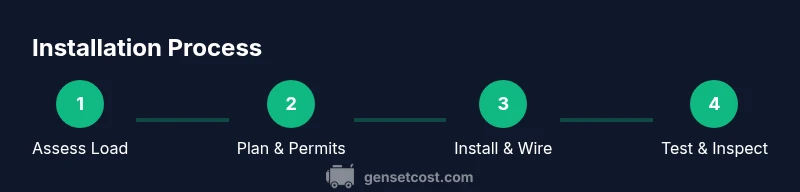
- 1
Assess load and select equipment
Begin with a detailed load calculation to determine the minimum generator size and transfer-switch capacity. Identify critical circuits that must stay powered during an outage and consider future proofing for additional loads.
Tip: Ask your installer to document the calculation method and keep a copy for future maintenance. - 2
Check permits and utility requirements
Contact your local building department to understand permit requirements and any utility interconnection rules. Prepare for potential inspections and anchor the project in a realistic timeline.
Tip: Request a written permit checklist and expected inspection windows to avoid delays. - 3
Plan siting and foundation
Choose a level, well-ventilated outdoor location with clearance from structures and vents. Plan for a solid concrete pad or rated base, and ensure drainage away from buildings to prevent water intrusion.
Tip: Verify setback distances in your local codes to prevent exhaust exposure. - 4
Install transfer switch and mounting
Mount the generator and ATS on a concrete pad, connecting the ATS to the main service panel. Route conduits and fuel lines following code-required clearances.
Tip: Coordinate with the utilities for any required shutoffs or notifications before energizing the system. - 5
Run fuel and electrical connections
Connect the fuel source to the generator and run the main electrical feeds from the ATS to the panel. Use proper fittings, strain reliefs, and protective enclosures.
Tip: Leak-test gas lines and check for secure cable routing to avoid vibration damage. - 6
Test, verify, and inspect
Perform functional tests: simulated outage, auto-transfer, and load transfer with diagnostic checks. Schedule an official inspection after passing internal tests.
Tip: Document test results and obtain a final sign-off from the inspector. - 7
Plan maintenance and training
Create a maintenance calendar for fuel, battery, and parts; train occupants on manual operation if needed and establish a winterization routine.
Tip: Keep a spare fuel stabilizer and a log of maintenance activities.
People Also Ask
Do I need permits to install a home standby generator?
Most jurisdictions require permits and inspections for a permanent standby generator. Your installer can help you determine the exact requirements and coordinate with the building department.
Yes. Permits are typically required to ensure safety and code compliance, and your contractor can guide you through the process.
How long does a typical installation take?
Installation duration varies by system size and local rules, but plan for several weeks from planning to final inspection. Your installer will provide a detailed schedule.
It usually takes several weeks, depending on permitting and inspection steps.
Standby vs portable: which is right for my home?
Standby generators are permanently installed with an automatic transfer switch for seamless power. Portable units require manual setup and transfer and are best for temporary, flexible use.
Standby units switch automatically, while portable models need manual setup during an outage.
Is DIY installation advised?
Electrical and gas work should be performed by licensed professionals. DIY can create safety hazards and void warranties.
No—this work should be done by licensed pros for safety and compliance.
What should I ask a contractor before signing?
Ask about licensing, permits, warranties, inspection plans, and future maintenance. Request written estimates and a clear scope of work.
Ask about licensing, permits, warranties, and inspections before you hire.
Could installation affect my home insurance or warranty?
Installations can impact insurance or warranties if not performed to code. Check with your insurer and ensure your contractor follows code requirements.
Check with your insurer and ensure the installer complies with all codes for coverage.
What maintenance is required after installation?
Regular inspections, fuel system checks, battery tests, and periodic run-throughs are essential for reliability and safety.
Maintain fuel systems and run regular tests to keep the system ready.
Watch Video
Key Takeaways
- Define loads clearly before sizing a generator.
- Permits and inspections are essential for safety and compliance.
- Choose a licensed installer to ensure correct wiring and gas connections.
- Plan siting with proper clearances to prevent exhaust and fire risks.
- Document maintenance and test results for long-term reliability.