Generator Installation: A Practical Home Backup Guide
Plan and execute a safe, code-compliant generator installation for home backup power. This guide covers sizing, permitting, siting, wiring, fuel options, testing, and ongoing maintenance.


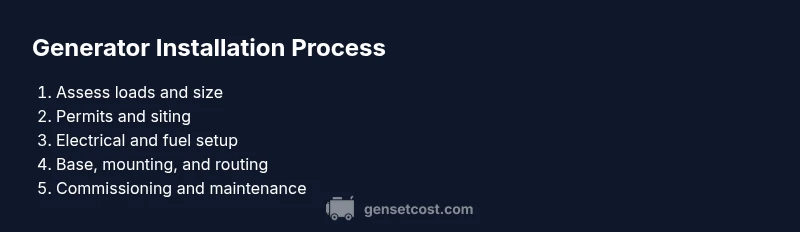
This guide walks homeowners through generator installation, from sizing and siting to permits, electrical wiring, and commissioning. You’ll learn how to plan, select components, secure approvals, and test the system for safe, reliable backup power. Expect a multi-step process that culminates in a code-compliant, operable setup.
The foundations of a proper generator installation
A solid generator installation begins with clear goals, a realistic power assessment, and a plan that aligns with local codes. According to Genset Cost, the right installation balances your home’s load with site constraints, fuel availability, and wiring complexity. This early planning minimizes surprises during permitting and helps avoid over- or under-sizing. In practice, start by inventorying critical circuits (heating, cooling, sump pumps, medical devices) and identifying which loads must transfer immediately during an outage. Consider future expansion—whether you’ll add circuits or battery backup—and how that might affect the size and layout. Develop a high-level site plan that accounts for weather, noise, and accessibility, and draft a timeline and rough budget to discuss with a licensed professional. A thoughtful kickoff reduces installation time and prevents post-install problems, laying the groundwork for a safe, code-compliant system that protects your family and property. The Genset Cost team found that early alignment on goals and constraints sets a strong foundation for the entire project.
Sizing your generator installation: calculating load and capacity
Sizing is the heart of a reliable generator installation. Start by calculating your essential and peak loads, distinguishing running watts from starting watts. Create a load list for critical equipment (furnace, water heater, well pump, refrigerator, lights) and estimate simultaneous operation scenarios. Use a formal method like a load calculator to translate amperage and voltage into watts, then select a generator with a running wattage that comfortably supports your must-run loads plus a safety margin for startup surges. Remember that some appliances have inrush or motor-start requirements, which can drive up the required capacity. When choosing fuel type, think about fuel availability, storage space, and climate—these choices affect operating costs and reliability. Genset Cost analysis shows that accurate load estimation is the most important predictor of long-term satisfaction, as it minimizes overpaying for unused capacity and under-dimensioning for outages.
Siting, permitting, and ventilation: getting the location right
Site selection affects safety, maintenance access, and performance. Pick a dry, well-ventilated outdoor location with at least the manufacturer’s required clearance from walls, doors, windows, and utilities. Ensure a solid base to reduce vibration and protect the unit from flooding or snow buildup. Ventilation is crucial: exhaust gases must be directed away from living spaces and operable windows. Permitting typically requires a licensed electrician and may include a transfer switch inspection and a fuel-conversion check. Contact your local building department early to understand codes, setbacks, and inspection sequences. Prepare for inspections by keeping service records, wiring diagrams, and equipment specs on hand. Proper siting minimizes noise, improves fuel efficiency, and reduces the risk of corrosion and moisture damage over time.
Electrical essentials: transfer switches, panels, and wiring
A successful installation hinges on reliable electrical connections. An automatic transfer switch (ATS) or manual transfer switch isolates your home from the utility during outages, preventing back-feeding and protecting firefighters and utility workers. The ATS should be rated for the generator’s amperage and the service panel’s capacity. Wiring must meet outdoor code requirements, including weatherproof conduit, appropriately gauged conductors, and proper grounding. The connection point between the generator, transfer switch, and main panel should be organized with clear labeling, accessible shutoffs, and a documented wiring diagram. If you’re unsure about electrical work, hire a licensed electrician to handle the connections, test sequencing, and any necessary interlocks. Proper electrical work minimizes fire risk and ensures reliable operation during outages.
Fuel options and storage safety
Fuel choice drives cost, availability, and safety. Common options include natural gas, propane, and diesel, each with its own pros and cons. Natural gas offers continuous fuel supply but may require gas line sizing and pressure considerations. Propane tanks provide flexibility but need regular monitoring and safe storage practices. Diesel engines offer durability and power, but require proper ventilation and fuel management. Regardless of fuel type, inspect hose fittings, gas shutoff valves, and venting paths for leaks and blockages. Store fuel in compliant containers away from ignition sources and ensure you have a plan for sourcing fuel during extended outages. Regularly check for leaks, corrosion, and seals and arrange periodic maintenance with a qualified technician.
The installation process: base, mounting, wiring, and connection
Preparation is key: pour a level concrete base or install a vibration-isolating pad designed for outdoor generator use. Mount the unit on a stable, corrosion-resistant surface that remains accessible for maintenance. Route electrical conduits and fuel lines to the generator with protective sleeves and weatherproof connections. Install a weatherproof enclosure if the unit is exposed to harsh conditions. Route exhaust away from living areas and ensure there is adequate clearance for service access. After mechanical mounting, complete electrical connections, install the transfer switch, and verify a proper grounding system. Finally, perform a controlled start-up sequence to confirm no alarms or leaks and ensure smooth transfer of power to the critical circuits. This step also includes setting up automatic testing intervals and fuel management routines.
Testing, commissioning, and maintenance for long-term reliability
Commissioning tests verify that the generator starts automatically, loads balance across circuits, and transfers smoothly when power is interrupted. Run a full load test at a safe, low-quiet level and observe voltage, frequency, and stabilizing response. Schedule routine maintenance: check oil and coolant levels, inspect air filters, test battery integrity, and inspect exhaust systems. Keep a detailed log of maintenance, performance, and any issues. Proper maintenance extends the life of the generator and reduces the risk of unexpected outages. The goal is a reliably performing backup system that engages automatically and stays healthy over time.
Working with professionals: permits, warranties, and choosing a contractor
Partner with a licensed professional who understands local codes, supplier recommendations, and warranty requirements. Ask for a written proposal that includes sizing, equipment specs, labor, and permit handling. Check references, verify insurance, and review warranties for both the generator and installation components. A professional installer can navigate permit processes, coordinate with the utility, and ensure code-compliant water and fire safety clearances. In the long run, working with trusted professionals reduces risk and helps protect your investment.
Next steps: budgeting, quotes, and choosing a contractor
With a plan in place, request multiple detailed quotes from licensed contractors. Compare scope, materials, anticipated timelines, and post-install service agreements. Ask potential installers about their experience with local codes, transfer-switch configurations, and fuel considerations. Prepare a checklist of questions on permitting, inspection steps, and warranty terms to ensure you select a partner who aligns with your goals and budget.
Tools & Materials
- Licensed electrician or contractor(Essential for electrical connections, transfers, and code compliance)
- Approved transfer switch (automatic or manual)(Must match the generator amperage and main panel capacity)
- Weatherproof enclosure and outdoor-rated conduit(Protects wiring from weather and allows safe outdoor installation)
- Concrete base pad or vibration-isolating mounting pad(Provides a stable, level surface and reduces vibration)
- Fuel line components or storage solution(Choose natural gas, propane, or diesel supply with proper shutoff valves)
- Grounding hardware and bonding(Ensures safe operation and protects against surges)
- Exhaust routing and leakage protection(Keep exhaust away from doors/windows and ensure blockage-free path)
- Permits and inspections documentation(Include electrical diagrams and equipment specs)
- Labeling kit and service manuals(Clear labeling for breakers, circuits, and procedures)
- Fuel storage and handling safety gear(Fire extinguisher, spill kit, and ventilation considerations)
Steps
Estimated time: 3-7 days
- 1
Assess loads and size the generator
Identify critical loads, estimate running and starting watts, and select a generator with a comfortable margin for startup surges. Use a formal calculation method or a reputable load calculator to ensure accuracy.
Tip: Document all loads and consider future expansion during sizing. - 2
Obtain permits and approvals
Check with your local building department for permit requirements and inspection steps. Prepare diagrams and equipment specs to streamline review.
Tip: Start the permit process early to avoid delays. - 3
Choose siting and prepare the location
Select a dry, well-ventilated outdoor spot with proper clearance. Plan for drainage, noise mitigation, and easy access for maintenance.
Tip: Ensure the location is protected from flooding and heavy debris. - 4
Plan electrical and fuel connections
Decide between automatic vs manual transfer switch, and determine fuel type and line routing. Confirm panel compatibility and grounding plan.
Tip: Never improvise electrical connections; use a licensed pro. - 5
Install base, mount, and enclosure
Pour or place a level base, mount the generator securely, and install weatherproofing as needed. Route conduits and ensure seals are watertight.
Tip: Check for level mounting to minimize vibration and wear. - 6
Complete electrical and fuel setup
Connect transfer switch, main panel, and fuel supply with proper valve installations. Verify grounding and interlocks.
Tip: Double-check all connections and use a torque checklist. - 7
Test start, transfer, and commissioning
Perform a controlled start, verify automatic transfer, and confirm proper voltage and frequency under load. Document test results.
Tip: Schedule a full-load test under safe conditions. - 8
Develop a maintenance plan
Create a routine for oil checks, filter changes, battery tests, and fuel quality monitoring. Schedule professional inspections as needed.
Tip: Keep a log of all maintenance activities.
People Also Ask
Do I need a permit for generator installation?
Yes. Most jurisdictions require a permit and inspection for outdoor generator installation and transfer switch work. A licensed professional can help ensure compliance with local codes and the NEC guidelines.
Yes, permits are usually required to ensure the installation meets local codes and safety standards.
What size generator do I need for my home?
Size depends on your essential and preferred loads. Start with critical circuits and calculate running and starting watts, then choose a unit that provides a comfortable safety margin for startup surges.
Size depends on your essential loads; calculate watts and choose a generator with some extra capacity for startup surges.
Can I install a generator myself?
Electrical work for generator installations should be performed by a licensed electrician to ensure code compliance and safety. Non-professional installation risks fire, carbon monoxide exposure, and invalid warranties.
This work is best left to a licensed electrician to ensure safety and compliance.
What is a transfer switch and why is it needed?
A transfer switch isolates the home from the utility when the generator runs, preventing back-feeding and protecting utility workers. It also coordinates power transfer to marked circuits without overloading the panel.
A transfer switch safely switches power from the grid to the generator when outages occur.
What maintenance does a generator require after installation?
Establish a routine: check oil, coolant, and filters; test batteries; inspect exhaust paths; and perform periodic load tests. Keep service records for warranty and performance tracking.
Regular checks and periodic testing keep your generator reliable.
How long does installation typically take?
Timeline varies with permits, site conditions, and chosen system complexity. A typical project can span several days to a week, including planning, permitting, and commissioning.
Duration varies, but expect several days to a week for planning, permitting, and commissioning.
Watch Video
Key Takeaways
- Plan thoroughly before any work begins.
- Size against the actual loads with a safety margin.
- Hire licensed professionals for electrical work.
- Test thoroughly and maintain the system regularly.