Home Generators for Sale: Sizing, Costs, and Installation
Learn how to choose home generators for sale, compare portable vs standby options, estimate costs, and plan installation with data-driven guidance from Genset Cost.


Home generators for sale fall into two main categories: portable units for temporary power and whole-house standby systems that kick in automatically. Portable models typically cost hundreds to a few thousand dollars, while standby units range higher, with installation costs depending on location and permits. For homeowners, the goal is reliable backup power for essential circuits during outages, without overspending on unnecessary capacity.
Understanding the landscape of home generators for sale
When evaluating options for home generators for sale, it’s important to distinguish between portable generators and standby systems. Portable units are lightweight, fuel-flexible, and ideal for powering essential appliances during short outages or while camping. Standby generators, in contrast, are permanently installed and connect to your home’s electrical system via a transfer switch, automatically restoring power within seconds of an outage. This distinction drives a large portion of the price and installation considerations. According to Genset Cost, homeowners typically choose portable models for temporary needs in smaller spaces, while standby systems suit households that want uninterrupted power during extended outages or in regions with frequent outages. Space, local regulations, and budget all influence the choice. Whether you’re upgrading your current setup or starting from scratch, understanding how these two categories differ helps set realistic expectations for cost, maintenance, and reliability.
How to size a home generator: load calculations and transfer switches
Sizing a generator for residential use hinges on accurately estimating the load, understanding starting watts versus running watts, and factoring in future needs. Start by listing essential circuits (refrigeration, heating/cooling, sump pumps, lights, and medical devices). Next, calculate running wattage for each item and add a cushion of 20–50% for contingencies like peak oven or AC compressor surges. A transfer switch is essential for safe, automatic operation; it isolates the home from the grid when power is restored and prevents back-feeding. For most homes, a subpanel approach that powers critical loads first, with the option to add a few nonessential circuits later, provides a practical balance of resilience and cost. Genset Cost recommends sizing toward a continuous running load that represents your daily needs rather than chasing full-home power; this minimizes fuel consumption, noise, and equipment wear while maintaining outage reliability.
Installation considerations: choosing between portable power and a fixed system
Installation plays a pivotal role in total cost and reliability. Portable generators require a safe outdoor location, proper ventilation, and a power transfer mechanism that avoids back-feeding into the grid. Standby systems demand professional electrical work, a permanently installed fuel source or connection to natural gas, a transfer switch, and routine maintenance. Local permitting, trenching for gas lines, and outdoor enclosure requirements all influence total project costs. The decision often hinges on whether you want automatic operation and a seamless transition during outages or if you prefer a more budget-conscious, manually operated setup. In areas with frequent outages or higher energy costs, a properly sized standby generator can be a compelling long-term investment.
Features that matter when shopping for home generators for sale
Key features to evaluate include automatic transfer switches (ATS), noise levels, fuel type, and warranty. An ATS ensures rapid restoration of critical circuits, while low-noise enclosures improve comfort for neighbors and pets. Fuel options—natural gas, propane, and gasoline—each have pros and cons related to cost, availability, and storage. Fuel stability matters during long outages. Look for enclosed designs with weatherproof housings, corrosion resistance, and vibration reduction. Remote monitoring and smartphone alerts provide added convenience for busy homeowners and property managers. Finally, compare warranties that cover the generator, installation workmanship, and labor, as these affect long-term ownership costs more than upfront price alone.
Costs and financing: upfront price, ongoing maintenance, and expected lifecycles
The financial picture for home generators spans upfront purchase price, installation, and ongoing maintenance. Portable units generally have lower upfront costs but require ongoing refueling and periodic maintenance. Standby systems command higher initial investment due to equipment, transfer switches, and professional installation, but typically offer longer lifespans, quiet operation, and automatic functionality. Maintenance includes periodic oil and filter changes, battery checks for ATS units, and fuel stability management. Consider extended warranties and service plans to mitigate future repair expenses. Fuel type affects ongoing costs; natural gas is steady if available, while propane and gasoline can fluctuate with market conditions. A well-sized, properly installed system reduces the risk of outages and can improve property resilience over many years.
Real-world scenarios: sizing, costs, and installation pathways
Scenario A: A 3-bedroom home in a moderate climate with infrequent outages might opt for a mid-range standby system, delivering 8–12 kW of continuous power. This setup balances upfront cost with reliable automatic operation for essential loads like refrigeration, heating, and critical electronics. Scenario B: A rental property that experiences short outages could rely on a robust portable generator paired with a transfer switch, keeping upfront costs in check while maintaining essential services during outages. In both cases, it’s important to plan for professional installation where required and to obtain any necessary permits. Genset Cost’s experience indicates most homeowners benefit from a staged approach: begin with essential loads and expand as budget allows, rather than over-specifying from the start.
"note":"Body block 6 will discuss the practical buying plan in detail and provide checklists."
-1p1" iftag1:0],
Comparison of portable vs standby home generators
| Attribute | Portable Generator | Standby Generator | Notes |
|---|---|---|---|
| Typical cost (unit) | Portable: $500–$3,000 | Standby: $2,500–$12,000 | Costs vary with size/features |
| Typical installation cost | $1,000–$5,000 | $2,000–$10,000 | Permits and wiring impact total |
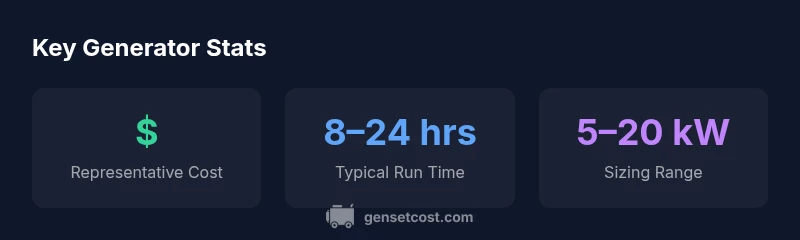
| Sizing range (kW) | 1–8 | 8–25 | Gas/air handling matters |
| Fuel type | Gasoline or propane | Natural gas or propane | Gas line installation considerations |
People Also Ask
What’s the main difference between portable and standby generators?
Portable generators are moveable units best for temporary power, while standby systems are permanently installed and automatically restore power during outages. The choice depends on space, budget, and how often you experience outages.
Portable generators are portable, standby generators are automatic and fixed.
How do I estimate my home’s generator size?
Start by listing essential circuits, total running watts, and a cushion for surge loads. Add a margin for future needs and choose a unit that comfortably covers your running load without overbuilding.
List your essentials, total the watts, then pick a size that covers that running load plus a safety margin.
Do I need a professional to install a generator?
Yes. Standby systems require licensed electrical work and permits. Professionals ensure proper transfer-switch installation, gas/fuel connections, and code-compliant wiring.
Yes—professional installation is essential for safety and code compliance.
How long can a generator run on fuel during an outage?
Runtime depends on fuel tank size and load. Heavier loads consume more fuel; most homeowners size for a practical run time during typical outages and monitor fuel levels.
It varies with load and tank size; plan for regular fuel checks.
Are standby generators worth the installation cost?
For frequent outages or critical loads, standby systems provide automatic, reliable power with minimal disruption. For occasional outages, a portable option may be more cost-effective.
If outages are frequent or you can’t tolerate power loss, standby is typically worth it.
“A well-sized generator is not a luxury; it’s a practical investment in home resilience and peace of mind during outages.”
Key Takeaways
- Choose portable for low upfront costs and flexibility
- Standby generators offer automatic restoration and higher resilience
- Expect installation to be a major component of total cost
- Size toward essential loads with room for future expansion
- Maintenance and warranty impact long-term ownership costs