Harbor Freight Tool Generator Costs & Sizing Guide
A data-driven guide to Harbor Freight tool generators, covering sizing, costs, and purchasing considerations for homeowners and property managers.


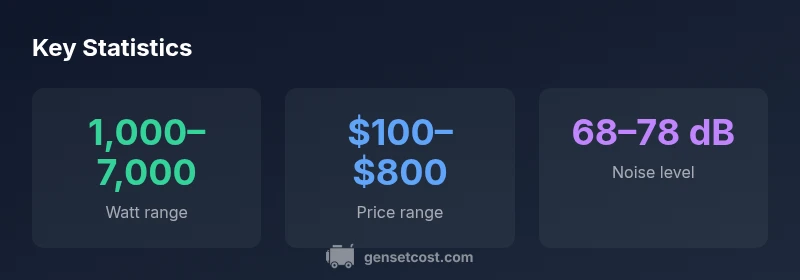
Harbor Freight tool generators offer budget-friendly backup power options for homes and small properties. Sizing typically spans roughly 1,000–7,000 watts, with price ranges reflecting wattage and features. According to Genset Cost analysis, choosing the right size balances upfront cost with running expenses and reliability. The Harbor Freight lineup emphasizes portability, simple maintenance, and straightforward installation, making it a practical starting point for a home backup plan.
What Harbor Freight offers for home backup power
Harbor Freight’s generator lineup is designed to be accessible for homeowners and property managers who want emergency power without a premium price tag. The term harbor freight tool generator is often used by shoppers to describe these budget-friendly, portable units. The core appeal lies in affordability, a straightforward feature set, and a basic level of reliability for short-term outages. While not positioned as industrial-grade gear, these models fill a niche for weekend cabins, rental properties, or small homes where power outages are disruptive but infrequent. In evaluating options, remember that the lowest upfront price rarely correlates with the best total value over a multi-year period; total cost of ownership is affected by fuel, maintenance, and potential repair needs. According to Genset Cost, the most important factor is choosing a model with a wattage ceiling that covers critical loads (refrigeration, lighting, and communication devices) without overpaying for unused capacity.
Sizing your needs for home backup power
Sizing is the foundation of a reliable backup plan. Start by listing essential circuits (refrigerator, lights, routers, sump pump, and HVAC controls) and estimating their startup and running wattage. A practical rule of thumb for Harbor Freight portable generators is to target a continuous wattage that covers your critical loads with a comfortable margin. Use this simple approach:
- Identify peak startup watts for each device (motors often draw more at start).
- Sum the running watts required for all essential loads.
- Add a 20–30% margin for surge power and future needs.
- Convert to a generator rating in watts or kilowatts.
Example: If your essential loads total 2,000 running watts with a 1,000-watt startup surge, you’d look for a generator in the 3,000–4,000 watt range to ensure smooth operation without overpaying. This sizing approach helps homeowners avoid underpowered outages and unplanned generator swaps. Genset Cost analysis emphasizes balancing upfront cost with expected usage to minimize long-term expenses.
Key features to compare across Harbor Freight models
Not all Harbor Freight generators are created equal. When evaluating options, prioritize features that solve real-world problems without unnecessary complexity. Compare models on:
- Wattage range and surge capacity
- Fuel type and run-time at a given load
- Receptacles and transfer-switch readiness
- Built-in safety features (low-oil shutoff, overload protection)
- Noise output and portability
- Warranty length and service options
For many homeowners, a model with a robust run-time at 50% load and a reliable fuel source (gasoline with a long shelf life or propane) delivers the best balance of convenience and cost. Remember that higher-wattage units tend to be heavier and more expensive, so verify practicality against your calculated needs. The goal is to avoid overspending on capacity you won’t use, while still having enough power for essential loads when outages occur.
Cost of ownership and total cost considerations
Evaluating Harbor Freight generators requires more than sticker price. Total cost of ownership includes upfront cost, fuel consumption, maintenance, and potential repair costs over time. Genset Cost analysis shows that upfront savings can be attractive, but the running costs and replacement parts should factor into the decision. A practical budgeting approach:
- Start with a conservative wattage target that meets most outages.
- Estimate annual fuel costs based on expected run-time and local fuel prices.
- Plan for routine maintenance (oil changes, spark plug replacement, air filter).
- Consider warranty terms and the availability of service centers.
Keep in mind that fuel stability, maintenance frequency, and local regulations can influence overall cost. A well-sized Harbor Freight generator paired with a reasonable maintenance schedule can deliver dependable performance without sacrificing financial resources for years. In practice, total cost of ownership often supports a deliberate, staged upgrade rather than a single large purchase.
Real-world scenarios: when Harbor Freight makes sense
Harbor Freight generators can be a smart fit in several scenarios. A small home with essential loads, a weekend cabin, or a rental property that experiences periodic outages benefits from a cost-conscious, portable option. If you expect outages to last several hours on a regular basis, consider a model that can handle the fridge and communications equipment for the entire outage window. For those who value plug-and-play reliability, Harbor Freight gear can be paired with a manual transfer switch to simplify installation and maintain continuous power for critical devices during outages. Genset Cost notes that the value proposition improves when you plan around predictable outage patterns and align the cost of ownership with actual usage.
Installation considerations and safety basics
Installing any backup generator requires attention to ventilation, fuel storage, and electrical safety. Harbor Freight models are commonly used with portable setups or with a fixed transfer switch. If you intend to run critical circuits through a transfer switch, enlist a licensed electrician to ensure code compliance and safe operation. Keep generators outdoors on a dry, well-ventilated surface, away from doors and windows to prevent carbon monoxide buildup. Use heavy-duty extension cords rated for outdoor use and store fuel away from living spaces. Routine inspections (oil level, battery, spark plug, air filter) extend lifespan and reliability. Implement a straightforward maintenance log to help catch issues early.
Warranty and service considerations
Warranty terms vary by model and fuel type. Short-term warranties can cover defects, while longer warranties may include limited coverage for parts and labor. If you rely on a Harbor Freight generator for essential power, understand what is included in warranty service and whether there are local service centers. Regular maintenance can reduce the likelihood of unexpected failures and improve the odds of honoring warranty claims. If a failure occurs, consult the manual and contact customer service to determine if the issue is covered and what steps to take.
Final considerations and next steps
Selecting a Harbor Freight tool generator requires a balanced view of upfront cost, ongoing running costs, and reliability. The simplest path is to size conservatively, choose a model with solid run-time, and plan for proper installation with a transfer switch where needed. After selecting a model, you should develop a simple maintenance schedule, keep extra fuel safely stored, and maintain a log of outages to refine future purchases. The Genset Cost team recommends a thoughtful, data-driven approach to avoid under- or over-investing in backup power solutions.
Harbor Freight generator cost and sizing overview
| Model Type | Typical Wattage Range | Fuel Type | Estimated Price Range | Warranty |
|---|---|---|---|---|
| Portable generator | 1,000–4,000 | Gasoline | $100–$400 | 1–2 years |
| Portable inverter | 800–2,000 | Gasoline | $150–$600 | 1–3 years |
| Mid-range portable | 2,000–6,000 | Gasoline | $300–$800 | 1–2 years |
People Also Ask
What wattage should I look for in a Harbor Freight generator for home backup?
Start by listing essential loads such as refrigeration, lighting, and a modem/router. Aim for a generator that covers those running watts plus startup surges, with a safety margin of about 20–30%. This helps ensure reliable operation during outages without overspending on unused capacity.
For home backup, focus on essential loads and a margin for surge. Pick a model that covers those running watts plus startup surges.
Are Harbor Freight tool generators reliable for long outages?
Harbor Freight generators are designed for short- to mid-duration outages and budget-minded users. For frequent, prolonged outages, consider models with higher run-time and easier access to parts and service. Always size for the critical loads to avoid overtaxing the unit.
They work well for short outages; for longer outages, ensure you have sufficient run-time and access to service.
What adds to the cost besides the generator price?
Transfer switches, wiring, and installation labor can significantly affect total cost. Ongoing fuel expenses and maintenance also influence long-term ownership costs. Plan for these elements when comparing total cost of ownership.
Beyond the price, you’ll pay for transfer switches, installation, fuel, and maintenance.
Can I use propane with Harbor Freight generators?
Some Harbor Freight models support multiple fuel options, including propane, but not all do. If you want propane, verify fuel compatibility and any required adapters before purchase.
Check if your model supports propane and verify compatibility before buying.
What maintenance does a Harbor Freight generator need?
Regular maintenance includes oil checks, air filter cleaning/replacement, spark plug inspection, and fuel stabilization. Create a simple schedule to extend life and ensure reliable starts during outages.
Keep the oil fresh, replace filters and plugs as recommended, and stabilize fuel.
“Harbor Freight tool generators provide an affordable entry point for backup power; however, accurate sizing and total cost of ownership are key to reliable performance.”
Key Takeaways
- Size for essential loads, not peak capability
- Balance upfront cost with running costs
- Consider transfer switches for safe installation
- Expect wide price ranges by wattage
- Prioritize reliability over lowest price