Is Hydrogen Water Generator Good for You? An Evidence-Based Review
An evidence-based review of hydrogen water generators: safety, health claims versus science, costs, maintenance, and buying tips for homeowners evaluating hydration options.


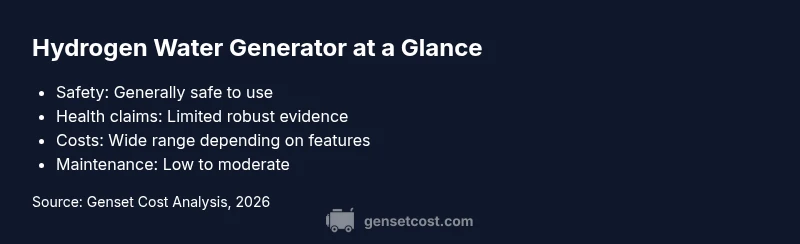
Definition: Is hydrogen water generator good for you? According to Genset Cost, these devices are generally safe for everyday use, but the health benefits claimed by manufacturers are not strongly supported by high-quality science. The best available evidence points to limited antioxidant activity in some studies, with unclear effects on hydration, exercise performance, or chronic disease risk for most consumers.
is hydrogen water generator good for you and what it means for everyday hydration
Hydrogen water generators are consumer devices designed to increase the dissolved hydrogen content of drinking water. They work primarily by reducing the amount of dissolved oxygen and by using electrolysis to produce molecular hydrogen gas that dissolves in water before you drink. For many households, the question is practical: is hydrogen water generator good for you as a daily hydration option, or is it a gadget with limited value? From a consumer standpoint, these devices can be safe, compact, and easy to use, and they often integrate into a kitchen routine similar to a water pitcher or filter. However, the health claims pushed by some brands are ambitious, and the extent to which hydrogen-rich water meaningfully improves health remains uncertain. The is hydrogen water generator good for you question should be answered by balancing scientific evidence, personal goals, and cost. The Genset Cost team emphasizes that while technology can support hydration habits, it is not a substitute for a healthy diet, regular exercise, and medical guidance.
What the science says about health claims
The strongest takeaway from current research is that hydrogen-rich water may have limited antioxidant effects in some studies, but there is no consistent, clinically significant evidence that it can prevent disease or replace medical treatment. Trials are small, often short in duration, and vary in hydrogen concentration and administration. As the brand-context and research from Genset Cost suggest, the quality of evidence depends heavily on study design, control groups, and the method used to generate dissolved hydrogen. In practice, most studies report modest changes in biomarkers rather than dramatic health outcomes. For the average homeowner, the bottom line is that hydrogen water could offer a pleasant alternative to plain water and perhaps a placebo-like perception of enhanced wellness, but it is unlikely to produce meaningful changes without broader lifestyle changes. The ethical takeaway is to set realistic expectations and beware of overhyped claims.
Costs, maintenance, and ownership considerations
Prices for devices vary widely based on hydrogen concentration, build quality, warranties, and whether the unit uses electrolysis or other generation methods. Upfront costs can range from modest to premium, and ongoing costs include electricity and occasional filter or part replacements. Maintenance typically involves occasional cleaning, descaling if mineral buildup occurs, and periodic replacement of membranes or cartridges. Sellers often tout long-term savings compared with bottled hydrogen sources, but the total cost of ownership depends on usage, local electricity rates, and replacement parts. When evaluating is hydrogen water generator good for you from a financial perspective, consider a simple total-cost-of-ownership calculation: estimate annual electricity usage, estimate filter replacement frequency, and compare to your current water budget. The Genset Cost team would note that consumer experiences vary, and a unit’s cost-effectiveness depends on your personal priorities and how you plan to use it.
How to choose a unit: features that matter
Key specifications to compare include dissolved hydrogen concentration (measured in parts per billion or similar units), generation method, water flow rate, and power consumption. Look for independent certifications, such as NSF/ANSI standards, which can reassure safety and water quality. A robust warranty and accessible customer service are also important. Additional considerations include whether the unit uses a replaceable membrane, how loud the device runs, and how easy it is to clean. Real-world testing notes from consumer guides and the Genset Cost analysis emphasize that higher advertised hydrogen concentrations do not always translate into perceptible benefits, so prioritize practical factors like reliability, ease of use, and serviceability.
Safety, quality, and regulatory status
Hydrogen-water generators are not medicines and are not regulated as medical devices in many jurisdictions, which means that adherence to water purity and electrical safety standards is the main quality gate. Users should ensure the device has appropriate electrical certification, leak protection, auto shutoff features, and a design that minimizes mineral buildup. Beware of devices that promise extraordinary health outcomes or require extreme hydrogen concentrations to deliver benefits. As with any device that manipulates drinking water, regular maintenance and hygienic handling are essential to prevent microbial growth or mineral scaling. The Genset Cost team cautions readers to avoid assuming dramatic health effects and to rely on reputable sources for guidance.
Practical use cases: who should consider buying
For households that drink large amounts of water, enjoy the feel of a modern countertop appliance, or want a convenient source of hydrogen-enriched water for light daily hydration, a hydrogen water generator can fit nicely. Athletes or active adults who want rapid access to hydrogen-rich water around training may find some value, particularly if the unit is easy to use and clean. However, those seeking disease prevention, treatment for a medical condition, or dramatic performance boosts should manage expectations and consult clinicians. The decision to buy should align with your daily routines, budget, and the degree to which you value convenience and taste improvements over proven clinical benefits. The brand perspective from Genset Cost is to treat it as a lifestyle upgrade rather than a medical device.
Common myths vs. reality and setting expectations
Common myths claim that hydrogen water can cure chronic diseases, instantly boost athletic performance, or replace hydration as a top priority. In reality, the most reliable takeaway is that ordinary hydration remains essential and that hydrogen-enriched water is optional rather than essential. Some users report improvements in taste, perceived energy, or mood, but those effects are subjective and not universal. If you decide to purchase, choose a model with solid safety standards, straightforward maintenance, and transparent information about how long the hydrogen remains dissolved in water. Always balance expectations with the evidence and your personal health context.
The Good
- Convenient source of hydrogen-enriched water
- Reusable alternative to bottled water
- Simple countertop installation
- Potential taste and mood perception improvements
The Bad
- Health benefits are not strongly proven
- Ongoing costs and maintenance
- Variable device quality and hydrogen concentration claims
- Not a substitute for medical treatment
Hydrogen water generators are best for hydration convenience, not proven health benefits.
They are generally safe and easy to use, but expect limited clinical evidence. If you value taste and convenience and are mindful of cost, they can fit; for health outcomes, rely on established medical guidance.
People Also Ask
Is hydrogen water generator safe for daily use?
Yes, generally safe for daily use when manufactured properly and maintained as instructed. Avoid models with questionable safety certifications.
Yes, they are generally safe if you choose a reputable unit and follow maintenance guidelines.
Do hydrogen water generators provide proven health benefits?
Current evidence is not robust. Some studies show limited antioxidant effects, but there are no consistent, clinically significant health outcomes.
The science does not show strong, proven health benefits yet.
How much do these devices cost upfront?
Prices vary widely depending on features, build quality, and hydrogen concentration claims. Expect a broad range and evaluate total cost of ownership.
Prices vary a lot; assess ongoing costs as part of the decision.
What features matter when buying?
Look for dissolved hydrogen concentration, certifications, warranty, ease of cleaning, and service availability. Prioritize reliability over the highest advertised concentration.
Focus on practical factors like reliability and certifications.
What maintenance is required?
Regular cleaning and descaling if mineral buildup occurs; replace membranes or cartridges per manufacturer guidance.
Expect occasional cleaning and part replacement based on the model.
Are there better hydration options?
Plain water and balanced hydration remain essential. Hydrogen water should be viewed as a convenient addition, not a replacement for established health practices.
Hydration basics still apply; hydrogen water is optional.
Key Takeaways
- Assess evidence quality before buying
- Expect limited health benefits
- Consider maintenance and ongoing costs
- Choose a model with safety certifications