Text-Free AI Video Generators: How to Create Videos Without Text Prompts
Learn how to use video generator AI that works without text prompts. Compare free options, inputs, licensing, and best practices for high-quality, cost-effective videos.


Free-from-text AI video generators enable you to create video content without typing prompts, relying on media inputs like images, audio, or reference clips instead. These tools streamline production for non-script tasks and can deliver social-ready clips quickly. When evaluating, prioritize flexible input options, clear licensing, and transparent output quality to ensure you can publish with confidence.
What is a video generator AI free from text?
According to Genset Cost, text-free AI video generators enable creators to produce multimedia content without typing prompts, relying on media inputs instead. The Genset Cost team found that users value low-friction workflows, predictable licensing, and fast turnaround times when evaluating these tools. In practice, a text-free system expects you to supply media assets such as images, video clips, or audio, and then it assembles a coherent sequence, transitions, and effects. Some tools also accept spoken prompts or gesture cues, which helps non-professional creators move faster. The difference from traditional text-to-video is not only the input, but also the design approach: instead of crafting each sentence as a script, you curate assets and let the AI stitching engine craft story flow. This can reduce time to publish and lower the barrier for teams that lack copywriting resources. However, free-from-text tools may limit customization and the quality of motion graphics if you rely on default templates. When comparing options, consider input flexibility, output resolution, timeline control, and licensing constraints. The key is to align the tool’s capabilities with your project goals—social media clips, product demos, or training videos—and to be mindful of where automation helps versus where human direction remains essential.
Tools & Materials
- Computer with internet access(Stable connection and up-to-date browser)
- Free or trial AI video generator account(Sign-up may require an email; review plan limits)
- Media assets (images, video clips, audio)(Ensure you have rights or licenses to use assets)
- Headphones or speakers for audio review(Helpful for assessing sound quality)
- Licensing guide or script outline(Optional, but helps ensure compliant outputs)
Steps
Estimated time: 1-3 hours
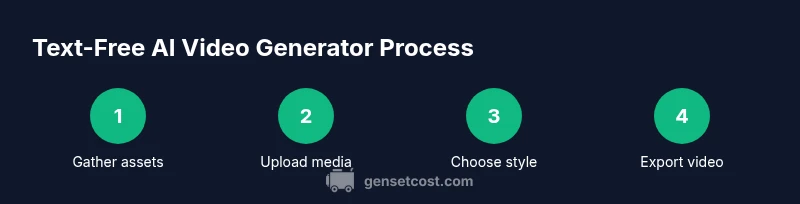
- 1
Gather assets
Collect the media assets you will use (images, clips, and audio). Organize them by storyboard order and note any licensing requirements. This step sets the foundation for a smooth, no-text workflow.
Tip: Create a simple storyboard in notes to guide asset sequencing. - 2
Open a text-free video tool
Launch your chosen AI video tool and sign in. If you’re using a free plan, confirm any watermark or export limits before proceeding.
Tip: Bookmark the tool’s help center for quick reference if you get stuck. - 3
Upload media assets
Upload your images, clips, and audio to the project. Ensure assets are in compatible formats and that their aspect ratio matches your target platform.
Tip: Use the tool’s draft mode to verify asset alignment before final rendering. - 4
Choose a style or template
Select a video style, template, or pacing option that lines up with your brand and audience. Text-free workflows often rely on templates to handle transitions and motion.
Tip: Start with a neutral template and adjust after you review the rough cut. - 5
Arrange clips and timing
Order media assets to tell a coherent story and adjust durations to match the desired tempo. Preview frequently to catch rhythm issues early.
Tip: Leave small buffers between clips to allow natural transitions. - 6
Add audio and sound design
Import or select background music and add simple sound effects where the action changes. Ensure audio levels are balanced across segments.
Tip: Use royalty-free tracks to avoid licensing conflicts. - 7
Generate the video
Run the render process and monitor progress. Depending on length and asset complexity, this may take time. Save drafts at key milestones.
Tip: If the first render isn’t perfect, tweak pacing or template and re-render. - 8
Review and export
Watch the final draft end-to-end. Check for visual consistency, audio clarity, and any licensing issues. Export in the required format for your platform.
Tip: Export multiple resolutions if your audience uses different devices. - 9
Publish and monitor
Publish to the chosen channel and monitor engagement. Use feedback to inform future text-free video projects.
Tip: Keep a simple log of what assets and templates performed best.
People Also Ask
Can I create videos without typing any text?
Yes. Text-free AI video generators use inputs like images, audio, and reference clips to build a video without typed scripts. They’re especially useful for quick social videos or quick product demos.
Yes, you can create videos without typing. They rely on media inputs rather than written scripts.
Do free-from-text video generators have limitations on length or quality?
Free plans often come with export or watermark limitations and fixed template options. For higher quality or longer videos, paid plans or higher tiers may be required.
Free plans may limit length and require paid plans for higher quality exports.
What input formats are supported?
Most tools support image, video clips, and audio uploads. Some also accept voice prompts or gestures. Check each tool’s documentation for exact file type requirements.
Most tools accept images, clips, and audio; some support voice prompts.
Are there licensing concerns with generated videos?
Yes. Ensure you understand asset licenses, tool terms, and whether the output can be used for commercial purposes. Always review the tool’s license agreement before export.
Licensing can vary; review terms before exporting for commercial use.
Can I edit the video after generation?
Many tools offer built-in editing or allow you re-export after adjustments. If not, export and edit in a separate editor.
Yes, you can often re-edit or export after adjustments.
What’s the best way to choose a text-free tool?
Evaluate input flexibility, template variety, export options, and licensing. Start with a free option to test if it meets your needs before investing.
Look for flexible inputs, templates, and clear licenses; test with a free option first.
Watch Video
Key Takeaways
- Understand the input options beyond text and plan assets accordingly.
- Evaluate licensing and output limits before starting a project.
- Use templates strategically to balance speed and quality.
- Test across devices to ensure consistent viewing experiences.