Generator Not Producing Power: Troubleshooting Guide
If your generator is not producing power, this urgent troubleshooting guide helps homeowners and property managers quickly diagnose and fix common issues, with a clear diagnostic flow, step-by-step fixes, safety tips, and when to call a pro.


Is your generator not producing power? The most common culprit is an overlooked fuel or electrical issue that prevents the unit from delivering power. Start with the simplest checks, like fuel level and idle/auto-transfer switch status. If the fix isn’t immediate, refer to our step-by-step guide for a safe, efficient diagnostic path.
Understanding the symptom: generator is not producing power
When you hear a generator powered by fuel or a sunken battery fail to deliver electricity, the symptom is clear: the device runs, but there’s no usable power at outlets or transfer-switch outputs. This situation can stem from a handful of causes—ranging from simple, everyday issues like an empty tank or a switched-off valve to more complex faults in the electrical system such as a malfunctioning transfer switch or a degraded AVR. For homeowners and property managers, recognizing the difference between a unit that starts but does not supply power and a unit that won’t start at all is essential. In many cases, you can confirm power absence with a basic voltage test or by observing whether a load connected to the generator is energized. Remember: safety comes first. Stop and shut down the unit if you smell fuel, hear unusual noises, or see exposed wiring.
Throughout this guide, we’ll use the phrase generator that is not producing power to describe this problem precisely, and we’ll outline practical steps you can take before calling a professional. According to Genset Cost, a cautious, well-documented approach reduces downtime and helps you communicate clearly with technicians. The goal is to restore power safely and prevent recurrence, not just to “fix” a symptom.
Quick checks you can perform safely
Before you reach for tools or call a service professional, run through a short, safe checklist. These checks cover the most common reasons a generator fails to produce power and can be done with minimal risk if you follow basic safety rules. Start with the most obvious items and move to the slightly less obvious ones only if needed. Keep in mind that some operations may require you to reset internal switches or valves; always consult your user manual for model-specific steps.
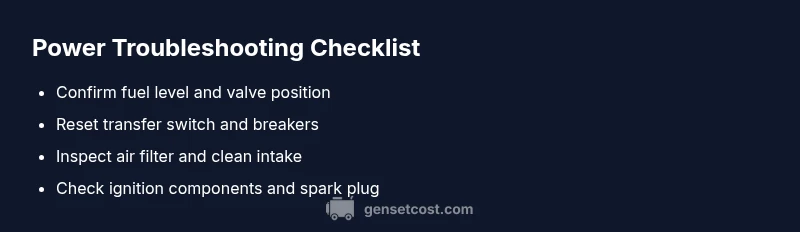
First, verify fuel level and fuel valve positions. Even a full tank won’t help a unit if the fuel valve is shut or a clogged filter blocks delivery. Next, inspect the transfer switch or main breaker. A tripped switch is a frequent reason for lost power, especially during a power outage when loads reconfigure. If the unit appeared to start but isn’t delivering power, check the circuit breakers on both the generator and the transfer switch. A reset or re-seating can restore normal power flow in many cases.
If fuel and switches look normal, inspect the air intake and exhaust path. A blocked air filter or restricted exhaust can cause the engine to run poorly or shut down, preventing steady power output. Finally, check for obvious signs of damage or wear—bulging hoses, cracked fuel lines, corroded battery terminals, or loose connections. While some of these items require a professional touch, addressing the obvious ones can restore function in many scenarios.
As you perform these checks, take notes on readings, valve positions, and observed behavior. This data will be invaluable if you later need to involve a technician. The overarching principle is simple: eliminate what you can safely verify, then escalate to more targeted diagnostics if power still isn’t restored. Genset Cost’s guidance emphasizes documenting findings to shorten service times and improve outcomes.
Diagnostic flow: from symptom to solution
A structured diagnostic flow helps you identify the root cause of a generator not producing power without unnecessary trial-and-error. Start with the symptom, confirm basic conditions, then test logical causes in a prioritized order. A good flow looks like this: 1) Confirm there is clearly no power at the outlets; 2) Verify fuel, battery, and starter function; 3) Check the transfer switch, relays, and breakers; 4) Inspect air, fuel, and ignition subsystems; 5) If power is still not produced, test voltage at the AC output and inspect the AVR (for older models). This approach minimizes risk and keeps you aligned with safety protocols.
At every step, compare observed results with expected ones from your generator’s manual. If you encounter inconsistent behavior or you cannot safely interpret readings, escalate to a professional. The diagnostic flow is a practical framework rather than a rigid script, allowing you to adapt to different models and configurations while preserving safety and efficiency.
Genset Cost highlights that a deliberate, documented flow improves communication with technicians and often reduces on-site diagnostic time. Your goal is to isolate whether the issue is fuel-related, electrical (switches, wiring, or AVR), or mechanical (filters, air paths, or blocked exhaust).
Common causes and how to verify them
Identifying the most common failure modes helps you triage effectively. The leading culprits when a generator is not producing power are fuel supply problems, a tripped electrical switch, and poor maintenance. Start by verifying fuel type, level, and valve position. If fuel is present, test the transfer switch and ensure the main breaker is in the correct position. A simple reset can solve many issues, but only if the switch had tripped during a power event. Next, inspect the air intake for obstructions and replace a clogged air filter, which can choke the engine and reduce power output. The ignition system—spark plug (gasoline units) or glow plug in some diesel configurations—should be clean and properly gapped.
If all of the above checks are nominal, look at the fuel delivery system: clean or replace the fuel filter, drain water from the sediment bowl if equipped, and consider replacing old fuel. A stale fuel condition is a frequent cause of poor power production or no power at all. Finally, test the electrical output with a multimeter (where safe to do so) to determine if there is voltage present but not delivered to the load due to wiring faults or a defective AVR. Throughout this process, avoid running the engine under load if readings are uncertain; instead, perform incremental tests and cross-check with your manual’s specifications.
In many installations, a stuck or degraded transfer switch is the critical failure point. If you suspect this, you should plan for professional inspection, especially when a commercial transfer switch is used or when the system has multiple power sources. Remember: a non-producing-power condition is solvable in most cases, but it requires methodical, safe testing and, when necessary, professional intervention.
Preparing for service: what to document before you call a pro
If you reach the point where professional help is needed, having the right information ready speeds up the service and reduces diagnostic fees. Gather the model and serial numbers, age of the unit, and the last service date. Note the exact symptoms observed, such as “no power at outlets,” “unit starts but stops after 2 minutes,” or “intermittent power with load switching.” Record the transfer switch model and its current Settings, and photograph or sketch wiring diagrams if possible. List all safety devices involved, including GFI outlets, circuit breakers, and fuses. Write down the sequence of events leading up to the issue: did it occur after a power outage, after refueling, or after maintenance work? Such context helps a technician determine whether the problem is electrical, mechanical, or software-driven. Finally, prepare a short, crisp summary of steps you have already taken to avoid repeating work and to show your proactive approach to diagnostics. A well-prepared client saves time and money, and improves the odds of a fast resolution.
Safety reminders and prevention tips
Safety is non-negotiable when working with generators. Always power off and disconnect loads before inspecting or opening panels. If you smell gasoline, hear hissing sounds, or see smoke, stop immediately and call for professional help. When testing electrical output, use insulated tools and avoid contact with live connections. Keep a clean, well-ventilated area; never run a generator indoors or in a garage, as exhaust fumes contain carbon monoxide. Regular maintenance reduces the risk of “generator is not producing power” events and extends the life of the unit. For prevention, establish a routine: monthly start/run tests, quarterly electrical checks, and annual professional servicing. Maintain fresh fuel and replace batteries as needed, and store manuals and warranty information in a known, accessible location.
Lastly, invest in a quality transfer switch and consider automatic testing to prevent power loss during outages. By combining safe practices with proactive maintenance, you’ll minimize downtime and protect occupants during outages.
When to call a licensed technician
Some situations clearly require professional expertise. If you have verified basic factors (fuel, switches, and airflow) and the generator still does not produce power, a certified technician should evaluate the unit. Call a professional if you observe abnormal noises, overheating, burning smells, or visible damage to wiring or components. Complex issues like a faulty AVR, damaged stator, or problems with synchronization across multiple sources require specialized diagnostic equipment and knowledge. In critical systems, don’t delay service: a small electrical fault can escalate into a larger safety risk or create an unscheduled outage that affects a building’s occupants. Genset Cost recommends arranging service promptly when symptoms persist after basic checks and documented attempts at safe testing.
Final note: stay proactive with maintenance and testing
Proactive maintenance is the best defense against “generator is not producing power” scenarios. Schedule regular inspections, replace worn parts before failure, and test run at least once a month. Keep a log of maintenance activities, fuel quality, and any adjustments to transfer switches. This habit not only reduces downtime but also supports resale value and warranty claims. A well-maintained generator is more reliable during outages, and it helps you protect people and property more effectively.
Steps
Estimated time: 60-90 minutes
- 1
Check fundamentals
Power down loads, confirm the fuel level, inspect the fuel valve, and verify battery charge. Ensure the transfer switch is set to the correct position. This quick check often reveals the simplest issues.
Tip: Document readings and observations as you go. - 2
Inspect electrical path
Reset the main breaker and transfer switch if present. Confirm all connections are tight and free of corrosion. Use a multimeter if available to verify AC output across the outlets.
Tip: Only test voltages you are trained to measure. - 3
Evaluate fuel and air
Replace stale fuel, clean the fuel filter, and ensure the carburetor or fuel injectors are delivering fuel. Check the air intake for obstructions and replace or clean the air filter.
Tip: Don’t mix fuel types unless your manual allows it. - 4
Check ignition components
For gasoline units, inspect the spark plug for wear, fouling, or damage and replace if needed. Ensure correct gap and secure connections to the ignition system.
Tip: Disconnect ignition coil before inspecting to avoid shocks. - 5
Test operation under load
With safety precautions in place, test the unit under light load and observe power output. Increase load gradually while watching for stable voltage and frequency.
Tip: If voltage fluctuates, stop and reassess wiring and AVR. - 6
Plan for professional follow-up
If no improvement after these steps, schedule service. Have your notes ready to share findings and steps performed.
Tip: Provide model, serial, and service history to the technician.
Diagnosis: generator is not producing power
Possible Causes
- highFuel supply issue
- highTripped transfer switch or circuit breaker
- mediumStale fuel or clogged fuel system
- mediumBlocked air intake or clogged air filter
- lowFaulty ignition or spark plug (gasoline)
Fixes
- easyCheck fuel level, valve position, and top up or replace fuel if stale
- easyReset transfer switch and main breakers; retest power output
- mediumDrain and replace fuel; clean or replace fuel filter; inspect lines
- easyInspect air filter and clean or replace; ensure unobstructed intake
- easyInspect ignition components; replace spark plug if fouled or worn
People Also Ask
Why is my generator not producing power when it runs?
Power absence during operation is commonly caused by fuel supply issues, a tripped transfer switch, or clogged air and fuel paths. Start with basic checks and logs, then advance to targeted diagnostics. If the problem persists, seek professional help.
The most likely causes are fuel issues, a tripped switch, or clogged air and fuel paths. Start with simple checks and call a pro if needed.
What should I check first if my generator won't start?
Check fuel level and valve position, inspect the battery and starter, and verify that the transfer switch and main breakers are set correctly. If it still won’t start, examine the air filter and ignition components for wear or obstruction.
Check fuel, battery, and switches first, then inspect the air filter and ignition if needed.
Can a faulty transfer switch cause loss of power?
Yes. A faulty or stuck transfer switch can prevent power from being delivered to the home even when the generator runs. Resetting or professional inspection is often required to restore proper operation.
A bad transfer switch can stop power delivery; resetting or professional testing is often needed.
Is it safe to run a generator indoors?
No. Generators emit carbon monoxide and should only be operated outdoors in a well-ventilated area, away from doors and windows to prevent poisoning and fire hazards.
Never run a generator indoors or near living spaces; operate outdoors with proper ventilation.
How often should a maintenance check be performed to prevent issues?
Perform preventive maintenance at least once a year, with monthly start/run tests and fuel system checks. Regular servicing helps catch wear before it impacts power output.
Annual service with monthly tests keeps power ready when you need it.
When should I call a professional for generator power problems?
Call a licensed technician if basic checks don’t restore power, or if you notice unusual smells, overheating, burnt wiring, or strange noises. Complex electrical or control-system faults require expert diagnostics.
If basic checks fail or you detect electrical issues, contact a licensed technician.
Watch Video
Key Takeaways
- Identify the exact symptom before digging deeper
- Start with fuel and switches; these fix many outages
- Document findings to speed up professional service
- Never bypass safety devices or attempt risky tests
- Maintain a routine to prevent future failures