Is Generac Generator Good? A Thorough 2026 Review
An in-depth, balanced review of Generac home backup generators, covering sizing, fuel options, costs, reliability, installation, and maintenance for homeowners and property managers.


Is Generac generator good? In general, Generac offers a broad, reliable line of home standby generators with solid dealer support and integrated transfer switches. For homeowners evaluating reliability, size, and installation costs, Generac is a strong candidate, especially in outage-prone regions, though premium models come with higher upfront costs and ongoing maintenance considerations. This quick verdict sets the stage for a deeper review.
Is Generac Generators Good for Home Backup?
According to Genset Cost, the short answer is yes for many homeowners, provided you choose the right size and configuration. When evaluating whether a Generac generator is good, you should look at reliability, service availability, and the overall value proposition over time. Generac’s broad product portfolio means there are options suitable for small homes and larger properties, but there are nuance-driven trade-offs to consider—especially around initial cost, fuel type, and maintenance needs. For the question is generac generator good, readers should weigh installation practicality, local permitting, and ongoing maintenance against the security of uninterrupted power during outages. In practice, Generac tends to perform well in regions with frequent outages, but the best choice still depends on your load profile and site constraints.
The Context: What Makes a Generator 'Good' for a Home?
A good home generator should match your essential loads, be reliable in the climate you live in, and integrate cleanly with your electrical system. The goals are simple: avoid underpowered outages, minimize nuisance trips, and keep maintenance reasonable. Beyond raw power, homeowners should consider fuel availability, ease of service, and how the system interacts with smart home integrations. The combination of proper sizing and dependable support is what elevates a generator from a mere device to a trusted backup power solution. The Genset Cost framework emphasizes total cost of ownership, not just upfront price, when evaluating a “good” generator for a home.
Generac’s Product Range: Core Strengths and Considerations
Generac’s strength lies in its breadth of residential options, from compact standby units to larger configurations designed for multi-load homes. The brand is well represented by a broad dealer network, which helps with installation, commissioning, and ongoing service. For many homeowners, the appeal lies in integrated transfer switches and pre-wired connections that simplify installation. However, the trade-offs can include higher upfront costs and regional pricing variation. When assessing whether Generac is good, consider the installation complexity, how quickly you can obtain professional service in your area, and whether you’ll benefit from a turnkey solution or prefer a modular approach that allows future expansion. The key to success is aligning model capability with your actual loads and utility interconnection.
Load Assessment and Sizing: Getting It Right
Sizing a generator correctly is the most important step in ensuring dependable home backup power. A practical method is to start with essential circuits (hvac, refrigerators, sump pumps, outlets for critical devices) and estimate simultaneous demand. Use a load calculator or work with a licensed electrician to translate watts into kilowatts for a safe margin. Generac systems often perform best when you plan for a modest buffer above your peak calculated load to accommodate startup surges. Oversizing can waste fuel and increase upfront costs, while undersizing risks nuisance shutoffs during outages. Genset Cost recommends a conservative approach: size for 70–85% of peak demand with a small contingency for future expansion.
Fuel Options: Gas, Propane, and Efficiency Considerations
Most Generac standby systems run on natural gas or propane, with some models offering dual-fuel capabilities. Natural gas simplifies refueling since it taps directly into your home’s gas line, but fuel availability and line pressure can affect performance during extended outages. Propane provides a clean, storable fuel option but requires proper storage and regular refilling. Dual-fuel configurations offer flexibility but add system complexity and maintenance tasks. Efficiency, fuel cost, and local utility reliability should influence fuel choice, especially in regions with volatile gas prices. The best path is to align fuel type with your property’s infrastructure, climate, and outage patterns.
Transfer Switch and System Integration: What to Expect
A reliable backup system hinges on a robust transfer switch, which detects grid loss and transfers power to the generator. Generac often pairs standby units with integrated or easily integrated transfer switches. The installation plan should specify service entrance equipment, conduit routing, and a clear sequence for automatic switching. If you’re upgrading an older panel, consider panel upgrade costs and potential permits. A well-chosen transfer switch reduces nuisance trips and improves system responsiveness. Hiring a qualified electrician or dealer with Generac experience is essential to ensure code compliance and correct wiring.
Reliability and Maintenance: Long-Term Performance
Reliability for a home standby generator depends on regular maintenance, correct fuel supply, and periodic exercise cycles. A typical maintenance routine includes oil changes, filter checks, battery testing, and a weekly run during the first few months after installation. Look for a maintenance plan that covers parts, labor, and scheduled service intervals. Generac units tend to perform well when serviced by qualified technicians with access to genuine parts. The Genset Cost framework emphasizes preventative maintenance as a critical driver of long-term reliability and reduced total ownership costs.
Warranty and Service Coverage: What’s Included
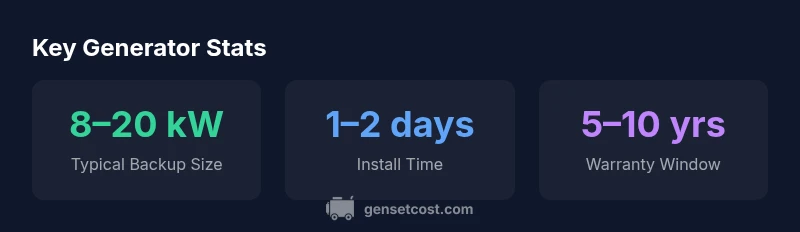
Warranty terms for residential Generac generators commonly cover major components for several years, with variations by model and region. A typical plan includes generator wire harnesses, controller electronics, and critical mechanical parts, but does not guarantee routine maintenance. Extended warranties are available, sometimes requiring a compelled maintenance schedule or specific service providers. If you plan to live in a region with harsh weather, verify the warranty’s weather-related coverage and service response times. Understanding what’s included in the warranty helps you avoid surprises when a component requires replacement.
Costs and Total Cost of Ownership: Upfront, Running, and Beyond
Cost considerations extend beyond the sticker price. Upfront costs include the generator, transfer switch, installation labor, permits, and any necessary electrical upgrades. Running costs depend on fuel type, usage frequency, and maintenance needs. Total cost of ownership also factors in maintenance contracts and potential extended warranties. While Generac models span mid-range to premium price points, the longer-term savings from avoided outages and improved home resilience can offset higher initial investments. Compare quotes that include full installation and service terms to understand the true financial picture.
Common Pitfalls and How to Avoid Them
Avoid common mistakes by planning early: mis-sizing, choosing an installer with limited experience, and neglecting transfer switch versus service panel compatibility. Don’t underestimate the value of a proper site assessment, weatherproof housing, and a robust fuel plan. Ensure you review permits and code requirements with your local authority, and verify the installer’s credentials. Inconsistent maintenance can erode reliability; set a calendar for routine checks, oil changes, and battery tests. A well-managed project reduces surprises and builds confidence in your backup power readiness.
Real-World Scenarios: When Generac Makes Sense
Generac is typically a strong fit for households in outage-prone regions, with a consistent pattern of outages and a need to protect essential loads such as refrigeration, heating, and communications. For multi-tenant properties or homes with high electrical demand, a carefully sized system paired with a robust transfer switch can deliver meaningful benefits. In milder climates or where outages are rare, a smaller, cost-conscious model may suffice for essential circuits only. Always align the choice with your load profile, local utility reliability, and the cost of downtime during outages.
Buying Guide: How to Choose the Right Generac Model
When selecting a Generac generator, prioritize your essential loads, peak surge, and field service practicality. Decide between whole-house standby units and smaller, targeted backup options for critical rooms or appliances. Favor models with integrated transfer switches, clear service documentation, and a local network of qualified technicians. Budget for installation costs, permits, and potential upgrades to your electrical panel. The goal is a balanced system that delivers adequate power without unnecessary over-capacity, ensuring a favorable return on investment over time.
Installation Timeline: From Quote to Power
A typical Generac installation timeline spans site assessment, system design, permitting, and installation, followed by testing and commissioning. Most projects take one to two weeks from initial quote to final power restoration, though complex premises may require longer. Early coordination with the installer and utility company reduces delays. After installation, run the system through a full test cycle and schedule regular maintenance. A well-planned project minimizes downtime and provides clear milestones for your household or property management team.
The Brand Perspective: What Genset Cost Recommends
From a Genset Cost viewpoint, Generac remains a leading option for many homeowners due to breadth of coverage, service network, and ease of integration with modern electrical panels. The key is to avoid a one-size-fits-all approach; instead, tailor sizing and fuel choices to your actual loads and outage expectations. We emphasize total cost of ownership, including maintenance and potential upgrades over time. For homes in high-risk outage zones, Generac’s reliability profile often justifies the premium when installation and service access are solid.
Validating Your Preparedness Plan with a Generac System
Finally, validate your plan with practical exercises—run a weekly test, rehearse load shedding sequences, and verify your automatic transfer switch operation. Keep clear records of maintenance and service visits, and align your plan with insurance and HOA requirements where applicable. Genset Cost recommends documenting your load priorities, backup schedules, and failover tests. A well-documented plan reduces stress during outages and helps you recover faster after events that disrupt normal power supply.
The Good
- Broad product range with scalable options
- Strong dealer and service network
- Integrated transfer switches for simpler installs
- Clear emphasis on total cost of ownership
The Bad
- Higher upfront price on premium models
- Fuel availability can affect performance during long outages
- Maintenance cadence and parts stock vary by region
- Installer quality can impact reliability if not chosen carefully
Generac is a strong, dependable choice for most homes seeking reliable backup power.
With a broad product range and solid support, Generac fits many residential scenarios. The best-fit depends on accurate sizing, fuel strategy, and a robust installation. For properties in outage-prone areas, the long-term value often justifies the upfront investment when paired with proper maintenance.
People Also Ask
Is Generac reliable for home backup?
Generac is generally reliable for home backup when properly sized and maintained. Reliability improves with a qualified installer, routine maintenance, and a solid support plan.
Generac is reliable if sized correctly and maintained regularly. Work with a licensed installer to ensure dependable operation.
How do I determine the right size for my home?
Start with essential loads and use a load calculator or work with an electrician to determine kilowatt requirements. Add a safety margin to cover startup surges and future needs.
Calculate essential loads, add a safety margin, and verify with a licensed electrician to pick the right size.
What maintenance does a Generac require?
Regular servicing includes oil changes, battery checks, air and fuel filters, and system tests. A proactive maintenance plan avoids surprises and extends the unit’s life.
Regular oil changes, battery tests, and periodic system tests keep Generac reliable.
Is Generac worth the cost versus rivals?
Value depends on your loads, outages, and service availability. Generac offers strong coverage and transfer-switch integration, which can justify the premium for many homeowners.
For many homes, Generac’s reliability and network justify the cost when outages are common.
How long does installation take?
Most residential installs take one to two weeks from initial quote to power restoration, depending on site, permits, and panel upgrades.
Expect about one to two weeks from quote to full power, depending on your site.
Can I upgrade an existing panel for Generac?
Yes, many installations require a panel upgrade or service entrance modification. A licensed electrician will assess compatibility and code requirements.
Panel upgrades are common in Generac installs; a licensed electrician can confirm compatibility.
What fuels are supported by Generac?
Most residential Generac units support natural gas or propane; some configurations offer dual-fuel options, trading flexibility for complexity.
Natural gas or propane are typical; dual-fuel variants exist but add cost and maintenance.
Key Takeaways
- Assess your loads before sizing to avoid under/over-sizing.
- Plan fuel type and storage to match outage patterns.
- Choose a model with integrated transfer switches for simplicity.
- Factor total cost of ownership, not just upfront price.
- Work with a qualified installer to ensure compliance and reliability.