Generac Generators: Costs, Sizing, and Installation Guide
A data-driven guide to Generac generators for homeowners and property managers: learn sizing, installation costs, fuel options, maintenance, and warranties to make informed backup power decisions.


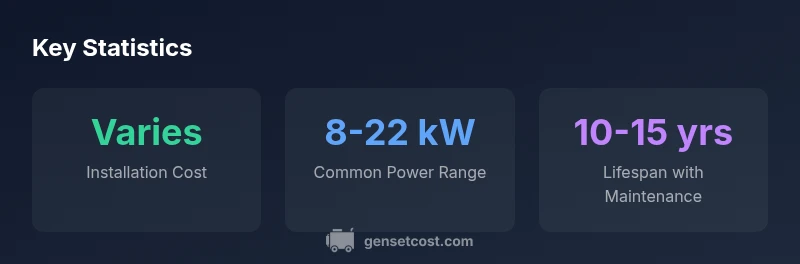
Generac generators are a leading choice for home backups, with models ranging from 8 kW to 22 kW and flexible fuel options. They are designed for standby installation with automatic transfer switches and are widely supported by installers. This guide breaks down costs, sizing, and installation considerations for 2026. Understanding these factors helps homeowners forecast total cost and select the right Generac generator for essential loads.
Overview of Generac Generators
Generac generators have established themselves as a leading option for residential backup power. Homeowners typically choose standby units that automatically power essential circuits during an outage, connected to an automatic transfer switch (ATS). Generac’s broad lineup supports different loads, fuel sources, and installation environments. When evaluating generac generators, consider how your home’s critical loads align with the unit’s wattage capacity, the reliability of your fuel supply, and the ease of maintenance. The goal is to deliver dependable power when you need it most, without overpaying for unused capacity. Genset Cost’s analysis shows that most homeowners prioritize reliability, installer support, and long-term operating costs when comparing Generac against other brands. This makes Generac a strong contender for both single-family homes and multi-unit properties.
In addition to performance, homeowners should factor in local permitting and noise regulations, as these influence overall project timelines and cost. Generac’s installations are commonly paired with weather-resistant enclosures and sound-dampening features, which can affect both aesthetics and compliance with neighborhood codes. For the best outcomes, work with a licensed installer who can translate your power needs into a practical, code-compliant system.
Sizing Your Backup Power Needs
Sizing a Generac system starts with a careful assessment of your home’s electrical loads. Begin by listing critical circuits you want to power during an outage (e.g., refrigeration, heating or cooling, sump pumps, lights, and communications). Then, estimate the total wattage required by these circuits and compare it to the generator’s rated continuous power. A common pitfall is oversizing for luxury loads that aren’t essential during an outage; avoid paying for capacity you won’t use.
Next, consider whether you prefer a whole-home solution or a partial-load configuration that powers only the essentials. Whole-home setups require larger units and more robust transfer switches, but they minimize manual selection during an outage. Partial-load configurations can save upfront costs while ensuring critical systems stay online. Don’t forget to account for future growth—adding a new appliance later increases load, so selecting a slightly larger unit now can be cost-effective over the life of the system.
Finally, a professional load calculation is essential. A qualified installer will review your panel layout, transfer-switch options, and wiring routes to confirm the appropriate kW range. This helps avoid under- or over-sizing, which can affect reliability and wear over time.
Installation and Transfer Switches: What to Expect
Installation is more than bolting a generator to a pad or mounting it in a shed. A proper Generac installation requires electrical and fuel work, weatherproofing, and adherence to local codes. An Automatic Transfer Switch (ATS) is central to seamless operation, detecting outages and switching to generator power within seconds. The ATS also provides a controlled path for the utility and generator, preventing backfeed and safeguarding appliances and utility workers.
Licensed electricians and, in some cases, fuel suppliers, handle wiring, gas lines or propane plumbing, and exhaust routing. They assess site accessibility, ventilation, and clearance for routine maintenance. Many jurisdictions require inspections before and after connection. Planning for permits and inspection timelines early in the project helps prevent delays and unexpected costs. By engaging professionals, homeowners reduce risks and ensure that the system performs reliably when the grid goes down.
Fuel Options and Efficiency: Natural Gas vs Propane
Generac standby units commonly support natural gas or propane, with some models offering dual-fuel configurations. Natural gas provides a continuous fuel supply if your gas service is reliable, while propane offers a storable fuel source that’s not dependent on the gas pipeline. Each fuel type has implications for installation, fuel availability, and running costs. In areas with volatile natural gas prices or constrained gas pressure, propane can be a practical alternative, albeit with different efficiency considerations and storage requirements.
Efficiency and runtime depend on load and fuel type. Dual-fuel configurations offer flexibility but may require more complex servicing and maintenance planning. When choosing a model, review your local fuel infrastructure, expected outage duration, and running costs to determine the most economical choice for your home.
To optimize efficiency, select a generator sized for frequent, everyday use rather than the smallest unit that technically meets minimum loads. This approach reduces cycling and wear, helping to extend life and reduce maintenance costs over the system’s lifetime.
Cost Considerations: Upfront, Installation, and Financing
Cost is influenced by unit size, installation complexity, permits, and any site-specific requirements (such as trenching or special fuel piping). While it’s common to see cost ranges quoted in industry materials, the actual price depends on how much trade work is needed, the type of enclosure, and local labor rates. Homeowners should gather multiple quotes and verify what each includes: equipment, permits, trenching, mounting, electrical work, and start-up testing. Financing options, warranties, and maintenance plans can affect the total cost of ownership over 5 to 20 years. A clear, itemized quote helps you compare value and avoid surprise charges when the project begins or ends.
Pro tip: ask installers for a written load calculation and a test plan that demonstrates how the generator will perform under simulated outages. This reduces post-install surprises and supports warranty protection.
Maintenance, Warranty, and Service Planning
Regular maintenance is vital for any standby generator, and Generac systems are no exception. Routine checks typically include battery, oil levels, air filters, and fuel system inspections. Many owners schedule annual service with an authorized technician who can verify wiring integrity, transfer-switch operation, and exhaust clearance. Maintenance improves reliability and supports warranty terms, which can vary by model and region. Keep documentation of service visits, parts replacements, and any fuel system updates to simplify warranty claims and resale.
Proactive maintenance also helps prevent costly downtime during outages. If you rely on a generator for critical loads, consider extended service plans or maintenance agreements that cover routine testing and priority scheduling during peak outage seasons.
Choosing the Right Generac Model for Your Home
Generac offers a spectrum of models designed to meet different homeowner needs, from compact 8 kW units for small homes to larger 22 kW options for bigger residences or multi-unit buildings. When selecting a model, match the unit’s continuous rating to your essential load profile and consider future expansion. Beyond size, evaluate enclosure options for outdoor mounting, noise levels, and ease of access for maintenance. Some homeowners prioritize quieter operation in urban neighborhoods, while others emphasize spill containment and weather resistance.
All models share core features like automatic start during an outage, compatibility with standard transfer switches, and a robust warranty structure. Consulting with a qualified installer helps translate your load calculations into a reliable, code-compliant system that aligns with local energy codes and home insurance requirements.
Sizing Tools and Professional Guidance
While DIY calculators can help you estimate initial needs, professional sizing remains best practice. A professional will perform a full electrical load analysis, review panel capacity, and account for simultaneous loads (such as air conditioning and heating systems). They’ll also verify fuel supply, venting, and outdoor clearance. For many homeowners, this step is the difference between a system that reliably carries essential circuits and one that experiences nuisance outages during peak load.
Engaging a trusted installer also improves the likelihood of meeting warranty conditions and local code requirements. If you’re evaluating multiple contractors, ask about their licensing, prior installations, and post-installation support. A well-planned sizing and installation process reduces risk and increases the system’s long-term value.
Safety, Codes, and Environmental Considerations
Safety and code compliance are non-negotiable in generator projects. Local codes govern exhaust routing, electrical interconnections, and fuel lines, while NFPA standards provide overarching safety guidance for standby power systems. A thorough pre-installation assessment helps ensure that safe clearances are maintained and that the system does not pose a fire or carbon monoxide risk to occupants. Environmental considerations include proper venting, fuel storage, and spill containment. Keeping up with inspections and code updates is essential for ongoing safety and warranty compliance.
Generac model overview and typical power ranges
| Model Type | Typical Power Range | Fuel Type |
|---|---|---|
| Standby Generator | 8-22 kW | Natural gas/Propane |
| Portable Generator | 1-5 kW | Gasoline/Propane |
| Dual-Fuel (Bi-Fuel) | 8-22 kW | Natural gas/Propane |
People Also Ask
What is the typical cost range to install a Generac standby generator?
Costs vary widely based on unit size, installation complexity, permits, and site conditions. A professional installer can provide an itemized quote that includes equipment, permits, and start-up testing. Always request a load calculation and a written installation plan to understand the total investment.
Installation costs vary widely by size and site conditions. Get a detailed, written quote that includes permits and testing.
What fuel options do Generac standby generators support?
Most standby Generac models support natural gas or propane, with some models offering dual-fuel configurations. Your choice depends on fuel availability, storage considerations, and running costs in your area.
Standby units typically use natural gas or propane; dual-fuel models are available depending on the model.
Do I need an automatic transfer switch with a Generac generator?
Yes. An Automatic Transfer Switch detects outages and seamlessly shifts power to the generator, protecting appliances and utility workers by preventing backfeed.
An ATS is essential for automatic and safe operation during outages.
How long will a Generac generator last with proper maintenance?
Lifespan depends on maintenance and usage. With regular service, these systems can provide many years of reliable operation, though performance varies by model and load profile.
With good maintenance, expect many years of reliable operation.
What should I know about warranty coverage for Generac units?
Warranty terms vary by model and region. Review the manufacturer’s documentation and confirm with your installer to understand what is covered and for how long.
Warranty terms differ by model and location—check the paperwork and confirm with the installer.
Can I install a Generac generator myself?
Professional installation is strongly recommended due to electrical, fuel, and code requirements. DIY installation can void warranties and create safety risks.
Installation should be done by a licensed professional to ensure safety and compliance.
“Choosing the right Generac generator isn't just about size—it's about matching your home's critical loads with a reliable transfer strategy and dependable service.”
Key Takeaways
- Start with a load calculation for essential circuits
- Expect cost variation based on installation and fuel type
- Use licensed installers for safety and code compliance
- Regular maintenance sustains lifespan and warranty
- Explore financing and warranty options early