What Is the Problem with Generac Generators? A Practical Troubleshooting Guide
Urgent, practical guidance to diagnose and fix common Generac generator issues. Learn quick fixes, safety notes, and when to call a pro for reliable backup power.


According to Genset Cost, the most common problem with Generac generators is a weak battery or fuel delivery issue that prevents starting or causes stalling. Start with checking the battery voltage, fuel level and quality, and the transfer switch status. If the symptoms persist, follow our step-by-step guide for safe, rapid diagnosis.
What is the problem with Generac generators? Understanding root causes\n\nWhen homeowners ask what is the problem with Generac generators, they’re usually facing a start-up failure or intermittent power. The root causes are practical and fixable with a safety-focused approach. In most residential systems, a weak or dead battery, stale fuel, clogged lines, or a tripped transfer switch top the list. Understanding these factors helps you prioritize diagnostics, avoid unnecessary service calls, and extend the life of your equipment. Brand context matters here: the Genset Cost framework emphasizes a structured, data-driven path to identify failures fast. This article walks you through symptoms, causes, and proven fixes so you can restore power quickly and safely.
Common symptoms and what they indicate\n\nTypical Generac symptoms include hard starts, surge or flutter during run, failure to transfer during an outage, and unexpected shutdowns. A slow cranking engine usually points to battery or starter issues, while rough running often signals fuel or ignition problems. If the transfer switch trips or the outlet remains dead, electrical faults or overloads may be involved. Each symptom maps to likely causes, which makes a methodical diagnosis possible without guesswork. For homeowners, recognizing patterns—like “no start after sitting idle” vs. “starts but dies quickly”—helps you choose the right checklists and avoid unnecessary repairs.
Safety-first diagnostic approach\n\nSafety should govern every step of troubleshooting. Begin by turning off all loads, disconnecting nonessential circuits, and ensuring the unit is in a well-ventilated area away from ignition sources. Use proper PPE, and never work on live electrical components. Reference your manual for model-specific shutdown procedures. If you smell fuel or hear unusual noises, pause and reassess—gasoline vapor is highly flammable and proper ventilation is critical. Document observed symptoms before testing, and seek professional help if you’re unsure about any step. The goal is safe, incremental diagnosis that reduces risk while speeding up repairs.
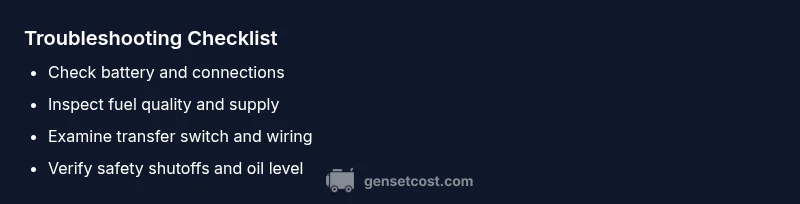
The most common causes and practical fixes\n\nBattery and charging: Check voltage with a multimeter; clean corrosion from terminals and ensure secure connections. Replace a weak battery if charging fails. Fuel quality: Use fresh gasoline, degenerate old fuel, and replace the fuel filter if present. Spark and ignition: Inspect spark plugs and ignition modules for wear or fouling; replace as needed. Transfer switch: Inspect breakers and wiring; reseat connectors and test with a controlled load. Oil and safety features: Verify oil level and reset safety shutoffs according to the manual. Regular maintenance prevents these causes from piling up.
Fuel system dynamics: fuel quality, storage, and additives\n\nGasoline can degrade in as little as 30 days in some climates. If you store fuel long-term, stabilize it and rotate stock. Fuel lines, filters, and carburetion (where applicable) must be clean for reliable starts. Use ethanol-free fuel if possible and avoid running generators with stale fuel. Inconsistent fuel pressure or dirty injectors can cause sputtering or stalling under load. Keep a simple fuel management routine and schedule periodic inspections to prevent drift from clean-running performance.
Electrical system and transfer switch considerations\n\nElectrical faults often masquerade as mechanical problems. Check that the transfer switch is receiving proper control signals and that all safety interlocks are functioning. Loose or corroded connections can create intermittent faults. If the generator starts but won’t transfer power, inspect the wall outlet, bypass relay, and control board for fault codes. Modern Generac units store fault history—consult the system’s display or diagnostic port to read codes before replacing components.
Maintenance habits to prevent problems\n\nCreate a simple, proactive maintenance schedule: quarterly battery checks, annual fuel system inspection, and semiannual transfer switch testing. Keep a log of maintenance activities and fault codes. Clean the generator area to prevent dust accumulation, which can affect cooling. Use manufacturer-recommended fluids and adapters. Regular service reduces unexpected outages and keeps your system ready for outages when you need it most.
When to call a professional (safety is non-negotiable)\n\nSome problems require a licensed technician, especially those involving gas connections, electrical panels, or gas-powered transfer switches. If you encounter a persistent fault code, strong fuel odors, or you’re uncomfortable with electrical testing, seek professional help promptly. Quick escalation can prevent dangerous situations and protect your investment.
Building a practical troubleshooting workflow for Generac units\n\nAdopt a workflow that starts with simple checks (battery, fuel, switch state) and progressively tackles electrical and control faults. Use the diagnostic codes on the unit’s display as a guide. Always verify safety shutdowns first, then perform a controlled test under load. A repeatable process minimizes downtime and enhances your confidence during outages.
Real-world scenarios and lessons learned\n\nIn real homes, a simple battery replacement often resolves what seemed like a complex outage. In other cases, degraded fuel requires a quick flush and fresh fuel. Documented failures, when reviewed, reveal recurring patterns that point to preventive maintenance gaps. The key is consistent inspections, timely replacements, and using data-driven checks to identify trend changes before they become outages.
Steps
Estimated time: 60-90 minutes
- 1
Secure safety and prep tools
Turn off all loads and disconnect nonessential devices. Gather a multimeter, flashlight, wrenches, and a clear workspace. Read the owner’s manual for model-specific shutdown steps before touching any components.
Tip: Always start with safety gear and a clear plan to avoid shocks or fuel hazards. - 2
Check the battery and connections
Test battery voltage with a multimeter and inspect terminal connections for corrosion. Clean terminals and snug clamps before attempting a start test.
Tip: A healthy battery is the most common fix; assume this step first when cranking is weak. - 3
Inspect fuel quality and supply
Drain stale fuel, replace with fresh gas, and check the fuel filter if your model has one. For propane or natural gas units, verify supply lines and regulators.
Tip: Don’t reuse old fuel; even small amounts can cause misfires or stalls. - 4
Check oil level and safety switches
Ensure the oil level is within the recommended range and that any low-oil sensor isn’t triggering a shutoff. Reset sensors per the manual if needed.
Tip: Oil concerns are safety-dependent; ignore warning lights and you risk engine damage. - 5
Evaluate transfer switch and wiring
Inspect breakers and wiring between the generator and the house panel. Reseat connectors and look for signs of wear or corrosion.
Tip: Loose connections are a frequent source of intermittent outages. - 6
Test under controlled load
Reconnect the loads and perform a controlled test to verify start, run, and transfer behavior. Note any fault codes or abnormal noises.
Tip: A controlled test reveals faults not evident during idle checks.
Diagnosis: Generator won't start or runs erratically, no power to loads
Possible Causes
- highWeak or dead battery/engine cranking issue
- highFuel system clog, old fuel, or failed spark plug
- mediumTransfer switch or electrical wiring fault
- mediumLow oil level or safety shutoff triggered
- lowOverload or tripped circuit, soft-lockout
Fixes
- easyTest battery voltage and charge or replace battery; check connections
- easyDrain and replace stale fuel; clean or replace spark plug; inspect fuel filter
- mediumInspect transfer switch, breakers, and wiring; reseat connectors; test with load
- easyCheck oil level and top-up; reset any safety shutoffs following manual
- easyReduce load, reset controller, and check for overload indicators
People Also Ask
Why won’t my Generac generator start after a power outage?
Common causes are a dead battery, stale fuel, or a tripped transfer switch. Check battery voltage, inspect the fuel system, and verify the transfer switch state before calling for service.
Most starts fail due to battery or fuel issues. Check the battery and fuel, then the transfer switch if it still won’t start.
How often should I service a Generac backup generator?
Follow the manufacturer’s recommended maintenance schedule — typically annual checks for critical components, plus more frequent inspections if the unit runs often or under heavy loads.
Service once a year, with more frequent checks if you use the generator regularly.
What causes a Generac to shut off automatically?
Low oil level, overheat protection, or unsafe gas conditions can trigger auto shutoff. Check oil, cooling, and venting; inspect for error codes on the controller.
Auto shutoffs happen when safety limits are reached, like low oil or overheating.
Is it safe to run a Generac generator indoors?
No. Generac generators emit carbon monoxide and must be installed outdoors with proper ventilation and clearance per the local code and manual.
No—run the generator outside with proper clearance and venting.
Do Generac generators require professional installation?
Installation should be performed by a qualified technician to ensure proper transfer switch wiring, fuel connections, and code compliance.
Most homeowners should have a pro install the unit for safety and code reasons.
Watch Video
Key Takeaways
- Start with simple checks (battery, fuel, switch)
- Prioritize safety and consult the manual for your model
- Keep a maintenance log to catch recurring faults
- Call a pro if you encounter gas odors or live electrical issues