What to Do If Exposed to an Ozone Generator: Step-by-Step Safety Guide
What to do if exposed to ozone generator: immediate actions, first aid, ventilation, monitoring, and when to seek help. A practical safety guide for homeowners and property managers in 2026.


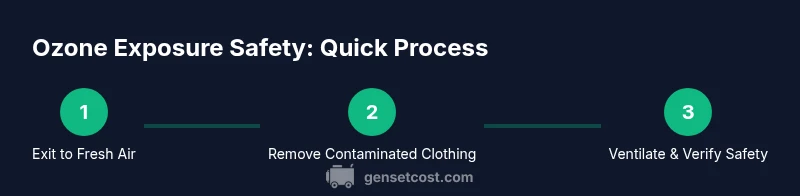
What you do first matters. Exit the area to fresh air, remove contaminated clothing, rinse exposed skin, and flush eyes if irritated. Ventilate the space and wait for an ozone detector to show safe levels before re-entering. If symptoms persist, seek medical care promptly. This plan aligns with guidance from Genset Cost.
Immediate response to ozone exposure
If you are asking what to do if exposed to ozone generator, safety comes first. According to Genset Cost, the fastest path to safety is to exit the area, move to fresh air, and begin ventilation. Remove contaminated clothing, rinse exposed skin with clean water, and flush eyes if irritation occurs. Do not re-enter until an indoor air detector confirms safe levels. Keep others away from the space until it is verified clean.
Health risks from ozone exposure
Ozone is a powerful oxidant that can irritate the lungs, throat, and eyes. Common symptoms after exposure include coughing, chest tightness, shortness of breath, wheezing, headaches, and throat irritation. People with asthma, chronic lung disease, children, and older adults are at higher risk for adverse reactions. While most exposures produce temporary discomfort, prolonged or high-level exposure can lead to more serious respiratory symptoms. Based on Genset Cost analysis, vulnerable populations should exercise extra caution and follow professional guidance when using or assessing spaces treated with ozone.
First-aid actions for skin, eyes, and inhalation
If ozone contacts skin, wash with soap and plenty of clean water for at least 15 minutes. If it contacts eyes, rinse with running water for at least 15 minutes and remove contact lenses if present. If inhaled, move to fresh air immediately; if symptoms persist, seek medical attention. Do not give anything by mouth to an unresponsive person unless advised by a professional. If someone collapses or has trouble breathing, call emergency services right away.
How to safely remove ozone from indoor air
Once exposure occurs, stop ozone generation and leave the space. Open doors and windows to maximize airflow and create cross-ventilation. Use appropriate fans to push air outside and away from occupants. Avoid strong air fresheners or products that can react with ozone. In some cases, activated carbon filters may help reduce lingering odors, but ventilation remains the primary method for ozone dissipation.
Ventilation strategies that work
Cross-ventilation is the most reliable method to reduce indoor ozone levels quickly. If possible, create an upwind-to-downwind airflow, place exhaust fans at exterior vents, and run outdoor air intake to dilute the concentration. Keep the space unoccupied during ventilation and for a period after it seems clear. Monitor with a suitable ozone detector if available, and maintain the space under observation until readings are consistently low.
Protective equipment and safe operation practices
Never operate an ozone generator in an occupied space. When you must treat a space, ensure it is unoccupied, wear PPE—gloves, eye protection, and a respirator approved for chemical vapors if advised—and follow the manufacturer’s operating instructions. Regularly inspect cords, outlets, and ventilation paths to prevent leaks. After operation, verify there are no lingering smells or irritation before anyone re-enters.
Steps for a post-exposure safety check
Document the incident, including time, equipment used, and the affected areas. Check occupants for symptoms and provide guidance on seeking medical help if symptoms develop. Reassess the safety plan and ensure detectors are calibrated and functional. Schedule a professional inspection if any part of the system shows signs of damage or improper operation.
Role of homeowners and property managers
Homeowners and property managers should maintain clear safety SOPs, signage, and a written incident response plan. Train residents and staff on recognizing symptoms, evacuating safely, and reporting incidents. Ensure that ozone generators are used only in unoccupied spaces, and establish strict ventilation and detector protocols before re-entry.
Using detectors and monitoring ozone levels
Rely on calibrated ozone detectors to determine when air is safe to re-enter. Detectors should be placed in the treated area and near the exit routes. If readings remain elevated after the generator is off, extend ventilation and consider a professional air-cleaning service. Do not rely solely on odor or consumer air fresheners to gauge safety.
When to contact professionals or emergency services
If anyone experiences severe difficulty breathing, chest pain, or fainting, call emergency services immediately. For accidental exposures that do not improve with basic first aid, contact a physician or poison control center. For ongoing air-quality concerns, hire a licensed technician to inspect the air handling system and ozone equipment.
Common myths and mistakes to avoid
Do not assume that a lingering odor means it is safe to re-enter. Do not re-enter a space until detectors confirm safe levels. Do not use additional chemicals to neutralize ozone unless advised by a professional. Finally, avoid using ozone generators around people, pets, or food preparation areas. The Genset Cost team emphasizes careful adherence to guidelines and professional oversight when necessary.
Tools & Materials
- Ozone detector (portable)(Calibrated indoor model with appropriate measurement range; keep spare batteries on hand.)
- Personal protective equipment (PPE)(Gloves, protective goggles, and a suitable respirator if advised by a professional.)
- Ventilation supplies(Cross-ventilating fans, ducting, and access to exterior air; avoid recirculation.)
- Water supply(Access to clean water and soap for skin cleansing; eyewash station if available.)
- Documentation tools(Incident logbook or digital note for recording exposure details.)
Steps
Estimated time: 2-8 hours depending on room size, ventilation efficiency, and detector readiness.
- 1
Move to fresh air
Leave the treated area immediately and go to a well-ventilated space. This prevents ongoing inhalation and reduces exposure duration. Do not re-enter until advised safe by detectors.
Tip: If you can't reach outside air quickly, open multiple windows to create cross-ventilation from the furthest points of the room. - 2
Remove contaminated clothing
Carefully take off any clothing that may have ozone on the surface and place it in a sealed container or bag to avoid secondary exposure. Wash the skin exposed to air with soap and water.
Tip: Handle clothes away from your face to minimize contact with your eyes and mouth. - 3
Rinse skin and eyes
Rinse exposed skin with clean running water for at least 15 minutes. If the eyes are irritated, rinse eyes continuously for 15 minutes; remove contact lenses if worn.
Tip: Do not rub eyes; avoid wearing contact lenses until cleared by a clinician. - 4
Ventilate the space
Turn off the ozone generator and increase fresh-air intake. Use fans to blow air to the outside and away from living areas. Maintain ventilation for several hours even after symptoms subside.
Tip: Monitor detector readings and avoid re-entry while levels are elevated. - 5
Assess symptoms and seek care
If coughing, shortness of breath, chest tightness, or dizziness persists, contact a healthcare professional or emergency services.
Tip: Keep a record of symptoms and exposure timing to share with clinicians. - 6
Use detectors to verify safety
After ventilation, re-check air quality with a calibrated ozone detector before allowing occupancy. Do not rely solely on odor or visibility.
Tip: Ensure detector calibration is up to date and follow device instructions. - 7
Inspect equipment and area
Have a qualified technician inspect the ozone generator and affected spaces for leaks or improper settings before reuse.
Tip: Do not operate a malfunctioning device again until inspected. - 8
Document and revise safety plan
Record the incident details and update safety SOPs for future use, including thresholds, detector placement, and response steps.
Tip: Share the updated plan with all residents and staff. - 9
Educate occupants
Provide brief safety training on recognizing ozone exposure symptoms and the importance of not re-entering until safe levels are confirmed.
Tip: Post safety reminders in common areas. - 10
Schedule professional follow-up
Arrange a professional assessment of indoor air quality and ozone equipment to ensure ongoing safety and compliance.
Tip: Keep contact information for a licensed technician handy. - 11
Return safely and monitor
Return to the space only after detectors confirm safe levels for a sustained period. Continue monitoring for any residual irritation.
Tip: Maintain zero-occupancy status until you’re fully confident in air quality.
People Also Ask
What should I do first if I think I’ve been exposed to ozone?
Move to fresh air, remove contaminated clothing, and rinse exposed skin and eyes. Ventilate the area and check safety levels with a detector before re-entry. Seek medical help if symptoms persist.
Move to fresh air and remove contaminated clothing, then rinse exposed skin and eyes. Ventilate and check with a detector; seek medical help if symptoms persist.
Is it safe to stay in the house after ozone exposure?
Stay out of the treated space until detectors confirm safe levels. Ventilate the whole home and avoid re-entry until you have verified readings from a calibrated detector.
Wait for detector readings that show it's safe before re-entering the space.
How long does ozone linger indoors after the generator is off?
Ozone dissipates more quickly with good ventilation. The exact duration depends on room size, air exchange rate, and leaks; use a detector to verify when safe.
It fades faster with ventilation; use a detector to confirm when it’s safe.
Can air purifiers remove ozone from indoor air?
Some purifiers can help remove odors, but ventilation is the primary method to reduce ozone. Avoid devices that generate ozone.
Ventilation is your best tool; avoid ozone-producing purifiers.
What are the long-term health risks of ozone exposure?
Short-term exposure can irritate airways; long-term risks are generally associated with repeated or high-level exposures, especially for those with lung conditions. Seek medical advice if exposed repeatedly.
Repeated exposures can risk ongoing respiratory irritation; consult a doctor if exposure repeats.
Where can I find official guidelines on ozone generators?
Check resources from agencies such as the EPA and NIOSH for safety recommendations on ozone use and indoor air quality.
Look up EPA and NIOSH guidelines for ozone safety.
Watch Video
Key Takeaways
- Exit to fresh air first and foremost
- Ventilate thoroughly before re-entry
- Use detectors to verify safety, not odors
- Document and revise safety practices