When to Use a Generator in an RV: A Practical Guide
Learn when to use a generator in an RV, how to size it, fuel choices, safety, and cost considerations. A practical, expert guide from Genset Cost for homeowners and property managers.


This guide helps you determine when to use a generator in an RV, how to size it for typical loads, and how to balance fuel type, safety, and cost. You’ll learn practical decision points for off-grid camping, extended outages, and high-demand climates, with a clear framework to compare options.
Understanding the RV power landscape
Power for an RV isn’t one-size-fits-all. It spans shore power, onboard batteries with inverters, and portable or installed generators. Shore power is convenient when you’re connected to a campground, but it isn’t always available or reliable on remote boondocking sites. Batteries and inverters support silent operation for basic needs like charging phones or running a small fridge, yet they struggle with sustained air conditioning, water heaters, or multiple appliances running simultaneously. A generator serves as a flexible on-demand power source, but its use hinges on your campsite, fuel logistics, and safety considerations. The central question is how to map your typical trips and loads to the power sources you’ll rely on. When to use a generator in rv depends on access, duration of stays, and comfort with running gear. As you plan, the framework from Genset Cost helps homeowners and property managers compare options, estimate installation needs, and evaluate long-term costs with clarity.
Quick context for decision points
- If you have reliable shore power and moderate loads, stay on lines power whenever possible.
- For boondocking or long outages, a generator can maintain essential comfort and safety.
- For heat or cold management, test whether a generator’s output meets peak or surge demands before relying on it.
Tools & Materials
- Portable RV generator(Choose a unit with wattage equal to or exceeding your calculated essential-load requirement.)
- Transfer switch(Necessary for seamless switching from shore power to generator in a fixed installation.)
- Outdoor-rated extension cords(Weatherproof, appropriately gauged for the feeder distance and load.)
- Fuel containers and stabilizer(Store fuel safely and stabilize fuel for longer trips.)
- CO detector and ventilation plan(Place CO detectors near the living area; ensure generator placement maintains ventilation requirements.)
- Basic tools kit (wrench, pliers, screwdriver)(Useful for mounting devices or adjusting connections during setup.)
- Fire extinguisher(Keep a rated extinguisher accessible in the generator area.)
Steps
Estimated time: 60-120 minutes
- 1
Calculate essential loads
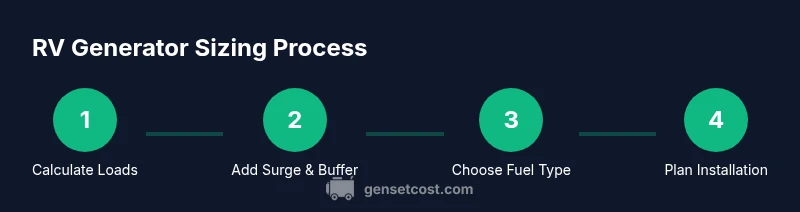
List every device you must run during a typical night—refrigerator, heater or AC, water pump, lights, and outlets. Look up wattage ratings and add surge watts for start-up equipment. This total defines your minimum generator capacity.
Tip: Include a small buffer (10-20%) above the calculcated essential loads to cover surges and unexpected appliances. - 2
Estimate surge requirements
Identify appliances with high starting wattage (compressors, induction cooktops, some HVAC units). Choose a generator that can handle starting loads without tripping breakers or loading the engine excessively.
Tip: If you’re unsure, choose a model with a higher-rated surge wattage than your calculated peak. - 3
Choose fuel type and runtime goals
Decide between gasoline, propane, or diesel based on availability, storage, and running costs. Consider how long you’ll be off-grid and how quickly you’ll need to refuel or swap tanks.
Tip: Propane offers clean storage and rain resistance for some setups, but check availability at your typical camping locations. - 4
Assess installation needs
Determine if you need a portable setup or a fixed installation with a transfer switch. A fixed install provides convenience and safety but requires professional wiring and adherence to codes.
Tip: Consult a qualified technician for permanent installs to ensure proper grounding and ventilation. - 5
Plan for safety and ventilation
Place the generator outdoors, away from doors and vents, with adequate clearance and a clear airflow path. Install CO detectors and never run the unit indoors or in an enclosed space.
Tip: Keep a dedicated, weatherproof storage plan for fuel and perform regular CO detector checks. - 6
Procure required accessories
Purchase correct extension cords, a transfer switch (if needed), and basic maintenance tools. Verify all connections are secure and rated for outdoor use.
Tip: Label circuits so you know exactly which outlets are fed by the generator. - 7
Test run and validate performance
Run the generator with a load close to your expected normal usage to verify that systems function properly. Check for unusual noises, vibrations, or overheating and adjust as needed.
Tip: Document test results and schedule regular maintenance checks as part of your camping routine.
People Also Ask
Do I need a transfer switch for RV generator use?
A transfer switch simplifies switching between shore power and generator and enhances safety by isolating power sources. If you’re building a semi-permanent installation, a transfer switch is highly recommended. For portable setups, you can manually disconnect from shore power when you start the generator.
Yes, a transfer switch simplifies switching between power sources and improves safety for a fixed installation. For portable setups, manual switching is common.
What size RV generator do I need?
Size depends on your essential loads and surge requirements. Start with a comprehensive load calculation, then select a unit with at least a small buffer above peak loads to handle starting currents.
Start with a full load calculation, then pick a generator with a little extra capacity for startup surges.
Can I run a generator with propane or gas?
Both propane and gasoline are common. Propane offers clean storage and longer shelf life, while gasoline is typically lighter and more widely available. Diesel is an option for some heavier-duty models but requires a different maintenance routine.
Propane is clean and stable, gasoline is common; diesel is another option for larger setups.
Is a generator mandatory for off-grid RV camping?
Not mandatory, but highly practical if you need reliable refrigeration, climate control, or sustained power. Evaluate your trip duration, location, and comfort level with fuel management to decide.
Not mandatory, but very practical for consistent power off-grid.
How often should I service my RV generator?
Follow the manufacturer’s maintenance schedule, with regular oil changes, air filter checks, and spark plug replacements as needed. Regular checks help prevent failures during trips.
Stick to the maintenance schedule and perform checks before trips.
What safety concerns should I consider with a generator?
Key concerns include carbon monoxide exposure, proper ventilation, electrical protection, and secure mounting. Always run outdoors, use CO detectors, and follow local codes for wiring and grounding.
Ventilate well, use CO detectors, and follow local electrical codes.
Watch Video
Key Takeaways
- Assess loads before choosing a generator.
- Size for surge and add a safety buffer.
- Prioritize outdoor placement and ventilation.
- Understand fuel options and maintenance needs.