Why Is My Generator Running When Power Is On? Practical Guide
Discover why your generator stays on after grid power returns, how to diagnose ATS and sensing faults, and safe, actionable steps to fix it with guidance from Genset Cost.


Most often, the generator keeps running when power returns because the automatic transfer switch (ATS) misreads grid status or stays engaged due to a fault. A stuck sensing circuit or wiring issue can also delay shutoff. Start by resetting the ATS, confirming grid status readings, and testing the transfer sequence. If it persists, call a licensed pro.
Why a Generator Might Run When Power Is On
If you’re asking why is generator running when power is on, you’re likely dealing with a backup power system that should automatically switch off when utility power returns. In real-world homes, the most common reason is an automatic transfer switch (ATS) that doesn’t detect the return of grid power or remains energized due to a fault. The result is a generator that stays wired to the transfer path and continues to run, sometimes loudly. The Genset Cost team notes that ATS-related issues are the leading cause of delayed shutdown after grid restoration. Other contributing factors include faulty sensing circuitry, wiring faults between the ATS and generator, or a generator set timer that hasn’t reset. Understanding these signals helps homeowners decide whether to reset, test, or call for professional service. If your generator is indoors or in an attached garage, this situation can also raise safety concerns, including exhaust buildup and carbon monoxide risk. Always ensure proper ventilation and follow safe lockout/tagout practices when inspecting control panels.
Across many installations, the sequence of events matters: power drops at the main service panel, the ATS detects loss, the generator starts, and when grid power returns, the ATS should switch back. When it fails to switch, your generator remains active and contributes to unnecessary fuel use and wear. Proactive monitoring of status lights, fault codes, and maintenance records can reduce the odds of this happening again. In some homes, remote start or automated demand response features may also influence how quickly the system disengages after grid power returns.
Common Causes of a Delayed Stop
The phenomenon of a generator continuing to run after power returns is rarely a single-event fault. The most common cause, by far, is an ATS misconfiguration or fault that prevents proper grid detection. In linear terms, the ATS should switch to the utility source once grid power is stable again; a fault can leave the generator framed in the active path. Sensing faults—either voltage, frequency, or phase sensing—can fool the system into thinking the grid is still down. Electrical wiring between the ATS, generator, and main panel can develop contact resistance or loose connections, causing inconsistent signals. Some systems also have a timer or software logic that briefly keeps the unit on after transfer, which if misconfigured, delays the shutoff. Less common but plausible causes include a stuck start circuit, a remote start feature that’s triggered by a load, or a malfunctioning load sensor that prevents the ATS from recognizing restored grid conditions. Regardless of the cause, consistent symptoms, alarms, or abnormal sounds warrant careful testing and, if doubts remain, professional inspection.
Safe Diagnostic Habits for Homeowners
Before you touch any electrical components, ensure your safety: wear PPE, keep children and pets away, and never rely on guesswork when working near live equipment. Start with the most obvious checks that are safe to perform from a distance. Verify that the main service disconnect has not tripped and that the utility meter indicates power flowing into the residence. Inspect the ATS indicator lights and fault codes on the generator controller; many modern systems provide a clear fault description. If you have an external transfer switch, confirm the wiring diagram and the model’s sensitivity settings. Do not bypass any safety interlocks or attempt to “short” bypasses. If you smell fuel, hear unusual noises, or notice overheating, treat it as an emergency and shut down the system by following the manufacturer’s shutdown procedure. Remember: never put your hands on moving parts or exposed electrical terminals while the system is energized. The goal is to gather data safely so a technician can pinpoint the fault with minimal risk.
Step-by-Step Troubleshooting Plan (overview)
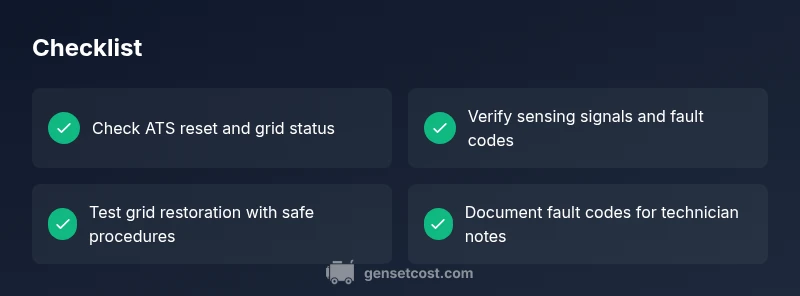
If you’re at a point where you can perform checks safely, follow a structured plan to confirm whether this is an ATS issue or a sensor fault. Start with soft diagnostics like confirming grid restoration on the main panel, inspecting indicator lights on the ATS and generator controller, and looking for obvious wiring issues. Move to controlled re-testing of the transfer sequence in a documented way, and record values for voltage, frequency, and phase. If you’re unsure at any step, stop and contact a professional.
These steps are designed to be safe and conservative. The most important thing is to avoid working on energized electrical components. Always disconnect power from the main service panel before investigating wiring. If you’re unable to complete any test safely, and especially if you observe heat, crackling noises, or strong odors, call for professional service immediately.
Steps
Estimated time: 25-40 minutes
- 1
Power down and reset the ATS
Turn off the generator and switch the ATS to its OFF position. Wait a few seconds, then switch back to AUTO and observe whether the transfer occurs correctly when grid power returns.
Tip: Lock out the panel if you need to cycle power; never touch energized components. - 2
Check status indicators
Read the status lights on the ATS and generator controller. Note any fault codes or unusual blinking patterns; compare to the manual.
Tip: Take photos of the indicator panel before making changes so you can revert if needed. - 3
Validate grid restoration
Confirm utility power is truly back by checking the main panel, meter, and any sub-panels. If the grid is restored but the ATS still pauses, the signal path may be degraded.
Tip: Use a multimeter only if you’re trained; otherwise skip to professional assessment. - 4
Test the transfer sequence
With safety precautions in place, simulate a grid outage and restoration to observe if the ATS disengages the generator promptly.
Tip: Document responses; if the sequence is inconsistent, don’t rely on this test alone. - 5
Call a professional if issues persist
If resets and basic checks don’t fix the problem, contact a licensed electrician or generator technician to inspect control wiring and software logic.
Tip: Provide fault codes, photos, and a detailed timeline of events to the technician.
Diagnosis: Generator continues to run after grid power restoration.
Possible Causes
- highAutomatic transfer switch (ATS) misconfiguration or fault causing generator to stay engaged
- mediumStuck or faulty sensing circuitry that misreads grid status
- lowWiring faults or loose connections between ATS, generator, and main panel
Fixes
- easyReset the ATS and generator control panel; perform a controlled test of the transfer sequence
- mediumTest sensing voltages and verify fault codes; inspect indicators for grid restoration signals
- hardInspect wiring connections and grounds between ATS, generator, and service panel; replace faulty components as needed
People Also Ask
What is the most common reason a generator keeps running after power returns?
The most common reason is a misconfigured or faulty automatic transfer switch (ATS) that fails to detect grid restoration. Sensing faults and wiring issues can also keep the generator engaged longer than necessary.
Usually, it’s an ATS fault or sensing issue. If you hear alarms, get a professional to check the wiring and switch settings.
Can I safely reset the ATS myself?
Yes, if you follow manufacturer instructions and power is off to avoid live components. Always lock out and test in a controlled environment before returning to AUTO mode.
You can reset if power is off and you follow safety steps; otherwise, call a pro.
What should I do if the generator smells like fuel or is hot?
Shut everything down immediately and call for professional service. Do not approach the unit while it’s hot or leaking fuel.
Shut it down and call a technician if you smell fuel or notice overheating.
Is this a sign of a bigger problem with my system?
Often not, but persistent issues can indicate a deeper control or wiring fault needing specialist diagnosis.
It could be a bigger issue; get a technician to diagnose if problems continue.
How can I prevent this from happening again?
Schedule regular ATS maintenance, verify sensing calibrations, and document grid-switch events to catch patterns early.
Regular maintenance and calibration help prevent this problem.
Should I run the generator during a power outage test?
Yes, but perform tests with proper safety protocols and only during scheduled maintenance windows. Avoid testing during extreme weather or at night near living spaces.
Test with safety in mind and during proper times; don’t do it haphazardly.
Watch Video
Key Takeaways
- Identify ATS faults as the primary cause
- Check sensing and grid restoration signals first
- Test in a controlled, safe manner
- Call a pro when unsure or faults persist