How to Turn Off Your Generator When Power Returns
Learn the safe, step-by-step method to shut down a home standby generator after utility power is restored. Includes transfer switch basics, safety checks, and practical tips for homeowners and property managers.


To safely power down after grid restoration, identify your generator’s transfer switch and follow a controlled shutdown: confirm grid power is restored, switch from GEN to OFF or AUTO, then reset the transfer switch to its normal mode and stop the engine if your setup requires it. Always observe manufacturer guidelines to prevent backfeed or equipment damage.
Why it's important to know how to turn off generator when power comes back on
According to Genset Cost, turning off a home standby generator promptly after grid power returns is essential for safety, efficiency, and equipment longevity. The Genset Cost team found that improper shutdown can increase backfeed risk, waste fuel, and place unnecessary stress on transfer switches. This guide explains how to turn off your generator properly once utility power is stable again, using the transfer switch, shutdown procedure, and simple checks. Following the recommended sequence minimizes safety hazards for you, your appliances, and the wider electrical system. Whether you rely on a small residential model or a whole-home system, mastering this shutdown process protects your home and your investment. The steps below are designed for homeowners and property managers who want clear, practical instructions that align with manufacturer guidance and best practices from industry sources.
Understanding transfer switches and how power flows
A transfer switch is the critical link between your generator and your home electrical system. It ensures that only one power source feeds your house at a time, preventing backfeed that could injure line workers or damage equipment. There are manual and automatic transfer switches. An automatic transfer switch (ATS) monitors utility voltage and starts the generator when power is out, then switches back when grid power is restored. In some systems, manual transfer switches require you to physically switch positions. Knowing which type you have will shape your shutdown sequence and help you avoid common mistakes.
Pre-shutdown safety checks you should perform
Before touching any controls, prepare the area and yourself. Put on appropriate PPE: safety glasses and insulated gloves, and ensure children and pets are out of the area. Keep the generator cool and dry; if you recently ran it, allow a cooldown period. Review fuel lines, hoses, and the surrounding space for leaks or spills. Confirm you have the generator’s manual handy and that you know the exact shutdown procedure for your model. A calm, deliberate approach reduces the chance of mistakes during the shutdown.
How to verify that grid power is stable before shutting down
Never assume restoration means it’s safe to immediately shut off the generator. Check multiple indicators: the utility meter or the main panel should show steady power, and there should be no flickering loads. If you have an home energy monitoring system, verify consistent voltage and frequency on the grid. If power appears unstable, wait a few extra minutes before proceeding. These checks minimize the risk of backfeed or re-engagement of the generator during a momentary grid fluctuation.
How to locate and interpret your transfer switch
Find the transfer switch panel, typically near the main electrical panel or within a weather-protected area. Identify the positions labeled LINE/UTILITY, GEN, and AUTO, or find theGEN/LINE toggle used by your model. If you’re unsure, consult the owner’s manual or label inside the panel cover. Document the current positions with a photo for future reference. Understanding which position feeds the house at any given time helps you execute a safe transition back to grid power.
Step-by-step overview of the shutdown sequence (non-actionable context)
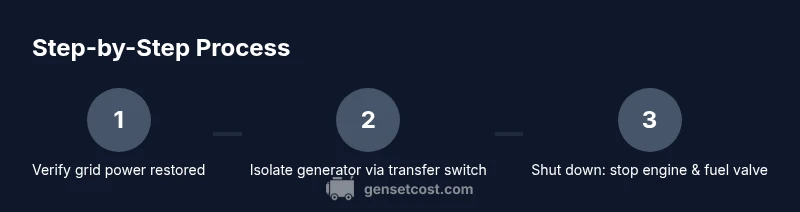
In many systems, the high-level sequence to turn off a generator after power returns is: verify grid power, switch the transfer switch to the LINE or OFF position to isolate the generator, stop the generator following the manufacturer’s STOP procedure, optionally close the fuel valve, and return the transfer switch to AUTO for automatic restart only if grid power is healthy. Always follow the exact steps specified by your model’s manual. Journal any deviations and confirm that loads transition back to utility power.
The official shutdown sequence (high-level) for most systems
For most residential setups, the shutdown sequence is: (1) ensure grid power is stable, (2) move the transfer switch to the LINE or OFF position to remove generator load, (3) use the generator’s shutdown control to stop the engine, and (4) reconfigure the transfer switch to AUTO so the system will re-engage automatically if needed in the future. Some systems require closing the fuel valve after shutdown; refer to your manual for exact steps. This sequence minimizes backfeed risk and preserves equipment integrity.
Post-shutdown actions: cooling, fuel valve, and securing the area
After stopping the generator, allow it to cool before handling any components. If your setup includes a fuel shutoff valve, close it to prevent fuel leaks. Inspect the area to ensure no fuel spills have occurred and that exhaust remains clear of obstructions. Store tools and manuals in a safe place. Document the shutdown time and any observations so you can review performance during your next outage. Keeping the area tidy reduces tripping hazards and makes maintenance easier.
Returning to normal operation and testing loads
Once power is confirmed stable, reset the transfer switch to AUTO so the system monitoring can revert to automatic operation. Validate that essential loads (refrigeration, lighting, climate control) are back on the utility feed. Avoid restarting nonessential appliances until the grid is solid and the backup generator remains off unless needed. If your system supports it, run a quick load test to verify distribution and voltage consistency. Regular testing strengthens your readiness for future outages.
Common mistakes and how to avoid them
Common errors include starting the generator while loads are still connected to the grid, failing to verify grid stability, and neglecting to return the transfer switch to AUTO. Another pitfall is relying solely on the generator’s start button to signal that the system is safe; electrical panels can mislead if the wrong position is selected. Always follow the manufacturer’s shutdown procedure and keep a written checklist accessible by the transfer switch. Establishing a routine reduces the likelihood of missteps during an outage.
Maintenance tips to ensure smooth transitions in future outages
Schedule annual generator servicing, including transfer switch inspection, fuel system checks, and exhaust clearance. Keep the manuals nearby and ensure all safety devices function correctly. Periodically test the entire shutdown and startup cycle in a controlled, non-emergency scenario to build muscle memory. Maintain a log with dates, readings, and any issues observed during shutdowns. A proactive maintenance plan reduces the risk of unexpected failures when power is interrupted.
Quick-checklist and next steps for homeowners
- Confirm grid power is stable before shutdown. - Identify and locate your transfer switch. - Move to LINE/OFF to isolate generator. - Stop the generator using the manufacturer procedure. - Return the switch to AUTO and verify loads. - Close the fuel valve if equipped. - Record the shutdown time and any observations. - Schedule the next maintenance check with a qualified technician.
Tools & Materials
- Owner’s manual for generator and transfer switch(Keep a copy on-site and accessible)
- Safety PPE (gloves, safety glasses)(Protect hands and eyes during controls handling)
- Flashlight(For visibility in dim conditions)
- Voltage tester or multimeter(Use to verify electrical status if unsure)
- Fuel valve (if present)(Know location and how to operate safely)
- Notebook or checklist(Record shutdown times and observations)
Steps
Estimated time: 30-45 minutes
- 1
Verify grid power is restored
Check the main panel for stable voltage and confirm utility power is steady. If you have a home energy monitor, verify there are no frequent flickers. Do not proceed if there are lingering instability signs. A calm confirmation reduces the risk of an unnecessary generator restart.
Tip: If in doubt, wait an extra 5 minutes and recheck indicators. - 2
Locate the transfer switch
Find the transfer switch panel adjacent to the main service panel. Identify each position (LINE, GEN, AUTO) and note any model-specific labels. Take a photo for quick reference later. This helps ensure you move the switch correctly under real conditions.
Tip: If the panel is difficult to access, consult the manual or contact an electrician. - 3
Isolate the generator by switching to LINE/OFF
Move the transfer switch away from GEN toward LINE or OFF to remove generator load from the home. Confirm that utility power feeds the loads. Do not proceed if the transfer switch does not clearly indicate LINE or OFF position.
Tip: If you’re unsure which position to pick, refer to the manual or contact support. - 4
Stop the generator using the manufacturer procedure
Use the engine stop control or switch per the manual. If you have a remote shutoff, use it only after ensuring the generator is isolated. Allow the engine to cool before touching hot surfaces. Do not turn off the generator by unplugging loads.
Tip: Do not shut down via the main breaker alone; use the dedicated stop control. - 5
Wait for cooling and secure the area
Give the generator 5–10 minutes to cool before inspecting components. Check for fuel leaks or smells; venting should be clear. Maintain a clean, dry environment around the generator.
Tip: Keep a clear zone around the exhaust for safe cooling. - 6
Close the fuel valve if equipped
If your system has a fuel shutoff valve, close it after shutdown to prevent fuel flow. This reduces risk of leaks and ensures a safe standby state. Do not force open or close valves without confirming the valve type.
Tip: Label the valve and verify it’s in the closed position. - 7
Return the transfer switch to AUTO
Place the transfer switch back into AUTO so the system monitors grid power and restarts automatically if needed. Watch for proper indicator lights or screen messages. Ensure the home loads are once again connected to the utility source.
Tip: Keep a log of the switch state for future reference. - 8
Test a few critical loads
Turn on essential appliances (fridge, HVAC, lights) to verify they’re powered by the grid. Check for any abnormal noises or smells. If a problem arises, pause and recheck the transfer switch and connections.
Tip: Start with one load and observe before adding more. - 9
Inspect for unusual signs
Listen for popping sounds, buzzing, or unusual odors. Look for warning LEDs on the generator or ATS. If anything seems off, shut down and call a professional.
Tip: No hesitation to call for a professional inspection if in doubt. - 10
Document the shutdown and maintenance plan
Record the date, time, and observations. Note any parts that require attention or replacement. Schedule an annual service with a qualified technician to ensure reliability.
Tip: Use a standardized form to compare future shutdowns. - 11
Recheck the power flow after a short interval
Wait 10–15 minutes and reverify that utility power is stable and that the loads remain on the grid. Confirm nothing retriggers the generator unexpectedly.
Tip: A short recheck helps catch intermittent issues early. - 12
Review safety and readiness for next outage
Close any gaps in your plan: update the checklist, ensure manuals are accessible, and confirm everyone knows the shutdown procedure. This improves readiness for the next outage and reduces response time.
Tip: Keep the plan simple and practice with household members.
People Also Ask
Is it safe to turn off a generator when power returns?
Yes, as long as you follow the correct shutdown sequence and wait for grid stability to confirm. This minimizes backfeed risk and protects equipment.
Yes. Follow the proper shutdown sequence and wait for grid stability before turning off.
What is an automatic transfer switch (ATS) and why does it matter?
An ATS automatically switches loads between grid and generator. It prevents backfeed and makes outages safer by ensuring the generator only powers loads when needed.
An ATS automatically handles switching to generator power and back to the grid, preventing dangerous backfeed.
Should I shut off the fuel supply after shutdown?
If your system has a fuel shutoff valve, close it after shutdown to prevent leaks and fuel remains. Only operate the valve according to the manual.
Yes, if you have a fuel shutoff valve, close it after shutting down.
What if power flickers back on after I’ve shut down?
Monitor the power feed; if grid power is unstable, the system may re-engage. If so, restart step-by-step using the manufacturer’s guidance.
If power flickers, recheck grid stability and follow the shutdown checklist again if needed.
How long should I wait before restarting after shutdown?
Wait for a clear, stable grid and the loads to be on the utility feed before considering any restart. Refer to your manual for model-specific guidance.
Wait for grid stability and refer to your manual for restart timing.
Can I manually restart during an outage after restoration?
Yes, but only after confirming grid power is restored and the ATS is in AUTO or LINE as appropriate. Follow the manual to avoid backfeed.
Restart only after grid power is stable and the system indicates it’s safe.
Watch Video
Key Takeaways
- Verify grid power is stable before shutdown.
- Use the transfer switch to isolate the generator.
- Follow manufacturer shutdown procedures exactly.
- Document the process and maintain a maintenance routine.