Why Is My Generator Backfiring? Urgent Troubleshooting Guide
Urgent guide to diagnosing and fixing generator backfiring. Learn common causes, safety steps, a practical diagnostic flow, and maintenance tips to restore smooth operation in 2026.


If the generator is backfiring, the most likely causes are an air-fuel imbalance, a fouled spark plug, or exhaust restrictions. Start by checking fuel quality, air filter, and spark plug; then inspect the choke and carburetor settings. If the problem persists, stop operation and seek professional help. why is my generator backfiring needs careful, immediate attention.
What backfiring means for a generator
Backfiring occurs when fuel is ignited in the exhaust rather than in the combustion chamber. For generators, this can produce a loud bang, smoke, or a sudden surge in RPM. When you ask why is my generator backfiring, you’re usually looking at air-fuel mix issues, ignition timing, or exhaust restrictions. Early signs include popping sounds during acceleration or deceleration, rough running, or a noticeable drop in power. Addressing backfire promptly protects exhaust components and helps maintain fuel efficiency. Throughout this guide, we’ll focus on practical checks you can perform safely and without disassembly, while highlighting when professional intervention is warranted.
Common causes of backfiring in generators
Backfiring in small engines like home backup generators is often tied to fuel or ignition problems. The top culprits include a too-rich or too-lean air-fuel mixture, a worn or fouled spark plug, dirty carburetor passages, a clogged air filter, and exhaust restrictions from a blocked muffler. Ethanol-laden fuels can leave varnish that gunk carburetors, amplifying backfiring symptoms. Improper choke position during startup or idle can also cause unburned fuel to ignite in the exhaust. If you’re asking why is my generator backfiring, prioritize inspecting these components first. Regular maintenance reduces recurrence and keeps your unit reliable for power outages.
Safety considerations when diagnosing backfiring
Before you begin any diagnostic work, disconnect the generator from any loads and switch off the engine. Ensure you’re in a well-ventilated area and wear eye protection and gloves. Never work with hot components; allow the exhaust system to cool. Be mindful of moving parts and fuel handling to prevent fires or spills. If you smell fuel fumes around the unit or see fuel leaks, abort the check and contact a professional. Safety first protects you and your investment, especially during power outages.
Diagnostic checklist: quick wins you can try today
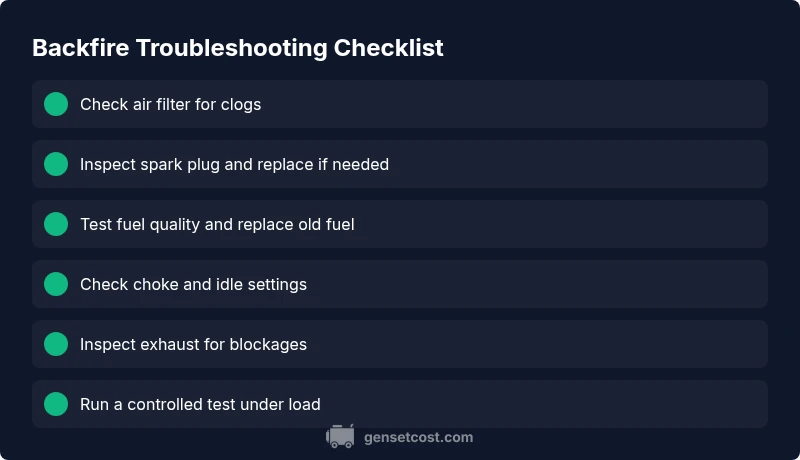
Start with simple, non-invasive checks. Confirm you’re using fresh, high-quality fuel and avoid gasoline stored for long periods. Inspect the air filter and replace if dirty. Remove and examine the spark plug for fouling or wear; gap it to the manufacturer’s spec if you have the tools. Check for correct choke operation and ensure the carburetor is not flooded. Finally, listen for exhaust restrictions—a blocked muffler can cause backfiring without a fuel issue. If the noise or symptoms persist after these quick wins, it’s time for deeper diagnostics or professional help.
Step-by-step repair process for the most common cause
The most frequent fix is cleaning or rebuilding the carburetor and replacing a fouled spark plug. Start by safely removing the spark plug cap and testing for spark with a tester. If the spark is weak, replace the plug and gap it properly. Drain and replace old fuel, then clean or replace a dirty air filter. Remove the carburetor upper body and check jets for varnish; use appropriate cleaner and compressed air to clear passages. Reassemble, ensure the choke is set correctly, and run the generator under no-load for a short period to confirm smooth operation before applying full load. If backfiring continues, you may be dealing with ignition timing or deeper exhaust issues that require a technician.
Maintenance habits to prevent backfiring
Preventive maintenance is your best defense. Schedule regular carburetor cleaning, air-filter replacement, and spark-plug checks every 6–12 months depending on usage. Use fresh fuel and stabilize it if you won’t rely on the unit for extended periods. Keep the exhaust path clear and inspect the muffler for obstructions after heavy operation. Document your maintenance so you can track trends and address issues before they escalate.
When to call a professional and what to expect
If backfiring persists after tried-and-true checks, or if you notice persistent backfires under light load, seek professional service. A technician can safely disassemble the carburetor, inspect the ignition timing, test fuel pressure, and verify exhaust integrity. Expect a diagnostic fee plus labor; parts costs vary with the specific repair. A pro can also advise on replacement options if a critical component is nearing end of life.
Realistic cost expectations and replacement options
Costs vary widely based on parts and labor needs. Minor fixes such as plugs or air filters are inexpensive, while carburetor rebuilds or replacement exhaust components will be more. A professional assessment provides a clear scope and eliminates guesswork, helping you decide between repair versus replacing the generator for reliability during outages.
Steps
Estimated time: 45-60 minutes
- 1
Power down and secure the generator
Disconnect all loads, switch off the engine, and allow it to cool. Remove the spark plug wire and discharge any residual energy before you touch components. This step reduces the risk of shock or fuel ignition during inspection.
Tip: Always work in a well-ventilated area away from open flames. - 2
Inspect air intake and filter
Check the air filter for dirt and clogging. A restricted intake can lean out the mixture and cause backfires. Clean or replace the filter according to the manufacturer’s instructions.
Tip: Replace every time you inspect if you see heavy debris. - 3
Check spark plug condition and gap
Remove the spark plug, inspect for fouling or wear, and test for a strong spark. Clean or replace as needed and set the gap to the specified distance. A weak or dirty plug often causes misfires that appear as backfire.
Tip: Keep spare plugs and a spark gap tool on hand. - 4
Evaluate fuel quality and carburetor behavior
Ensure fuel is fresh and properly stabilized. If you suspect varnish or deposits, perform a carburetor clean or professional rebuild. Don’t operate with stale fuel that may varnish jets.
Tip: Use a fuel stabilizer for longer storage periods. - 5
Test choke function and idle settings
Verify the choke opens and closes correctly and that idle settings align with the manual. A stuck choke can flood the engine and trigger backfiring when you transition to normal running.
Tip: Do a cold start worst-case test to catch choke issues. - 6
Reassemble and perform a controlled test
Reinstall components, reconnect the spark plug wire, and run the generator under no-load for several minutes. Listen for changes in sound and behavior; if backfiring returns, you likely need deeper service or timing adjustment.
Tip: Document steps taken for future maintenance.
Diagnosis: Engine backfires with pops or bangs during acceleration, deceleration, or under load
Possible Causes
- highIncorrect air-fuel mixture (rich or lean)
- mediumWorn or fouled spark plug or ignition timing issue
- lowExhaust blockage or muffler restriction
- lowPoor fuel quality or water in fuel
Fixes
- easyCheck and adjust air filter; replace if dirty
- easyInspect spark plug; replace and gap to spec
- mediumClean carburetor passages and jets; adjust idle/choke
- mediumDrain old fuel; flush fuel system and replace with fresh fuel
- mediumInspect and clear exhaust/muffler; verify no blockage
People Also Ask
What exactly is generator backfiring and why does it happen?
Backfiring is the ignition of unburned fuel in the exhaust. It usually signals an air-fuel imbalance, ignition timing issue, or exhaust restriction. Address the simple checks first before deeper repairs.
Backfiring happens when fuel ignites in the exhaust. Start with air and spark checks, then inspect the exhaust and fuel quality.
Can a dirty air filter cause backfiring?
Yes. A clogged air filter can starve the engine of air, causing a rich mixture that can backfire. Clean or replace the filter as a first step.
A dirty air filter can cause backfiring by choking air flow; replace it to see if symptoms improve.
Is backfiring always dangerous for a generator?
Backfiring can be a prelude to more serious issues and may indicate ignition or exhaust problems. It should be treated seriously and repaired promptly to prevent damage or fire risk.
Backfiring isn’t just loud—it can point to ignition or exhaust problems that need fixing.
When should I replace parts rather than repair?
If multiple components show wear or if backfiring continues after basic maintenance, a professional evaluation helps decide between repair and replacement for reliability during outages.
If simple fixes don’t work, a pro can tell you whether to repair or replace parts for reliability.
Can bad fuel cause backfiring even with a clean carburetor?
Yes. Ethanol blends and old fuel can varnish carburetor passages and ignite in the exhaust. Drain and replace old fuel and use stabilization.
Low-quality or old fuel can cause backfiring, even if the carburetor looks clean.
Should I run the generator after performing fixes?
Do a controlled test under no-load first, then gradually apply load to ensure stable operation. If backfiring worsens, stop and consult a technician.
Test it gently after fixes; increase load slowly to verify stability.
Watch Video
Key Takeaways
- Identify air-fuel and ignition issues before replacing parts
- Clean or replace clogged components to stop backfiring
- Use fresh fuel and proper air-fuel balance for best results
- If symptoms persist, consult a qualified technician promptly
- Regular maintenance reduces backfire risk during outages