Why Is My Generator Leaking Gas? Essential Fixes & Safety
Urgent guide to diagnose and stop gas leaks from home generators. Learn safety steps, common causes, maintenance tips, and when to call a licensed technician for reliable, safe operation.


Most generator gas leaks come from a faulty fuel line, a degraded carburetor gasket, or a loose connection at the fuel tank. For a quick fix: shut off the fuel supply, disconnect power, and evacuate the area if you smell gas. Do not start or operate the unit. Contact a licensed technician immediately; gas leaks require professional inspection.
Why is my generator leaking gas? A quick safety-first overview
When a generator starts to leak, the most important thing is safety and rapid assessment. According to Genset Cost, residential leaks are most often traced to fuel-line wear, loose fittings, or gasket failures rather than explosive faults. In this section, we outline why leaks happen, the exact safety steps to take immediately, and how proper maintenance can prevent recurrence during outages. The goal is to empower homeowners and property managers with clear, actionable guidance that reduces risk during power interruptions in 2026.
Immediate safety actions you should take now
If you detect a gas odor or see wet fuel around your generator, stop what you’re doing and act quickly. Move people and pets away from the area and ventilate if you can do so safely. Do not operate electrical switches or flames near the unit. If the odor is strong or you cannot identify the source safely, call emergency services and evacuate the space. After you are a safe distance away, you can inspect from a distance to note visible damage or leaks. Remember, quick, calm action reduces the risk of fire or toxic exposure, and it preserves the unit for later professional evaluation.
Common causes in home backup generators and how they look
Fuel-line wear and cracked hoses are among the most common leak sources in residential generators. Loose clamps, corroded fittings, and degraded gaskets around the carburetor or fuel tank are frequent culprits. A cracked fuel tank or cap can also leak fuel when pressure builds during operation. In some cases, leaks manifest as a mist or a visible sheen near connections, with a strong gasoline or propane odor that lingers after shutdown. Genset Cost analysis highlights fuel-line failures and gasket wear as typical failure modes, guiding you toward targeted inspections.
Safe inspection methods and what not to touch
Only perform non-invasive checks if you can do so safely from a distance: look for obvious drips, cracks, or loose clamps and verify that hoses are fully seated. Do not attempt to dismantle sealed components or replace gas lines without training. When inspecting, wear gloves and eye protection, and ensure the area is well-ventilated. If you notice any hissing sounds, strong odor, or fuel pooling, exit the area and contact a professional immediately. After basic checks, document findings to share with a technician to speed up the repair.
Professional help: when to call and what to expect
If a gas leak is suspected or confirmed, professional service is required. A licensed technician will perform leak testing, pressure checks, and fuel-system repairs using proper safety protocols and calibrated tools. Expect a full inspection of lines, clamps, seals, and the tank; replacements may include hoses, fittings, gaskets, or the tank itself. Regular follow-up maintenance can prevent recurrence, and a technician will advise on safe storage and operation during outages.
Preventive maintenance to minimize leaks and extend generator life
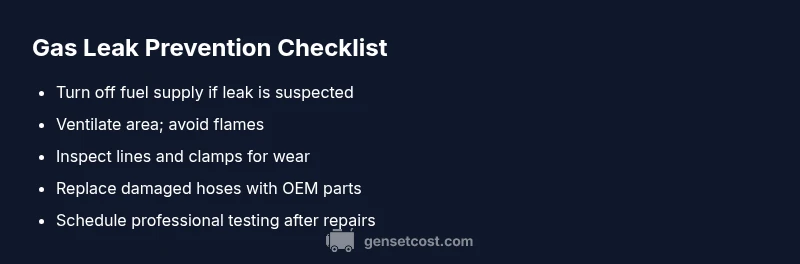
To reduce future leaks, schedule routine inspections of hoses, clamps, and fittings every 6–12 months, and after each storage period or power outage. Replace worn components proactively, especially aged rubber hoses and gasket seals. Keep fuel storage clean and limited to recommended amounts, and always perform leak tests after any maintenance. A proactive maintenance plan, aligned with manufacturer guidelines, minimizes downtime and enhances safety during power interruptions.
Steps
Estimated time: 45-60 minutes
- 1
Power down and shut off fuel supply
Turn the generator off and close the fuel valve if accessible. If you can't locate the valve, shut off the main gas supply to the unit. Verify there is no power to the unit and disconnect any external loads to prevent accidental startup during inspection.
Tip: If you smell strong gas, leave the area and call emergency services before touching anything. - 2
Ventilate and evacuate if necessary
Move people and pets to fresh air. Do not create sparks or use electrical devices near the leak. Once outside, continue to monitor the area from a safe distance and note any changes in odor strength or gas flow.
Tip: Avoid re-entering until professionals declare the area safe. - 3
Perform a visual inspection of lines and fittings
From a safe distance, inspect visible hoses, clamps, and connections for cracks, splits, or looseness. Look for fresh fuel residue around joints and check the tank cap for tightness. Do not forcibly bend hoses or pry components apart.
Tip: Document any obvious damage with photos for your technician. - 4
Tighten or replace easily accessible parts
Carefully tighten any loose clamps and replace obviously damaged hoses. Do not attempt to reseal or repair internal components if you are unsure of the correct procedures. Use manufacturer-approved parts only.
Tip: Dispose damaged parts properly and avoid mixing fuel types. - 5
Test for leaks safely and confirm repairs
If you have approved leak-testing tools, apply a soapy water solution to suspected joints and observe for bubbles. If bubbles appear, there is still a leak. Do not operate the unit until all leaks are resolved.
Tip: If you’re unsure, skip testing and call a professional immediately. - 6
Schedule professional service and maintenance
Even if leaks stop after adjustments, arrange a professional inspection to verify leak integrity and fuel-system safety. Follow a maintenance schedule and reference the owner’s manual for replacement intervals.
Tip: Keep the contact details of a licensed technician for emergencies.
Diagnosis: Generator smells of gas, visible fuel leak, or wet spots near lines during or after operation
Possible Causes
- highCracked or damaged fuel line
- highLoose clamps or fittings
- mediumWorn carburetor seals or gaskets
- lowDamaged fuel tank or cap
- lowOverflow from overfilled tank
Fixes
- easyInspect and tighten all fuel line clamps and fittings; replace damaged hoses
- easyReplace cracked hoses or damaged clamps with manufacturer-approved parts
- mediumReplace faulty carburetor seals or gaskets
- hardRepair or replace a cracked fuel tank or cap
- mediumSchedule professional leak testing and fuel-system service
People Also Ask
What should I do immediately if I smell gas near my generator?
Leave the area immediately, move to fresh air, and call emergency services if the odor is strong. If safe, turn off the fuel supply and avoid using switches or flames near the unit. Then contact a licensed technician for a full inspection.
If you smell gas, move away to fresh air and call emergency services. Do not operate the generator; contact a licensed technician for inspection.
Can I diagnose a fuel leak myself?
You can perform safe, non-invasive checks like looking for visible damage and leaks, but avoid disassembly of fuel components. Leaks from fuel lines and tanks should be handled by a professional to prevent fire or exposure hazards.
You can do basic visual checks, but leave fuel-line repairs to a pro for safety.
Is it safe to operate a generator with a suspected leak?
No. Do not run the generator if you suspect a leak. Shut it down, ventilate, and call a licensed technician for diagnostics and repair before resuming operation.
No, avoid running it until a professional confirms it’s safe.
How often should I inspect for leaks?
Inspect for leaks as part of regular maintenance, especially after storage and before peak outage seasons. Perform quick checks monthly during heavy use and after any servicing.
Do regular checks, especially after storage or servicing.
What maintenance can prevent leaks?
Replace worn hoses, tighten clamps, and check gaskets and seals during routine maintenance. Ensure fuel storage and handling follow manufacturer guidelines to minimize leak risk.
Routine hose and seal checks help prevent leaks.
Watch Video
Key Takeaways
- Shut off fuel and evacuate if a leak is suspected.
- Identify common leak sources: lines, clamps, gaskets.
- Do not DIY gas-line repairs—call a licensed professional.
- Implement a regular maintenance plan to prevent leaks.