Do Generators Smell Like Gas? An Urgent Troubleshooting Guide
Discover why your generator smells like gas, safety steps to take, common causes, and practical fixes. A homeowner-focused guide from Genset Cost to diagnose odors quickly and prevent hazards.


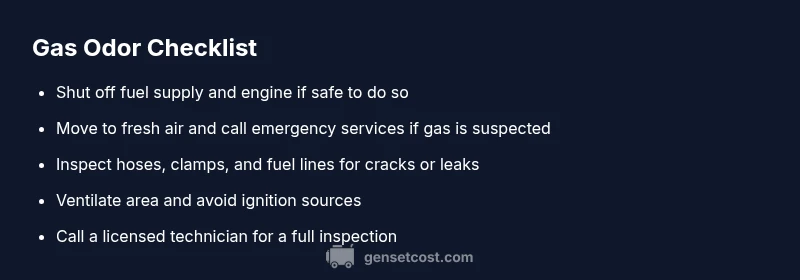
If you notice a strong gas smell around a generator, treat it as an emergency. Immediately shut off the engine, move to fresh air, and avoid flames or electrical switches. Call your gas utility or emergency services, then contact a licensed technician to inspect for leaks, cracks, or improper venting.
What the scent signals about your generator
Do generators smell like gas? This question should trigger immediate safety checks. When a homeowner or property manager detects a distinct gasoline-like odor around a backup generator, it often signals more than ordinary exhaust. Fuel system components, lines, seals, or fittings can leak, allowing vapors to accumulate near the engine compartment. Odors can also stem from hot exhaust mixing with ambient humidity, or from unburned fuel if the choke is left engaged after startup. In some setups, a strong natural gas or propane scent may indicate a supply issue rather than a leak in the generator itself. For homeowners managing rental or installed units, every odor should be treated as potentially hazardous until proven otherwise. The risk isn’t limited to fire; inhaling fuel vapors indoors or in poorly ventilated spaces can trigger health effects, especially for children, older adults, or pets. In short, do generators smell like gas? Yes—if you detect any persistent odor, act quickly, prioritize safety, and arrange a professional inspection. While you wait, ensure the area is well-ventilated and avoid ignition sources.
Immediate safety steps if you notice a gas-like odor around a generator
If you smell gas around a running or recently started generator, evacuate people and pets to fresh air immediately. Do not operate electrical switches or create sparks. Turn off the fuel supply if you can do so safely from a distance and call your gas utility or emergency services. Do not re-enter the area until responders declare it safe. If you’re working indoors or in a semi-enclosed space, increase ventilation and move the unit outdoors if possible, keeping the exhaust away from doors and windows. After the initial response, contact a licensed generator technician to inspect for leaks, pinhole faults, or venting blockages. Safety should always come first, even if you’re tempted to troubleshoot.
Common causes of gas odors near generators
Gas odors around generators can originate from several sources. Fuel leaks from hoses, carburetors, fuel lines, or the tank are common culprits and require immediate attention. Exhaust leaks or a damaged muffler can also emit gas-like fumes, especially if heat or a small crack redirects exhaust gases. In propane or natural gas setups, odor perception may reflect a supply issue, a faulty regulator, or a leak in the gas line feeding the generator. Contamination in the fuel tank, improper wet weather exposure, or recently performed maintenance could temporarily magnify odors. Differentiating odor sources helps you communicate more clearly with technicians and utility providers when requesting service.
Fuel type differences and odor nuances
Different fuels produce different odor signatures. Gasoline smells are typically stronger and more pungent, especially near the carburetor and fuel lines. Propane and natural gas odors resemble protective sulfur-tasting notes when leaks occur but should be difficult to mask. If your generator runs on gasoline, inspect the carburetor seals, fuel lines, and petcock for leaks. If you rely on propane or natural gas, odor may stem from the supply line, regulator, or transfer-switch connections rather than the engine itself. Understanding the fuel type helps you guide responders and reduces the risk of misdiagnosis during an inspection.
How to inspect safely and what to look for
Before inspecting, power down and disconnect the generator from any fuel supply if you can do so safely. Wear eye protection and gloves, and avoid hot surfaces. Look for fresh fuel puddles under the carburetor, fuel lines, or tank; check hose clamps for looseness or cracking; examine seals around the carburetor and fuel pump; and inspect the exhaust system for obvious cracks or holes. If you detect moisture, oil slick, or residue around fuel components, don’t touch—leave it to a professional. Verify that the generator is on a stable, ventilated surface outdoors, away from doors and windows. Do not attempt to repair fuel components without proper training.
Diagnostic flow: symptom to action
When you notice a gas-like odor, start with a quick symptom check, rule out obvious leaks, and escalate to a professional assessment. If the odor persists after you’ve secured the area and shut the unit down, it’s time to involve a certified technician. This approach minimizes risk and helps identify problems such as fuel line corrosion, worn gaskets, or improper venting that might not be obvious to homeowners. Remember, never ignore strong odors—gas leaks can cause fires or health hazards.
Prevention: maintenance and best practices to avoid reoccurrence
Proactive maintenance is the best defense against gas odors. Schedule annual professional inspections, replace aging hoses and seals, maintain clean fuel systems, and store fuel away from living spaces. Keep the area around the generator clear of debris, ensure proper ventilation, and install carbon monoxide detectors near living spaces. When storing or transporting fuel, use approved containers and keep them sealed. Finally, educate all building occupants about the signs of a gas leak and the steps to take if an odor is detected. Regular maintenance and rapid response are your best protections against hazardous odors.
Steps
Estimated time: 45-90 minutes
- 1
Power down and secure area
Shut off the generator, disconnect any power connections if safe, and remove people and pets from the area. Do not restart until a professional approves the unit. Verify there are no ignition sources nearby.
Tip: Do not touch hot surfaces or fuel lines while the unit is hot. - 2
Assess for obvious leaks
Check hoses, clamps, and the fuel tank for damp spots or wet fuel. If you see dripping fuel, do not attempt a temporary fix; call a professional immediately.
Tip: Use a flashlight to inspect tight spaces—fuel leaks can be small and easy to miss. - 3
Inspect fuel system connections
Look for cracked hoses, loose clamps, or corroded fittings. Replace damaged components only after the power is confirmed off and the fuel supply is isolated.
Tip: Only use manufacturer-approved parts for any replacement. - 4
Ventilate and relocate if possible
Move the generator outdoors to improve ventilation and reduce vapor buildup. Do not operate indoors or in enclosed spaces.
Tip: Keep the exhaust directed away from doors and windows. - 5
Call professionals when in doubt
If you cannot identify the source or if a leak is suspected, contact a licensed technician or your gas utility immediately.
Tip: Do not attempt to seal leaks or patch hoses yourself. - 6
Document fuel type and maintenance history
Record the fuel type, last service date, and any recent repairs. This helps technicians diagnose the issue faster and plan preventive maintenance.
Tip: Maintain a maintenance log for quick reference.
Diagnosis: Strong gas smell around or near generator, especially after startup or during operation
Possible Causes
- highFuel leak from carburetor, fuel line, or tank
- mediumExhaust leak or exhaust under carriage, muffler issue
- lowNatural gas/propane supply odor from fuel source or transfer switch leak
Fixes
- easyShut off fuel supply and stop engine; do not start until a professional inspects for leaks
- easyDisconnect power, ventilate area, and call utility or emergency services if you suspect a gas leak
- mediumSchedule a professional inspection to repair lines, replace hoses or seals, and verify ventilation
- hardIf odor persists after repairs, replace related components and re-test with a professional
People Also Ask
What should I do immediately if I smell gas around my generator?
Evacuate everyone from the area, avoid creating sparks, shut off the generator if safe, and call your gas utility or emergency services. Do not re-enter until responders say it’s safe.
Evacuate the area, avoid sparks, and call for help. Do not re-enter until responders confirm it's safe.
Why does a generator smell like gas after refueling?
A fuel residue or leaking connection can emit a gasoline scent after refueling. Shut off fuel supply, inspect for leaks, and arrange a professional check if the odor continues.
Fuel residue or leaks can cause odor after refueling; stop the fuel and inspect or call a pro if it persists.
Can I run my generator if I smell gas indoors?
No. Do not operate or run the generator indoors or in enclosed spaces. Move outdoors and ventilate; call for professional inspection immediately.
No—avoid running it indoors. Move outside and call for inspection.
Is a gas odor always dangerous?
Not always, but it’s a warning sign that should be treated seriously. A persistent odor warrants professional evaluation to rule out leaks or venting issues.
It's a warning sign—take it seriously and get it checked.
How often should I service my generator to prevent leaks?
Most experts recommend at least an annual professional inspection, plus inspections after any major fuel work or weather damage.
Have a yearly professional check, and inspect after major fuel work or storms.
What will a professional check during a generator inspection?
Technicians inspect fuel lines, seals, hoses, the regulator, valves, and the exhaust system for leaks or damage, plus venting performance and transfer switches.
They inspect fuel lines, seals, hoses, and the exhaust system, plus venting and electrical connections.
Watch Video
Key Takeaways
- Act fast if you smell gas around a generator
- Prioritize safety and call professionals for suspected leaks
- Different fuels have distinct odor signatures
- Regular maintenance reduces future odor issues
- Document maintenance and seek annual professional inspections