Why Is My Generator Smoking? Urgent Troubleshooting for Home Backup Generators
Facing smoke from your generator? Learn the urgent steps, common causes, and safe fixes. A clear, DIY-friendly guide with professional help cues from Genset Cost.


The most common reason a generator smokes is oil or fuel contacting hot engine surfaces, usually due to leaks, overfill, degraded gaskets, or overdue maintenance. Immediate fix: stop using the unit, switch it off, and disconnect loads; let it cool before inspecting for oil leaks, spilled fuel, or clogged filters. If smoke persists, contact a qualified technician for a thorough diagnosis.
Why smoking happens: common causes and what they mean
Smokiness from a generator is not something to ignore. The Genset Cost team notes that smoking is frequently a sign of an underlying maintenance issue or a mechanical fault that creates excessive heat. In many cases, oil leaks that reach hot exhaust surfaces, spilled fuel during refueling, or degraded gaskets can cause visible smoke within seconds of operation. Over time, restricted airflow from dirty cooling fins or a clogged air filter can compound the problem by making the engine overheat. A rich fuel mixture from carburetor faults or contaminated fuel can also produce smoke as the mixture burns improperly. While occasional white steam after a cold startup isn’t alarming, persistent smoke demands inspection and likely service to avoid damage.
How to think about smoke color and severity
Smoke color and odor matter. White or gray smoke often points to steam or coolant/oil burning on hot surfaces, blue smoke suggests burning oil, and black smoke typically signals a very rich fuel mixture or fuel system fault. Quick checks include looking for obvious oil leaks, fuel spills, or burnt smells near the exhaust. If you detect any electrical burning or plastic odors, shut down immediately and call a technician. Remember, ongoing smoking can escalate into expensive damage or safety hazards, so prioritize a safe, methodical approach.
Immediate safety steps you should take (do this now)
- If smoke is visible, stop running the generator and switch it off at the breaker or switch. Do not attempt to restart it.
- Move the unit to a well-ventilated outdoor area away from flammable materials. Keep bystanders at a safe distance.
- Disconnect all electrical loads and wait for the engine to cool before touching any components.
- If you notice fuel odor or bright flames, call emergency services and contact a professional immediately.
- After cooling, perform a visual inspection for obvious leaks or damaged hoses, and plan a more thorough check before re-using the unit.
Inspecting the exhaust, intake, and cooling system
Inspect the exhaust path for oil residue or soot that may indicate leaks or improper combustion. Check the muffler for cracks or degraded seals. Examine the air intake path and clean or replace the air filter if it’s dirty or clogged. Ensure cooling fins are free of dust, leaves, or debris that restrict airflow. A clean cooling system helps prevent overheating, which is a frequent driver of smoke.
Fuel, oil, and fluids: quality, levels, and contamination
Check oil level using the dipstick and inspect oil color and viscosity for sludge or contamination. Replace oil if it looks dirty or smells burnt. Inspect fuel for stale odor, separation, or debris; drain and refill with fresh fuel if needed. Always use the manufacturer’s recommended oil type and fuel grade, and avoid mixing fuels or using old gasoline stored long-term. Stable, clean fluids support safe operation and reduce smoke risk.
Electrical wiring and insulation: hazards and checks
Inspect for melted insulation, frayed wires, or scorch marks near the electrical connections and control panel. Loose or corroded connections can overheat and emit smoke. If you find damaged insulation or signs of arcing, do not power the unit; have a qualified electrician or service technician repair or replace the affected wiring. Never bypass safety features or operate with exposed conductors.
Maintenance practices to avoid smoking in the future
Establish a regular maintenance plan: change oil and filters per the manufacturer’s interval, run the generator under load periodically, and replace the air filter when dirty. Keep the cooling system clean and unobstructed, and use fresh fuel with stabilizer. Track maintenance in a log so you don’t miss critical tasks. Regular upkeep reduces the chances of smoke and extends service life.
When to repair vs replace: decision guidelines
If smoking persists after basic maintenance and cleaning, or if leaks or major component damage are evident, repair is worth pursuing only if the estimated repair cost is well below the cost of a new unit. If critical parts like the crankcase seal, piston rings, or the wiring harness show extensive wear, replacing the generator may be more economical and safer. Consult a licensed technician to evaluate remaining lifespan and warranty coverage.
Quick troubleshooting plan for homeowners
This practical plan helps you triage quickly:
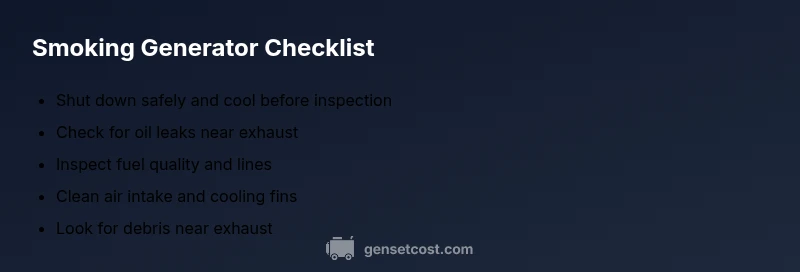
- Ensure safety: turn off power and cool the unit.
- Look for obvious leaks or spills around the engine and exhaust.
- Check oil and fuel quality and level.
- Inspect air intake and cooling fins for debris.
- If smoke remains after these checks, schedule a professional inspection and avoid operating the unit until cleared.
Steps
Estimated time: 60-120 minutes
- 1
Power down and secure the area
Shut off the generator at the main switch and disconnect any attached loads. Allow the engine to cool for at least 15-30 minutes before handling. Use protective gloves if you must touch hot components.
Tip: Never touch hot metal; wait until the unit is cool. - 2
Move to a ventilated outdoor area
If smoke is heavy, relocate the unit to an open space away from walls and flammable items. Ensure there is adequate ventilation to prevent gas buildup.
Tip: Ventilation reduces fire risk and makes inspection safer. - 3
Check for obvious leaks and spills
Visually inspect around the engine, oil pan, and fuel lines for fresh leaks or spills. Wipe away residue to better see any new leaks once you recheck after cooling.
Tip: A bright flashlight helps reveal small drips. - 4
Assess fluids: oil and fuel
Check oil level and color; look for milky or burnt smells. Inspect fuel for cloudiness or separation. Drain and replace if needed, following the manual.
Tip: Always dispose of fluids per local regulations. - 5
Inspect air intake and cooling
Remove debris from the air intake path and around cooling fins. Ensure the fan can rotate freely and there’s no obstruction in front of the radiator or coil.
Tip: A clean intake improves combustion and cooling. - 6
Look for electrical issues
Check for exposed wiring, melted insulation, or scorched areas near connectors. Do not run the unit if wiring shows damage.
Tip: If you’re unsure about electrical signs, call a pro. - 7
Decide on next steps
If you found a leak, damaged seals, or persistent smoke after checks, schedule professional service. If the unit appears sound, perform a controlled test under load with caution.
Tip: Document findings for the technician.
Diagnosis: Generator emits visible smoke during operation
Possible Causes
- highOil leaks onto hot exhaust surfaces due to gasket failure or cracked seals
- highOverfilling engine oil or fuel spill during fueling
- mediumPoor maintenance leading to clogged cooling fins or dirty air filter causing overheating
- lowElectrical insulation or wiring overheating
- lowBurning debris like rags or plastic near exhaust
Fixes
- mediumShut down and cool; locate and repair leaks or replace faulty gaskets/seals
- easyDrain excess oil or correct oil level; refill with the recommended grade
- easyClean cooling fins and replace dirty air filter; ensure unobstructed airflow
- hardInspect wiring for damage; replace damaged harness or seek professional electrical service
- easyRemove any combustibles near the exhaust and check for debris buildup
People Also Ask
Is it safe to operate a generator that is smoking?
No. If your generator is smoking, stop it immediately, move it to a ventilated area, and inspect for leaks or burning materials. Only resume operation after a professional has verified it is safe.
No. Stop the generator and have it checked before use.
What are the most common causes of generator smoke?
Oil leaks onto hot surfaces, fuel spills during refueling, and overheating from clogged cooling or air filters are the usual culprits. Electrical issues and debris near the exhaust can also cause smoke.
Common causes are leaks, spills, overheating, or electrical issues.
Can I fix wiring or electrical components myself?
Only if you are trained and understand safety protocols. Damaged insulation or arcing can pose serious shock or fire hazards. When in doubt, hire a licensed electrician or service tech.
Only attempt electrical fixes if you’re trained; otherwise hire a pro.
Can old or contaminated fuel cause smoking?
Yes. Stale fuel can burn poorly and produce smoke. Drain old fuel, flush lines as needed, and use fresh, stabilized fuel for safe operation.
Yes. Old fuel can cause smoky exhaust; replace it.
How often should I maintain a generator to prevent smoking?
Follow the manufacturer’s schedule for oil changes, air filter replacements, and cooling system checks. Regular service reduces smoke risk and extends lifespan.
Keep to the maintenance schedule to prevent smoking.
When should I replace a smoker?
If smoking recurs after proper maintenance or if critical components show extensive wear, replacement may be safer and more cost-effective than repeated repairs.
If it keeps smoking after fixes, consider replacement.
Watch Video
Key Takeaways
- Shut down safely when smoke appears and assess before restarting.
- Identify leaks, oil/fuel quality, and airflow issues as primary causes.
- Prioritize cooling and electrical safety; call a pro for damaged components.
- Maintain a regular service schedule to prevent smoking.
- Document findings to guide professional repairs or replacement decisions.