Why Is Your Generator Blowing White Smoke? Troubleshooting Guide
Learn why a generator blows white smoke, urgent safety steps, and a structured diagnostic flow to fix common causes like oil seals, fuel quality, and air intake. Clear, actionable guidance for homeowners and property managers.


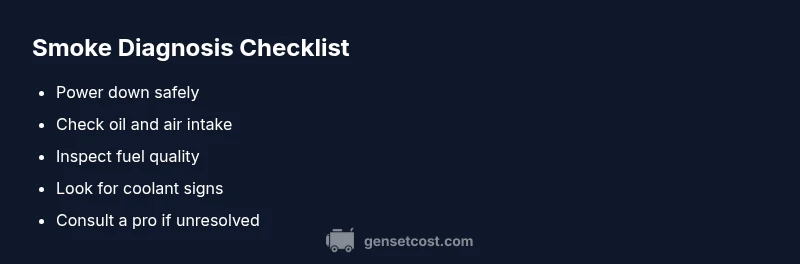
White smoke from a running generator usually means unburned fuel or oil is burning. The quickest fix is to stop the unit, unplug loads, and inspect the most common culprits: oil level, fuel quality, and air intake. Avoid running it in enclosed spaces. Then start with these initial steps: check oil level, look for leaks, inspect the air cleaner, and assess the exhaust path.
Understanding White Smoke: Is It Normal or a Warning Sign?
If you’ve ever asked yourself why is generator blowing white smoke, you’re not alone. In most cases, white smoke indicates something is burning that shouldn’t be—usually oil or unburned fuel. The Genset Cost team notes that this symptom is a warning signal, not a routine exhaust plume. Early diagnosis can prevent engine damage and costly repairs. Treat it as a red flag and act quickly to isolate the cause while keeping safety at the forefront.
The Most Common Causes (and How They Manifest)
There are several frequent culprits behind white smoke from a generator, and recognizing them helps you prioritize fixes. Common issues include excessive or degraded oil, low-quality or old fuel, a clogged air filter, and a rich fuel mixture. Less common but serious possibilities include coolant entering the combustion chamber due to a head gasket leak. Understanding these scenarios helps you decide when DIY checks are appropriate and when to call a pro. In our experience, routine maintenance reduces the risk of these events, and this is a key takeaway from Genset Cost analysis.
Safety First: Immediate Steps to Take
Prioritize safety before you touch anything. If smoke is heavy, odors are strong, or you notice heat, pull the plug from the outlet, shut off the fuel supply if you can safely do so, and move the unit to a well-ventilated outdoor area. Do not operate the generator in a garage, shed, or indoors where fumes can accumulate. Keep kids and pets away, and never lean over the exhaust while inspecting. These precautions help prevent carbon monoxide exposure and fire risk.
Initial Checks You Can Do (No Tools Required)
Start with the basics to narrow down the issue. Check the oil level and oil condition; oil that’s milky or very dark can indicate problems. Inspect the air filter—blocked air intake can cause incomplete combustion and abnormal smoke. Look for fuel leaks around the carburetor, fuel lines, and fuel tank. If you’ve recently refilled with fuel, ensure it’s fresh and the correct type for your model. These simple checks often resolve smoke caused by maintenance gaps.
How to Assess Whether This Is a Maintenance or a Mechanical Issue
If basic checks don’t resolve the smoke, you need a more methodical approach. A heavy, continuous white plume often points to burning oil or coolant, while intermittent smoke can indicate fuel-related issues. Listen for unusual engine noises, check for coolant color or puddles, and monitor engine temperature. Note any dashboard lights or fault codes. Collecting this information speeds up professional diagnosis and protects the engine from further damage.
DIY Fixes You Can Try Safely (Within Limits)
Where safe, you can perform a few fixes. Replace a clogged air filter and use fresh, quality fuel. If oil looks dirty or the level is off, perform a cautious oil change following your manual. Tighten any loose hoses and inspect for obvious leaks. Do not perform invasive tests like compression checks unless you have the right tools and experience. If the smoke persists after these steps, it’s time to consult a technician.
When to Call a Professional—and What to Expect
Some causes require professional attention, such as suspected head gasket leaks, faulty piston rings, or cooling-system problems. If you notice coolant in the oil, white smoke persists after basic maintenance, or you detect overheating, contact a qualified technician. A pro will likely perform a compression test, leak-down test, and a coolant leak check, plus a thorough external inspection of fuel and air paths. Early professional input can prevent catastrophic engine damage.
Maintenance Backups: Preventing Future Smoke Events
Prevention is your best defense. Establish a routine maintenance schedule with oil changes, air-filter replacements, and fuel-system cleaning. Use fresh fuel and stabilizers to extend fuel life. Keep the exhaust and cooling paths clear of debris, and store the generator in a ventilated area when not in use. Document maintenance activities to build a reliable service history that helps future troubleshooting.
diagnosticFlow(placeholder)":null},
diagnosticFlow
stepByStep
tipsList
keyTakeaways
videoEmbed
faqSection
mainTopicQuery
Steps
Estimated time: 60-90 minutes
- 1
Power down and secure area
Shut off the generator, disconnect loads, and move away from enclosed spaces. Let the exhaust cool before touching any components. This prevents burns and reduces risk while you inspect.
Tip: Keep a fire extinguisher within reach in case you smell fuel. - 2
Check oil level and condition
Remove the dipstick, wipe clean, reinsert, and pull out to check level. If low, add the correct oil type as specified in the manual. Look at oil color—milky indicates coolant mixing; dark oil can indicate contamination.
Tip: If oil looks milky, stop and call a professional. - 3
Inspect air intake and filter
Remove the air-cleaner assembly and inspect the filter. A blocked filter reduces air flow and can cause rich mixtures that produce smoke. Clean or replace as needed and reseat the housing securely.
Tip: Do not operate with a damaged air cleaner. - 4
Check for fuel leaks and fuel quality
Inspect fuel lines, carburetor seals, and fuel tank for leaks. If fuel is old or degraded, drain and replace with fresh fuel appropriate for your model. Reconnect lines and test for leaks in a safe area.
Tip: Dispose of old fuel per local regulations. - 5
Inspect for coolant signs
Look for white milky oil or puddles that indicate coolant intrusion. Check coolant level in the reservoir and hoses for cracks or leaks. If coolant is present, do not run the engine; coolant intrusion likely requires professional service.
Tip: Never open pressurized coolant lines while hot. - 6
Test run and monitor
After completing the checks, run the generator in a safe, open outdoor area. Observe the exhaust plume and listen for unusual noises. If smoke returns or persists, stop and arrange service.
Tip: Record observations and times to share with a technician.
Diagnosis: Generator blows white smoke during operation
Possible Causes
- highBurning oil due to worn seals or valve guides
- mediumFresh or degraded fuel causing incomplete combustion
- lowCoolant leaking into combustion chamber (head gasket or gasket failure)
- lowOverfilled oil or contaminated oil
Fixes
- easyCheck oil level and condition; top up or replace if needed
- easyInspect air filter; replace if clogged or dirty
- mediumTest for fuel leaks and use fresh fuel; drain old fuel if necessary
- hardConsult a professional for compression test or cooling-system inspection
People Also Ask
What does white smoke from a generator mean?
White smoke usually indicates burning oil or coolant. It can also result from unburned fuel due to ignition or air-path issues. Start with basic maintenance checks and avoid running the unit until you identify the cause.
White smoke generally means burning oil or coolant, or unburned fuel. Begin with basic checks and do not run the unit until you identify the cause.
Is white smoke dangerous to health or the engine?
Yes. Burning oil or coolant can indicate serious engine problems. Prolonged exposure can damage components, and fuel-related smoke may indicate dangerous emissions. Shut down and inspect or contact a professional.
Yes, white smoke can signal engine damage or dangerous emissions. Shut down and get a professional inspection.
Can I fix white smoke myself?
Some simple checks (oil level, air filter, and fresh fuel) are safe DIY steps. More complex issues like head gasket leaks require a qualified technician and diagnostic tests.
You can do safe basics yourself, but complex problems need a pro.
When is it safe to run the generator after smoke stops?
Only if the unit has been inspected, leaks ruled out, and no signs of overheating remain. If in doubt, wait for a professional evaluation.
Run only after a professional checks show no issues.
What maintenance helps prevent white smoke?
Regular oil changes, air-filter replacement, and using fresh fuel can prevent many white-smoke scenarios. Keep cooling and exhaust paths clear and schedule routine service.
Regular maintenance prevents most white-smoke issues.
Watch Video
Key Takeaways
- Stop the unit at first signs of white smoke.
- Check oil, air, and fuel system before attempting fixes.
- Don’t run the generator if smoke persists after checks.
- Schedule professional service for head gasket or cooling issues.
- Document maintenance and fault signs for future prevention.