How to Stop a Generator from Smoking: Urgent Troubleshooting
Urgent guide to stop a smoking generator safely. Learn quick diagnostics, essential fixes, and maintenance tips to prevent smoke and fire hazards, with guidance from Genset Cost.


Why stopping generator smoking matters
Smoke from a generator is a safety alert. In many cases smoke indicates an underlying fault that could lead to fire or carbon monoxide exposure. According to Genset Cost, the most common culprits are an overfilled or burning oil, restricted air flow, or a cooling system issue. When you ask how to stop generator from smoking, the first step is to shut down safely and let the unit cool before inspecting components. Addressing the problem promptly protects your home and occupants and reduces the risk of costly damage. Regular maintenance as part of a routine lets you catch issues early, before smoke returns. For homeowners and property managers evaluating home backup generator options, recognizing warning signs and acting fast is critical.
Common causes of smoking and how to spot them
Smoke can originate from several sources. Oil leaks or an overfilled sump are frequent culprits, especially after long test runs or during cold starting. Overheating due to a clogged air filter, blocked cooling fins, or insufficient ventilation can produce dark, acrid smoke. Fuel-system problems like an overly rich mixture, degraded fuel, or leaking lines also generate smoke. Finally, an exhaust restriction or damaged muffler can force exhaust gases to vent improperly and smoke. The key is to observe smoke color, odor, and timing to narrow the cause.
Immediate safety steps you should take
First, shut the generator off and disconnect the load to prevent electrical hazards. Move away from the unit and ventilate the area if you’re outdoors. Do not attempt to restart until you have inspected basic causes. If you notice strong fuel smells, sign of a leak, or burning plastic odors, call for professional help immediately. Keep a fire extinguisher on site and avoid touching hot surfaces. These safety steps protect people and property while you diagnose the issue.
How to diagnose smoke color and pattern
Blue or gray smoke often points to burning oil, while white smoke may indicate water vapor at startup or a coolant leak, and black smoke suggests incomplete combustion or rich fuel. In many cases, smoke that persists after the engine has cooled points to a mechanical fault rather than temporary vapor. Document when the smoke appears (startup vs. running) and how long it lasts. This information helps distinguish between oil seals, fuel delivery, or cooling problems and speeds up professional diagnostics if needed.
Checking the basics safely
Begin with a visual inspection when the engine is cool. Check oil level with the dipstick and look for oil leaks around gaskets and the oil pan. Inspect air filters for dirt or oil contamination, and clear any debris around the intake and cooling fins. Ensure there is adequate clearance around the unit for proper airflow. Inspect exhaust paths for obstructions or corrosion. If fuel smells strong, check for leaks at lines and connections and use fresh fuel.
Diagnostic flow: symptom-to-diagnosis mapping
The diagnostic flow helps you map a symptom to a diagnosis and then to a fix. Start with the symptom: smoke during operation. Then consider high-lidelity causes: oil overfill or leak (high likelihood), overheating due to restricted air (high), fuel-system issues (medium), or exhaust blockage (low). For each cause, apply the recommended fix and re-test. If smoke persists after these steps, contacting a professional is advised.
Step-by-step fixes for the most common causes
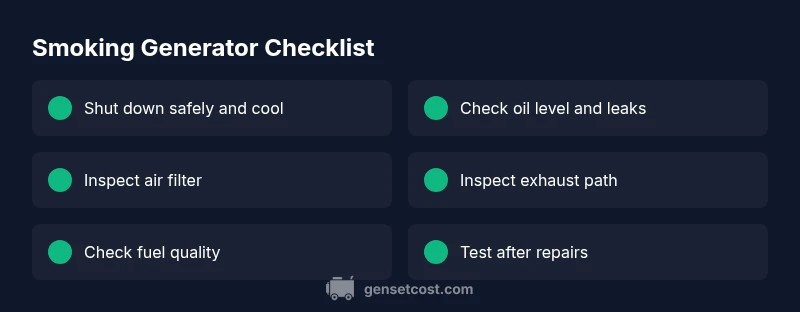
- Shut down safely and allow the unit to cool. Inspect for obvious oil leaks and verify the oil level.
- If oil is low or overfilled, correct to the manufacturer’s range and replace any suspect seals.
- Check and clean or replace the air filter; ensure unobstructed airflow.
- Inspect the exhaust path and muffler for blockages; clear debris as needed.
- Inspect fuel lines and carburetor for leaks or signs of aging; replace worn components and use fresh fuel.
- Reconnect and test at low load, watching for smoke. If smoke returns, stop and call a technician.
Safety reminders and maintenance best practices
Never operate a smoking generator indoors or in a closed space. Maintain a clean intake and exhaust area, and schedule regular maintenance checks. Use a fuel stabilizer and freshly drained fuel to avoid varnish buildup in the carburetor. Keep emergency equipment handy and document all inspections for future reference. When in doubt, seek professional service promptly to avoid dangerous situations.
Prevention tips to avoid smoking in the future
Implement a routine maintenance plan that includes oil changes, air-filter replacement, cooling-fan cleaning, and fuel system inspection at regular intervals. Use correct oil grades specified by the manufacturer and ensure the generator has adequate clearance for airflow. Store fuel safely and monitor for signs of wear or leaks. Proactive maintenance reduces smoking risk and extends equipment life.