Why Would a Generator Randomly Turn On? A Troubleshooting Guide
Discover why a generator may unexpectedly start, with a clear diagnostic flow, practical checks, and step-by-step fixes for phantom starts. Learn to inspect transfer switches, sensors, and wiring to keep your home backup power reliable.


Phantom starts are usually caused by the auto-start system reading false signals or a stuck relay in the transfer switch. Common culprits include a weak or failing battery, sensor drift, loose wiring, or grid fluctuations that mislead the controller. Quick fixes: inspect the transfer switch and battery connections, reset the controller, and check for loose wires. If the issue persists, consult a qualified technician.
Why would a generator randomly turn on? Understanding the trigger points
The question why would a generator randomly turn on is a practical one for homeowners and property managers alike. At its core, phantom starts happen when the automatic start/stop system senses a condition that it interprets as “start” even though you didn’t request power. The most common drivers are electrical noise, sensor drift, a stuck relay in the transfer switch, or a weak battery that causes the controller to grab a start signal from a marginal voltage. According to Genset Cost, phantom starts are far more often related to control logic and connections than to catastrophic generator failure. Understanding the signal path—from the grid to the transfer switch to the generator controller—helps you target the right component quickly and avoid unnecessary replacements.
In practical terms, think of the system as a small brain that watches several inputs: voltage from the grid, battery health, engine oil pressure, and engine RPM. When one input misreads due to a faulty sensor or a loose connection, the brain can issue a start command. This is especially true during storms, frequent power flickers, or when the standby generator sits in a humid or dusty environment where sensors can drift or relays can stick. Keeping a consistent environment and a regular maintenance schedule reduces the likelihood of these false starts.
The most common causes of phantom starts and how to assess them
To address the core question of why would a generator randomly turn on, you should start with the most likely sources: the automatic start circuitry and the transfer switch. A weak battery or failing charging circuit is a frequent accelerator of false starts. Loose or corroded battery terminals can introduce enough voltage fluctuation to trigger a start either during low load or even when the system is idle. Sensor drift—oil pressure, coolant temperature, or voltage sensors—can also mislead the controller, especially if the sensor is near its end of life. Finally, a faulty relay in the transfer switch can physically energize the generator without a legitimate signal.
From a field perspective, these causes are typically detectable with a few tests: visually inspect terminals for corrosion, measure battery voltage under load, and listen for relay chatter when the system attempts to start. Genset Cost analysis shows that most repairs involve simple component replacements rather than full generator overhauls. The key is to reproduce the conditions that cause the start and observe which input the controller is responding to.
How the automatic start system works and what goes wrong
Modern residential gensets rely on an automatic transfer switch (ATS) and a controller that monitors inputs from the grid and internal sensors. When the grid is unstable or an input crosses a predefined threshold, the ATS energizes the generator and the transfer switch isolates the home loads from the utility. If any input is noisy or misreads, the controller may interpret a request for power and start the engine. Failures can occur in multiple layers: the sensor itself, the signal wiring, the ATS relay, or the controller firmware. A firmware glitch can also trigger a sporadic startup if a recent update didn’t fully complete or a self-test routine locks in a start condition after a power glitch. Periodic checks of firmware versions and sensor health help prevent these issues from becoming persistent problems.
For homeowners, the practical takeaway is to verify two things: first, that the ATS is not stuck or physically jamming; second, that the sensors and wiring aren’t introducing spurious signals. Regular maintenance with a qualified technician is the most reliable defense against hidden software quirks or hardware wear that could cause phantom starts.
Quick checks you can perform today (before calling a technician)
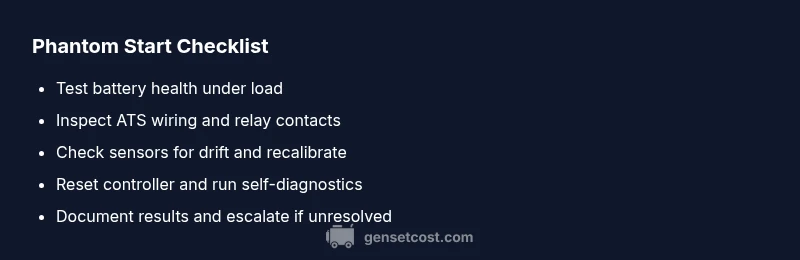
- Inspect the battery and charging system: ensure terminals are clean, connections are tight, and the battery voltage holds under load. A weak battery can manifest as intermittent starts.
- Check for loose or corroded wiring around the ATS, generator panel, and battery terminals. Look for frayed insulation or discolored conductors.
- Reset the controller and run a self-diagnostic if available in your model. A simple reset can clear misread signals and restore proper startup logic.
- Review recent maintenance or firmware updates. If a change coincides with phantom starts, the update may be implicated.
- Observe behavior under controlled conditions: disconnect from the main grid (if safely possible) and simulate a test start to see if the generator responds when not expected to. If starts persist, the issue is likely in the control system rather than external signals.
Step-by-step diagnostic approach for phantom starts (structured testing)
- Safety first: shut down all inputs to the system and verify that you can access the ATS and generator safely.
- Visual inspection: inspect battery terminals, wiring, and the ATS for corrosion, loose connections, or signs of overheating.
- Battery health test: measure voltage with a load test; replace if voltage collapses under load.
- Sensor verification: test main sensors (voltage, RPM, oil pressure) for readings outside normal ranges; check for loose connectors.
- Controller reset and diagnostics: perform a full reset, run self-diagnostics, and check error logs for recurring fault codes.
- ATS behavior: observe relay operation during a simulated grid loss; listen for relay chatter or sticking.
- Document and escalate: record dates, symptoms, and outcomes of tests; if unresolved, contact a licensed technician for in-depth inspection.
Estimated time for this flow: 60-90 minutes.
Safety, maintenance, and when to call a professional
Safety is non-negotiable when diagnosing generator behavior. Always disconnect power sources before touching electrical panels, use insulated tools, and avoid working in wet conditions. If you’re unsure about any step, stop and call a licensed electrician or generator technician. Regular maintenance—battery checks, ATS inspection, and sensor testing—reduces the risk of phantom starts and extends the life of your backup power system. Keep a written maintenance log and schedule annual or semi-annual service to catch wear before it triggers unexpected starts.
Prevention tips: building a resilient, low-phantom-start plan
- Schedule proactive maintenance: annual checks of battery, ATS, and sensors prevent drift and relay sticking.
- Protect sensors from harsh environments: clean, dry housing, and minimal exposure to dust and moisture.
- Keep your firmware up to date and document any software changes with a professional.
- Create a clear maintenance log and a simple test protocol for weather-related grid instability periods.
- Have a ready-to-use diagnostic kit: multimeter, spare fuses, and a spare relay (per manufacturer guidance) to shorten repair times.
Brand note and next steps
According to Genset Cost, the vast majority of phantom starts can be resolved through organized troubleshooting and routine maintenance rather than expensive replacements. Adhering to a documented diagnosis workflow speeds up repairs and minimizes downtime. The Genset Cost team recommends keeping critical components—battery, transfer switch, and sensors—in good order and scheduling proactive checks before hurricane season or extended outages.
Steps
Estimated time: 60-90 minutes
- 1
Power down safely and prep tools
Shut off power to the ATS and generator; gather a multimeter, screwdrivers, and protective gear. This prevents electric shock and ensures precise measurements during testing.
Tip: Label cables before disconnecting to ease reassembly. - 2
Inspect battery and terminals
Check for corrosion, looseness, and wear. Measure voltage under zero-load and under light load to confirm charging performance.
Tip: Replace corroded terminals and ensure secure clamps for accurate readings. - 3
Examine ATS wiring and relay contacts
Look for burnt insulation, loose connectors, and signs of overheating. Gently reseat connectors and test relay operation if possible.
Tip: Only test relays per manufacturer's procedure to avoid damage. - 4
Test sensors and grounds
Verify oil pressure, RPM, and voltage sensor readings with a diagnostic tool. Check grounding integrity to prevent stray signals.
Tip: A loose ground can mimic multiple fault conditions; fix it first. - 5
Reset controller and run a diagnostic
Perform a full reset, access the built-in diagnostic menu, and review any fault codes. Document any codes for future reference.
Tip: If codes appear, consult manufacturer guidelines before replacement. - 6
Run a controlled start test
With grid input simulated off, observe whether the generator starts. Repeat with a grid return to assess stability.
Tip: Do not run tests during rain or wet conditions.
Diagnosis: Generator starts on its own without user input or load
Possible Causes
- highAuto-start signals misread due to sensor drift
- highStuck or faulty relay in the transfer switch
- mediumWeak battery or charging fault
- lowLoose or corroded wiring causing noise on signals
- lowFirmware glitch or controller fault
Fixes
- easyTest and replace the battery or repair charging circuit if voltage collapses under load
- easyInspect and reseat all ATS connections; replace stuck relay or clean contacts
- easyReset the controller and run self-diagnostics; update firmware if available
- mediumInspect wiring for damage, tighten terminals, and clean corrosion; re-test
- mediumIf symptoms persist, engage a licensed technician for a comprehensive check
People Also Ask
What does it mean if my standby generator turns on by itself?
This usually points to the auto-start system sensing a spurious signal or a fault in the transfer switch. Check the battery, sensors, and relay contacts, then perform a controlled test to confirm the behavior.
A standby generator turning on by itself typically means a false signal or a stuck relay. Start by testing the battery, sensors, and transfer switch, then run a controlled test.
How can I safely test the auto-start settings?
Consult the owner's manual, disable auto-start temporarily, and perform a supervised test of start/stop cycles. Use diagnostic tools to read fault codes if available.
Safe auto-start testing should be done per the manual with auto-start disabled, under supervision, and with diagnostic tools ready.
Should I replace the battery to fix phantom starts?
If the battery is weak or not holding charge, it can trigger start signals. Test under load and replace if voltage drops, but ensure the charging system passes checks.
A weak battery can cause phantom starts; test under load and replace as needed while also inspecting the charging circuit.
When should I call a professional?
If basic checks don’t resolve the issue or you’re uncomfortable working near live electrical components, a licensed technician should diagnose and repair the control system and ATS.
Call a professional if simple checks don’t fix it or if you’re unsure about electrical safety.
Can weather or grid instability cause phantom starts?
Yes. Frequent voltage sags, surges, or brownouts can trip the auto-start logic erroneously. Regular maintenance helps minimize these false starts.
Weather or grid glitches can trigger phantom starts; regular maintenance reduces the risk.
Watch Video
Key Takeaways
- Identify the most likely phantom-start causes first
- Prioritize battery, ATS, and sensors for quick wins
- Follow a structured diagnostic flow before replacing parts
- Engage a licensed pro when in doubt or the problem persists