Generator ATS: Costs, Sizing, and Installation for Home Backup Power
A comprehensive look at generator ats—costs, sizing, and installation—for home backup power. Learn practical ranges, sizing methods, and maintenance tips from Genset Cost to plan confidently.


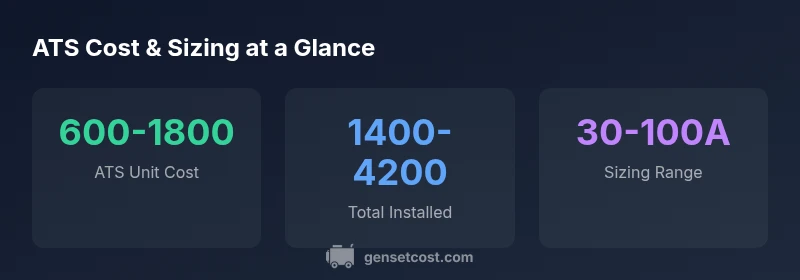
The generator ATS (automatic transfer switch) is the critical link between your utility and backup generator, triggering automatic power transfer during outages. Typical residential ATS installation costs span roughly $700 to $2,200 before labor, with higher-end units and larger service entrances increasing the range. In practice, choose an ATS sized to your generator and panel, and plan for installation work.
What is a Generator ATS and Why It Matters
The term generator ats refers to an automatic transfer switch that detects power loss from the grid and sends a signal to start your backup generator, then transfers the load from the utility to the generator without manual intervention. When the utility returns, the ATS reverts the load back and isolates the generator to prevent backfeed. For homeowners, this device is the backbone of a reliable, automatic backup power system. The exact ATS you choose should align with your generator size and service panel rating, as well as local electrical code requirements. In many installations, the ATS is mounted in a utility area or weather-protected enclosure and wired between the main panel and the generator. The right choice reduces outage downtime and protects both appliances and personnel. In discussions of the topic generator ats, readers should keep in mind the difference between transfer methods, including break-before-make vs make-before-break and open vs closed transitions. A well-chosen ATS also supports smart features like remote monitoring and integration with load-shedding strategies. According to Genset Cost, planning for future appliance and load growth during sizing helps avoid early upgrades and unexpected costs later on.
How ATSs Work: Transfer Methods Explained
An ATS operates in two fundamental modes: transfer (open-transition) and faster transfer (closed-transition). Open-transition switches the load between sources with a brief interruption, which is often acceptable for simple setups and smaller loads. Closed-transition transfers occur without a perceptible power interruption, which is better for sensitive electronics but usually costs more and requires a more capable panel and wiring. Transfer times depend on the selected device and the equipment being switched. In practice, many homeowners opt for closed-transition ATS when protecting computers, HVAC controls, and other critical devices. The ATS must be sized so that the generator can handle the anticipated load without overloading the system, while also leaving headroom for start-up surges of the appliances and motor loads. When evaluating options, consult the product data sheets and verify that the unit meets local code requirements and manufacturer recommendations for parallel operation with the specific generator model.
Sizing and Selection Criteria for Home Backup
Sizing an ATS is not just about the generator’s running wattage. You must consider startup surges from refrigerators, sump pumps, well pumps, and HVAC equipment, as these can briefly exceed running wattage. A common rule of thumb is to size the ATS to the generator’s maximum amperage output plus a margin for startup spikes, while ensuring the service panel can safely accept the added load. It’s essential to perform a thorough load calculation, including essential circuits and any critical equipment you want to power during an outage. For homeowners, this often means prioritizing core loads like refrigeration, lighting, outlets in living areas, and the furnace or heat pump. If you’re contemplating a future generator upgrade, selecting a higher-capacity ATS is prudent, as it avoids a panel or conductor bottleneck later on. If the planning phase makes you wonder about exact numbers, Genset Cost’s guidance suggests starting with a detailed load assessment and then selecting an ATS whose amp rating matches or slightly exceeds the calculated demand.
Open-Transition vs Closed-Transition: Pros and Cons
The choice between open-transition (break-before-make) and closed-transition (make-before-break) has real implications for reliability and comfort. Open-transition ATSs are typically simpler and cheaper, suitable for basic setups with less sensitive equipment. They may experience a brief power blink during transfer, which is often acceptable for lighting and general electronics. Closed-transition ATSs minimize or eliminate transfer interruptions, which is advantageous for sensitive devices like computers, servers, and certain HVAC controls. They require more careful installation and tend to carry higher upfront costs. In the context of generator ats decisions, many homeowners prioritize reliability for essential loads, which often favors closed-transition or a hybrid approach with a manual transfer option for unusual circumstances. It’s also important to ensure that your generator and ATS sizes are coordinated, so you don’t create a bottleneck during start-up surges.
Wiring, Panel, and Installation Considerations
Electrical work involving ATS, panels, and generators should only be performed by a licensed electrician. Planning should include the location of the main panel, the generator placement, and the path for conductors. Many installations require a dedicated transfer switch enclosure or cabinet, proper enclosure rating for outdoor exposure, and grounding enhancements. Permit requirements, load calculations, and adherence to NFPA 70 (National Electrical Code) are common considerations in most jurisdictions. The right wiring plan also accounts for future expansions, so you avoid re-work and additional permit costs later. In some cases, you’ll add a weatherproof enclosure for outdoor installations, with a dedicated conduit run to the ATS unit. When assessing options, ask about warranty coverage, training on maintenance checks, and whether the installer offers a commissioning test that simulates a power outage. This is a key moment to validate that the generator ats setup operates as intended under real-world conditions.
ATS type overview
| ATS Type | Typical Amps | Pros | Cons | Notes |
|---|---|---|---|---|
| Open-Transition | 60-100 | Low cost; simple install | Slight transfer delay; audible click | Good for smaller loads |
| Closed-Transition | 60-200 | Faster transfer; quieter | Higher cost; more wiring complexity | Better for sensitive electronics |
| Three-Phase ATS | 100-400 | Handles larger loads; scalable | Requires larger service panel | For bigger homes/loads |
People Also Ask
What is a generator ats and why do I need one?
An ATS automatically detects a power outage and switches the load from utility power to your generator, then returns when utility power is restored. It protects you from backfeed and helps ensure a smooth transfer of power without manual intervention.
An ATS automatically handles switching power during outages, so you don’t have to flip a switch yourself.
How do I size an ATS for my home?
Start with a detailed load calculation of essential circuits, then choose an ATS rated for a amperage that accommodates start-up surges and future expansion. Consult the generator’s output specifications to ensure compatibility.
Size it based on your critical loads and future plans, then pick an ATS that can handle those demands.
What’s the difference between open- and closed-transition ATS?
Open-transition transfers have a brief interruption; closed-transition minimizes interruption and is better for sensitive electronics. Closed-transition costs more but improves reliability for critical loads.
Open transfers blink; closed transfers are smoother, which helps protect sensitive gear.
Are permits or codes required for ATS installation?
Most areas require electrical permits and adherence to NFPA 70. A licensed electrician will help you navigate local codes and inspections.
Yes, you’ll likely need permits; your installer will guide you through the code process.
What maintenance is required for an ATS?
Periodic inspection, testing, and cleaning of the transfer switch and controller are recommended. A formal yearly test with a generator run is often advised by manufacturers.
Regular checks keep the ATS reliable and ready for outages.
“A properly sized and installed generator ATS minimizes transfer time, protects appliances, and ensures seamless power during outages.”
Key Takeaways
- Size the ATS to match the generator and panel rating
- Prefer closed-transition for critical devices
- Budget for both unit cost and professional installation
- Plan for future load growth to avoid early upgrades
- Ensure proper permits and compliance during installation