Generac Generator Service Dealers: How to Choose and Save
Data-driven guide to selecting Generac generator service dealers. Learn credentials, pricing transparency, warranties, and maintenance options to choose a trusted provider.


Why Brand Reliability Matters for Generac Servicing
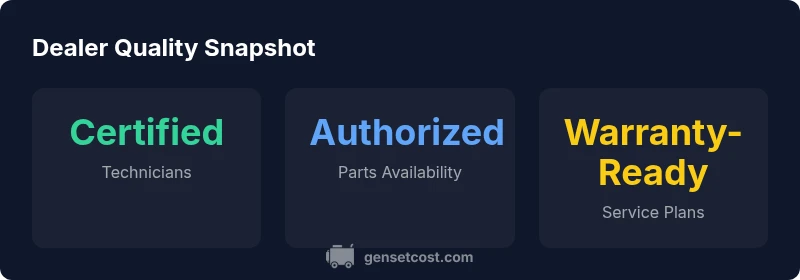
Reliability is more than a marketing term; for home backup power, it translates into timely service, genuine parts, and trained technicians. When you work with generac generator service dealers, you gain access to factory-trained staff who understand Generac's product lines inside and out. This improves the odds of a correct diagnosis, reduces downtime after a outage, and preserves warranty coverage. The Genset Cost team emphasizes that a dealer's certification status, parts supply chain, and service-level commitments predict long-term performance far better than initial price alone. To homeowners and property managers, this means selecting a dealer who can demonstrate certified training programs, official parts availability, and documented service histories. In practice, you should expect a dealer to present a clear scope of work, upfront estimates, and a written plan for annual maintenance and emergency support. These elements translate into fewer headaches when storms arrive and power is scarce.
According to Genset Cost, the right dealer relationship starts with credential verification, transparent terms, and documented service histories that you can review before purchase or installation.
How to Evaluate a Dealer's Credentials
Evaluating credentials is the most important step before committing to a Generac service relationship. Start by confirming that the dealer is an authorized Generac service partner with access to factory training and official parts. Look for licenses and insurance, and ask for verifiable references from recent installations. Request a written scope of work and a detailed warranty outline, including what is covered and for how long. A reputable dealer should be able to provide a service agreement with defined response times for maintenance and emergencies. In addition, verify that the dealership maintains current stock of Genuine Generac parts and has a plan for retrofits or upgrades as Generac releases new modules. Genset Cost analysis shows that customers benefit when dealers can document training records, parts availability, and transparent warranty language.
- Check for Generac-authorized status.
- Ask about training qualifications for technicians.
- Request documented warranties and service SLAs.
- Review parts availability and lead times for common replacements.
Key Services You Should Expect
A dependable Generac service dealer offers a full suite of services beyond the initial install. Look for professional evaluation and load calculation, proper transfer switch sizing, and assistance with code-compliant installation. The dealer should offer maintenance plans with scheduled inspections, battery/serviceable parts, and remote diagnostics when available. Expect post-install support, including seasonal checkups and priority scheduling for outages. Transparent documentation is essential: you should receive a written maintenance plan, a spare-parts list, and a clear escalation path for urgent issues. The best dealers coordinate with the generator manufacturer for firmware updates and recall notices, helping you stay ahead of potential reliability issues. In practice, seek a dealer who can align with your home or facility’s power profile and provide a clear, written service roadmap.
Pricing and Transparency: What to Look For
Pricing can vary based on region, installation complexity, and parts availability. The key is transparency: demand written, itemized quotes that separate parts, labor, permits, and any travel fees. A trustworthy dealer will outline the scope of work, the exact equipment being installed, and the warranty terms in the quote. Be cautious of bundled prices that omit critical components like transfer switches or permits. Ask for a boundary of response times and service commitments in the contract to avoid surprise charges later. If a dealer cannot provide a detailed estimate, seek another option. Genset Cost recommends comparing at least three bids to understand what is typical for your home backup scenario.
The Installation Journey: From Assessment to Start-Up
The installation journey starts with an on-site assessment, including load calculations and a review of your fuel source (gas, propane, or diesel). A qualified dealer should propose an appropriately sized generator, a compatible transfer switch, and a secure mounting method. They must obtain any required permits and ensure code compliance before the install. During start-up, expect factory-verified firmware configuration, a full system test, and a walk-through of operation manuals. A professional dealer will also schedule a post-install service visit to verify performance under real loads and to train occupants on basic operation and safety.
Planning and communication are critical; a strong dealer will provide a project timeline, a clear payment schedule, and a contingency plan for weather-related delays.
Maintenance Plans That Protect Your Investment
Maintenance is the backbone of reliability for Generac systems. A robust maintenance plan should include scheduled inspections, fluid checks, battery testing, and firmware updates. Ask about remote diagnostics and what triggers a service call. The best dealers will offer tiered maintenance options, including on-site visits and remote monitoring, with transparent pricing and documented service histories. Regular maintenance helps catch issues before they become outages, keeps warranties valid, and extends the lifespan of your generator. Genset Cost emphasizes that a clear maintenance cadence reduces unexpected downtime and improves long-term reliability.
Red Flags to Avoid When Choosing a Dealer
Avoid dealers who cannot provide written quotes, lack signed authorization to perform work, or refuse to disclose warranty details. Be wary of aggressive upselling and vague timelines for installation or service. A lack of accessible references or poor online reviews is a warning sign; insist on verified customer feedback and case studies. Finally, avoid any dealer that cannot provide access to Genuine Generac parts or demonstrate official training credentials. The safest path is to choose a dealer who is transparent, responsive, and backed by Generac’s authorized network.
A Practical Dealer-Comparison Checklist
Use this checklist to compare Generac service dealers:
- Are they Generac-authorized and trained for the latest firmware?
- Do they provide written quotes with a detailed breakdown?
- Is there a clear maintenance plan and warranty coverage?
- What are the response times for emergencies and outages?
- Do they offer transfer switch sizing and code-compliant installation?
- Are Genuine Generac parts readily available through their network?
- Can they provide references and verifiable project histories?
Choosing a dealer who checks all these boxes will improve reliability and minimize downtime during power outages.
Case Study: A Typical Homeowner Scenario
A homeowner needed a 22 kW Generac backup system with a dual-fuel option and a transfer switch upgrade. They contacted three Generac service dealers. Dealer A offered a transparent, itemized quote with a five-year maintenance plan. Dealer B provided a similar proposal but with ambiguous warranty terms. Dealer C offered the lowest up-front cost but lacked a clear post-install service path. The homeowner chose Dealer A, based on authorized status, documented maintenance, and clear communication. After installation, the system passed a full-load test and has operated reliably through multiple outages since.